SAP’s Dr Christian Schmeichel: No-one but HR can guide organizations through the future of work successfully
UNLEASH speaks with Future of Work expert, SAP’s Dr Christian Schmeichel, to find out what HR leaders should be prioritizing to steer businesses through periods of change and the transformational power of AI.
HR Leader Insights
SAP’s SVP and Global Head of People & Culture Services, Dr Christian Schmeichel, is one of the foremost experts on the future of work.
After his appearance at UNLEASH America earlier this year, we sat down with Schmeichel for an in-depth interview into his thoughts on how the world of work and HR leadership is evolving.
Read on to find out how AI can be a silver bullet for HR, as long as the human element of work does not get left behind in the race to adopt new technologies.
At this year’s International Festival of HR, SAP’s SVP and Global Head of People & Culture Services, Dr Christian Schmeichel was joined on the Main Stage by peers from Microsoft and New York University to discuss how organizations should be preparing for the future of work.
During the panel discussion, Schmeichel recommended that HR leaders “stay curious,” while not becoming overwhelmed in the face of the next world of work, as they anticipate how workforces will be impacted and shaped by forces such as technology advancements and changing skill requirements.
Sitting down with UNLEASH following this year’s event for an exclusive interview, it’s a theme he revisits, referencing the findings of SAP’s most recent Future of Work – Trend Report, which shows an ongoing and dynamic structural shift occurring in the workplace.
He details that while there is still a significant focus on fostering purpose-driven organizations, there is also much work being put into flexibility – such as the consistency of hybrid working models and greater focus on skills-based approaches replacing traditional role-based models.
“You really have to acknowledge that the world around us is changing at breakneck speed,” Schmeichel says. “It’s an exciting time to be in HR.”
“From an HR practitioner’s perspective, this feels like a once-in-a-generation opportunity to help shape how we work and live in the future and that’s incredibly exciting.”
But in order to ensure HR organizations are future-ready, Schmeichel adds that HR must first prepare its own people.
While the function has “traditionally been great at driving talent strategies” for the business, it is “now equally important to come up with a talent strategy for the HR function itself,” he explains.
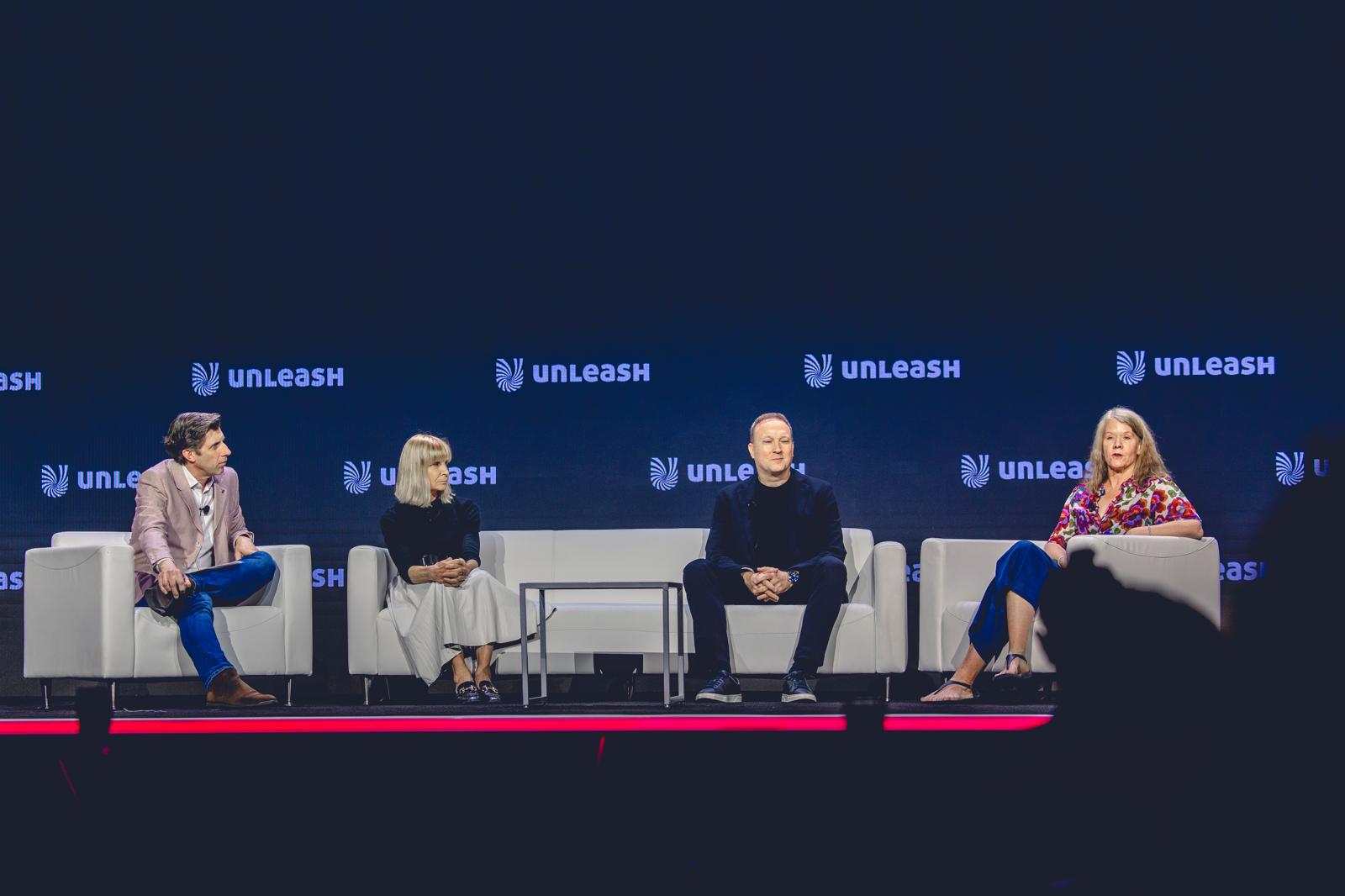
Dr Christian Schmeichel (second rigth), alongside David Green, Anna Tavis and Karen Kocher, on the Main Stage at UNLEASH America 2025
Using data now to prepare leaders for the future
In order for organizations to be ready and adaptable to the future, advanced HR analytics must become an essential part of a HR leader’s skillset, Schmeichel states.
Those who can hone this ability will be in the driving seat to best meet the needs of the business as they evolve.
The future of HR is data-driven,” he asserts.
“Practically speaking, it’s about knowing where to find the data, how to analyze and visualize it, and how to tell a compelling story around it.
“When the CEO asks for advice one should be prepared to leverage facts and figures for meaningful insights that allow for strategic decision making.”
Schmeichel highlights that although leadership has “always been crucial in any transformation – that remains true, especially now”, it has never been more important to furnish leaders at any level of the business with “the right knowledge and tools to drive change.”
“Managers make a huge difference not just in what they do, but in how they do it,” he says.
“That’s why investing heavily in leadership capability building is absolutely critical.”
At the end of the day, he adds, gaining traction in any form of transformation journey comes down to a “few core leadership principles,” such as being a role model, authentic and open about “what you don’t know.”
It’s not about having all the answers, but about asking the right questions,” he explains.
“That means fostering a culture of continuous learning and creating an environment of psychological safety, so people feel secure navigating the transformation and understand they’re all part of it.”
AI can be a silver bullet for HR…

Dr Christian Schmeichel, SVP and Global Head of People & Culture Services at SAP
One of the most prominent and widespread agents of change influencing the future of work is, of course, AI.
While adoption of AI continues to grow, the impact is being felt in various ways, from ongoing reticence among workers to embrace the technology to mandated use at every organizational level.
Schmeichel says that AI in HR is a “fascinating topic” and “arguably one of the silver bullets” many organizations have been waiting for.
“It enables us to drive efficiency and synergies in transactional work, transforming operational excellence,” he says.
“In turn, this frees up resources to focus on high-value HR activities like creating impactful employee experiences and making time for meaningful human interaction.”
On the subject of employee experience, he adds that while HR has “always talked about improving” the experiences of workers, AI now offers the “the chance to make it finally a reality.”
Despite the adoption and use of AI continuing to proliferate at organizational level, Schmeichel states that AI-readiness in HR is “still emerging” and there is “need to accelerate.”
“If we want to get the future of work and the future of the HR organization right, we have to act now,” he explains.
Because without a strong HR function, there’s no one else who can guide the organization through this kind of massive transformation successfully.”
…but the human heart of work cannot be neglected
2025 has been labelled by some as the year of agentic AI and many CHROs have moved quickly to ensure these virtual workers are core part of responsibilities.
Indeed, SAP’s Future of Work – Trend Report highlights the importance of establishing a human and AI partnership to redefine the future of work, putting human-centric skills at the heart of this union.
While there have been numerous technology-based disruptors to hit the workplace before, Schmeichel opines that it’s important to recognize that agentic is different because “it truly augments human capability.”
“It doesn’t just improve workflows and processes, but it enhances thinking, decision-making, and creativity,” he says.
“We’re talking about adaptive, real-time change by nature. AI learns and evolves, enabling more responsive, contextual support across the entire employee lifecycle.
“And building on that, it drives cross-functional, enterprise-wide impact.”
However, he also points out that this “massive change happening at unprecedented speed”, which also touches on fundamental aspects of work, creates a dilemma.
“AI demands urgent adoption, but we must also prioritize ethical, reliable, and responsible deployment. Balancing speed with responsibility is not easy,” he says.
One of the major risks of hasty AI adoption is a negative impact on employees – workers need to be given the proper support, tools and time to adjust to this new working landscape in order to thrive.
It also means a re-evaluation of what skills are most likely to increase in value in an AI-led future of work.
Schmeichel states that soft skills should be emphasized as “our new power skills” in this setting, with human traits such as collaboration, empathy, resilience and non-linear creativity acting as “real differentiators.”
“In the age of AI, reintroducing the human element in HR is more important than ever,” he concludes.
While technology powers scale and efficiency, it’s the personal connection that infuses meaning and culture into the workplace.”