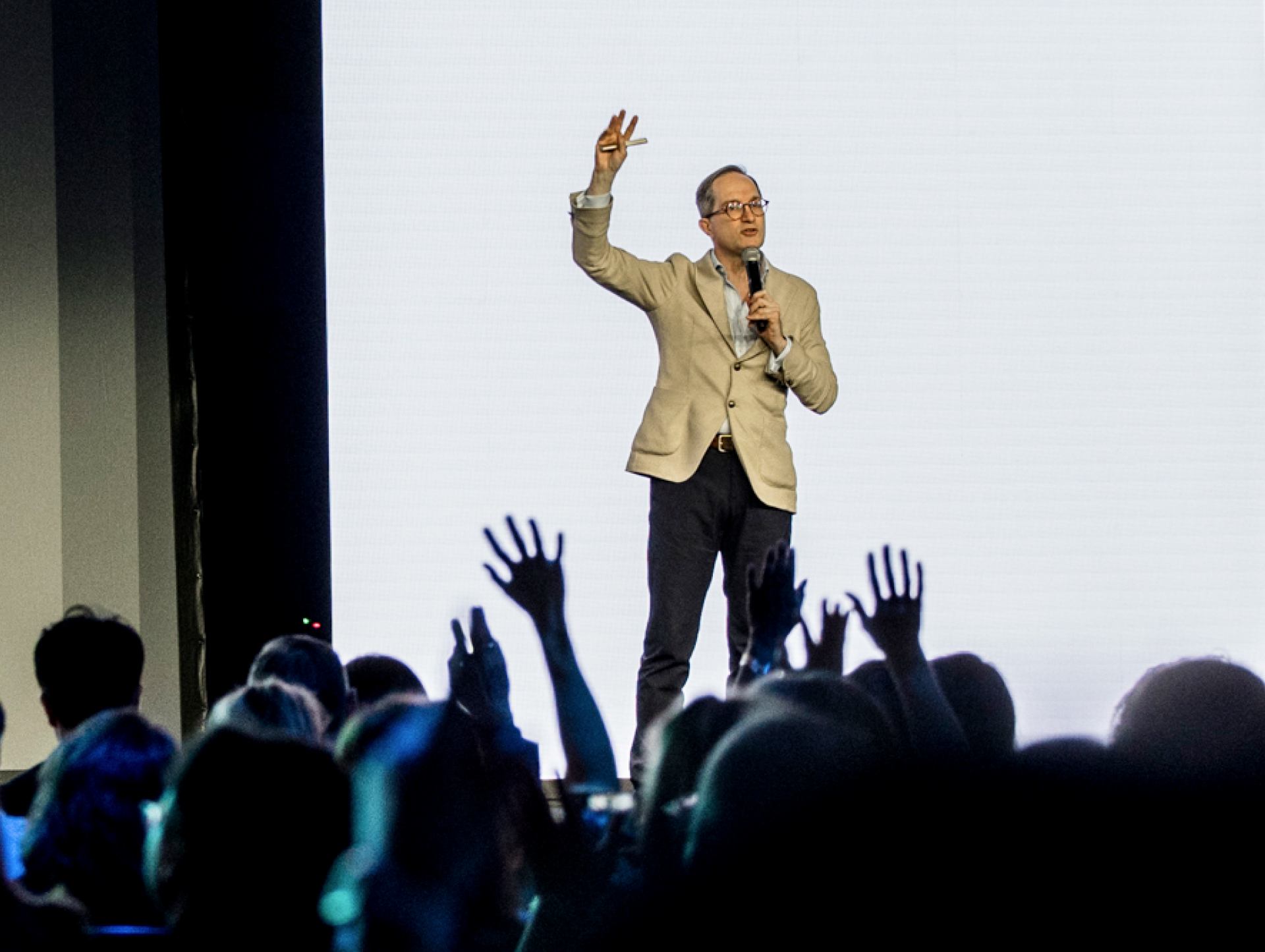



I'm building a Digital Me. I'm not sure HR is ready for her.
September 29, 2026

The future of work will see humans work alongside AI agents.
That's the perspective of Salesforce CEO Marc Benioff.
It’s not a fantasy of the future, “it is what is happening right now”.
The good news is that organizations, and specifically CHROs, are very aware of this fact.
According to a recent Salesforce survey of 200 global HR leaders, by 2030, 80% of them believe that the workforce will have humans and AI agents working together.
Plus, 86% CHROs said that integrating digital labor into the existing workforce will be a critical part of their role.
HR chiefs believe that AI agent adoption will jump by 327% in the next two years (from 15% now to 64% in 2027), and that once agentic AI is fully implemented into their workforce, they will see a 30% gain in productivity and 19% reduction in labor costs.
This trend towards digital labor is “something that can’t be ignored”, Salesforce President and Chief People Officer, Nathalie Scardino, exclusively tells UNLEASH.
The question is where should CHROs and HR teams start to move the needle on agentic AI and reap the rewards?
Currently, 85% are yet to implement agentic AI, and 73% of employees remain unaware of how AI agents will impact their work, so there’s lots of work to do.
Salesforce’s research found that four in five HR chiefs plan to reskill to be more competitive in a market shaped by AI agents.
20% are already reskilling, and 67% plan to do so, in order to create better future opportunities for workers.
While AI literacy will the number one skills workers need as businesses move into the agentic AI economy, soft skills will also come to the fore.
75% of HR leaders said AI agents will put the need for soft skills like collaboration, accountability, adaptability and emotional intelligence.
This reskilling also plays into organization and job redesign (77%) and redeployment and reassignment of employees to more relevant roles (89%).
88% HR leaders also said that redeployment was more cost effective than hiring from outside the business for new roles.
“We need to act now in order to future proof our companies for the digital labor revolution.”