‘There are going to be lots of jobs for people to do. The challenge is that these jobs are going to look quite different’: Daniel Susskind
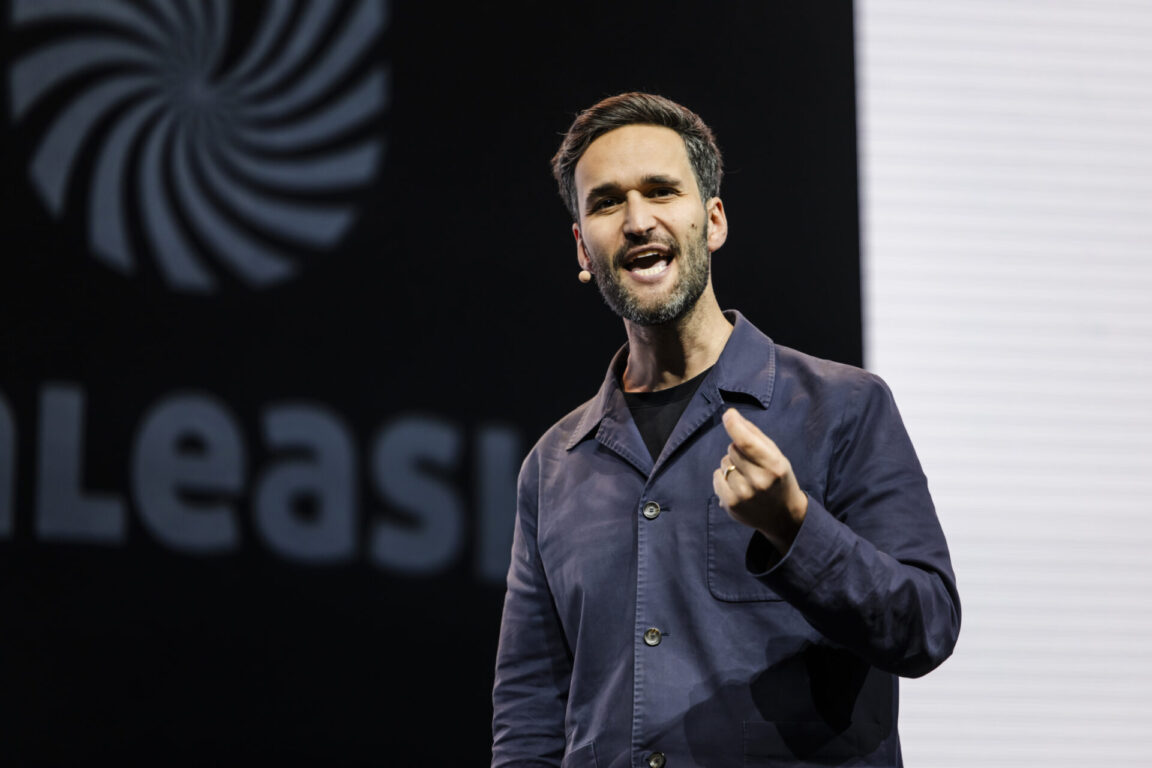
King College London professor Daniel Susskind closed out UNLEASH World 2025 by talking about the AI fallacies individuals need to avoid when it comes to AI’s disruption of the world of work.
UNLEASH World 2025
Technology is not just coming for blue collar work, with generative AI, it is also disrupting white collar work.
Daniel Susskind, Economics professor at Kings College London, called for white collar workers to "sit up straight" and take note of this. AI can be creative, it just does it in a different way to humans.
Here's our top takeaways from Susskind's closing keynote of UNLEASH World 2025.
People seem to be “comfortable” with the concept that technology disrupts blue collar work.
There’s an assumption that blue collar work is “relatively routine, relatively straightforward”, and easy to explain.
Conversely, “we think of the work that white collar workers do as requiring far subtler faculties” – like creativity, judgement, empathy – meaning it is out of reach and protected from disruption.
With the advent of generative AI, that’s simply not true – that’s an AI fallacy. That’s how Kings College London Research Professor in Economics Daniel Susskind closed out UNLEASH World 2025.
In this Day Three closing keynote, Susskind explained why “white collar workers need to sit up straight” and take the wave of AI seriously when it comes to their jobs.
Daniel Susskind on how to avoid failing into AI fallacies around jobs
Susskind called for the UNLEASH World audience to change their mindset.
There’s a perspective that “the only way to build a system to outperform a human expert” is to get that expert to “explain to you how they solve whatever problem it is you’re trying to solve, and then capture” those instructions for the machine to follow.
But if you take the example in the late 1990s of Chess Grandmaster Gary Kasparov being beaten by Deep Blue, an IBM computer, you’d realize that Kasparov wouldn’t be able to explain why he’s so good at chess; “it requires gut reaction, instinct, intuition, judgment, experience, creativity”, according to Susskind.
Instead, the reason why the computer could beat Kasparov was because it could calculate 330 million moves per second, whereas Kasparov could do maybe 100 moves at best. The computer simply had the data storage and processing power advantage.
“It did not matter that Gary couldn’t explain how he was so good at chess, the system was performing the task in a fundamentally different way”.
This is the lesson that we all need to learn – it’s a mistake to assume “the only way to develop systems to perform tasks at the level of humans beings is to somehow replicate, imitate or copy the way that human beings perform a task”.
The temptation is to say that because machine can’t think like us, they’ll never be creative, because machines can’t reason like us, they’ll never exercise judgement, because machines can’t feel like us, they’ll never be empathetic”.
This approach fails “to recognize that machines might never think like us, or reason like us, or feel like us”, but that doesn’t mean they can’t be creative – they just do it in a different way.
Rather than asking if a machine can exercise judgement, the question we need to ask is “can a machine deal with uncertainty better than a human being?”
The answer is yes; that’s precisely what AI is good at.
We’re living in an age of “increasingly capable non-thinking machines” – they have huge compute and processing power and data storage and they are “designed to perform tasks that might require very subtle faculties from us, but perform them in fundamentally different ways”, stated Susskind.
It’s time to shift from thinking about jobs, and instead focus on tasks.
It’s “unhelpful” to fall into the trap of the “different jobs that people do”, according to Susskind – “if you look closely at any job, what you see is that people perform a really wide variety of tasks in their jobs”.
By focusing on tasks, it is possible to get out of the “mindset where the only way that technology can affect the work we do is by destroying or creating jobs” – “that isn’t how technology affects the work we do, it might displace us from performing particular tasks and activities, but it also makes other tasks and activities more valuable and more important”.
What’s the answer to this AI challenge?
“The best response we have.. is a training one” – “the most likely story for the next five, ten, 15 years is that we see an increase in demand for these tasks and activities that cannot yet be automated”.
“There are going to be lots of jobs for people to do. The challenge is that these jobs are going to look quite different,” concluded Susskind.