Shift from qualifications to skills and reap the performance and productivity rewards, finds Top Employers Institute
“The old, qualification-driven model is no longer enough”, shares Top Employers Institute’s Adrian Seligman. Find out why skills-first approaches are better suited to this AI world of work, according to new data from the institute.
News In Brief
“Companies that prioritize skills over credentials are seeing higher internal promotion rates, stronger diversity outcomes and are 7% less likely to lose their top performers.”
That's Adrian Seligman talking about Top Employers Institute's new data.
Find out how to shift to skills-first approaches and reap the rewards.
AI is triggering large scale workplace redesign – organizations are having to redeploy, reskill and re-engineer their workforce.
It is clear that “the old, qualification-driven model is no longer enough”; instead, skills-first approaches are having a positive impact on businesses and their bottom lines.
Speaking to UNLEASH about new research from Top Employers Institute, Executive Board Member Adrian Seligman, shares: “Companies that prioritize skills over credentials are seeing higher internal promotion rates, stronger diversity outcomes and are 7% less likely to lose their top performers.”
The HR services company’s data from 2,300 organizations across 125 countries also shows that when skills data is embedded across HR that drives up to 15% higher productivity.
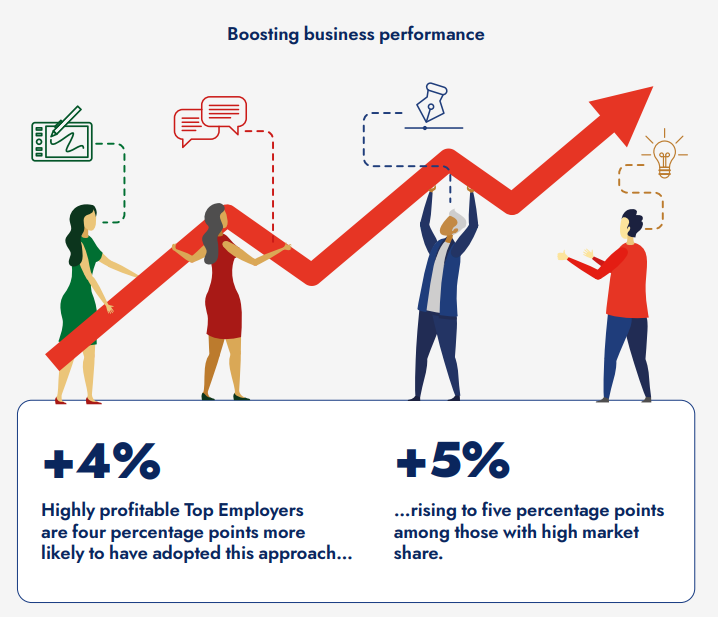
Credit: Top Employers Institute.
Given that the labor market is now defined by skills scarcity, those gains are significant,” Seligman adds.
Skills-first seems easy in theory, but it is difficult to do in practice – where should HR leaders start? UNLEASH put that question to Seligman, and dug into the data.
How to become a skills-first organization
Currently, 39% of companies in the research are embracing a world where skills outtrump academics in the hiring process, while 53% are giving equal weight to skills and formal qualifications.
This is great progress, but to reap the rewards, it seems that organizations need to push the needle even further towards skills-first.
Seligman tells UNLEASH that “leaders must audit hiring practices, build comprehensive skills inventories and integrate skills data across all HR functions”.
They need to break down jobs into skills – 25% are doing this, and 24% have a plan in place here. This helps to spot capabilities, and where there are gaps, and those insights need to be plugged into all of HR – hiring, learning & development, rewards, and workforce planning.
Beyond this, HR leaders also need to be transparent about the impact AI is having on the business – both good and bad.
84% of those studied are taking steps to ensure that employees know about future changes to skills needs within the organization, thereby reaping retention and trust rewards.
Seligman shares that organizations need to “communicate openly about future skills needs and invest in scalable reskilling programs that enable rapid redeployment”.
Those who act now will not only safeguard business continuity but also build a more agile, diverse and high-performing workforce to power their future.”