EqualReach: Working with refugees isn’t just the right thing to do, it makes good business sense
There are 123 million forcibly displaced people in the world – most of which are young, and seeking work. In a world where employers have huge skills gaps, an obvious solution is to tap into overlooked refugee talent. That’s where EqualReach comes in; UNLEASH sat down with CEO & Founder Giselle Gonzales to discuss the business case.
Expert Insights
A decade after travelling the refugee route from Greece to Germany, Giselle Gonzales founded EqualReach to bridge refugees and businesses.
Her approach is to link displaced talent with project-based work to close skills gaps employers are facing.
UNLEASH sat down with Gonzales for an exclusive conversation about EqualReach, and to hear her advice for leaders on the benefits of continuing to step up despite the political environment.
A decade ago, Giselle Gonzales travelled from Greece to Germany to document the realities facing millions of refugees fleeing the civil war in Syria.
Gonzales noticed that the refugees she met, just like her, wanted a life of purpose and work that mattered – but when they reached their host countries, work was the hardest part of rebuilding their lives.
She asks: “How do you solve for that work piece when people are often unable to work locally, or the local community [where they settle] is struggling just as much in the host country?”
Gonzales reached that this new concept of ‘digital work’ could be part of the solution.
However, through years of research, it became clear there were numerous barriers in displaced people accessing digital employment on marketplaces like Fiverr or Upwork – notably, lack of recognized ID and access to formal financial systems to get paid.
When the COVID-19 pandemic hit, Gonzales went to work for a Fortune 500 company – Amazon – and found herself “managing the very types of freelancing, project-based work that I had spent so many years looking at refugees struggling to access”.
So, she started a pilot alongside her job to link refugees with the project work that needed doing – over three years, she turned those pilots into “multi-million dollar impacts to the business”, which also had huge social impacts.
If Amazon, one of the largest organizations on the planet, could have this level of impact, then so could other employers – they just needed a bridge between the refugee and business worlds, so in 2023, Gonzales founded EqualReach.
She built the organization backwards from the business case, and what she had wished had existed in her previous role: A “freelancing marketplace [to create] clear pipelines for refugee talent to access the digital economy”.
All while also enabling the business world to “pivot and be agile in this changing job ecosystem”, and doing so in a compliant, risk-free, secure way for both individuals and businesses.
There are 123 million forcibly displaced people in the world – most of which are young people, seeking work and purpose. In Gonzales’ view, it’s a market failure that businesses have overlooked this talent for so long.
In an exclusive conversation with UNLEASH, Gonzales shares her message to HR and business leaders about why, amid skills and talent shortages, they really need to think outside of the box.

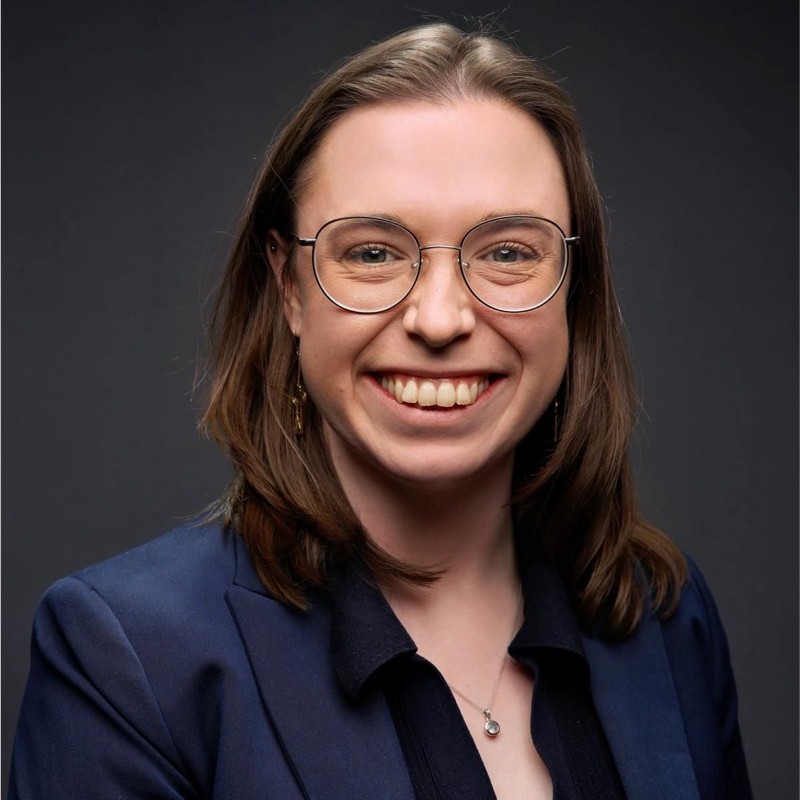
Giselle Gonzales, CEO & Founder, EqualReach.
Refugee hiring cannot just be a CSR initiative
Gonzales and EqualReach’s mantra is that working with displaced talent isn’t just morally the right thing to do – it is the strategic choice.
EqualReach does not position its work as “nice-to-have CSR initiatives” – instead, the aim is to connect real experts in their field with work opportunities that companies need to fill.
Previously, they have faced huge barriers to accessing those projects – “there is a trust gap” and often it can be a “race to the bottom of the barrel in these massive open marketplaces”, like Fiverr or Upwork.
Research by the UNHCR found that on average, it took refugee freelancers six months to land their first project, and that was only after they lowered their rate by 70%.
There’s a really big stigma around refugee talent” – so EqualReach takes the attitude of “show don’t tell, let people’s skills and talent shine”, Gonzales tells UNLEASH.
“These are quality, real specialists that we’re just helping be seen by the private sector” – this is not about handouts to displaced talent, but actually enabling these individuals to use their skills to solve real business needs.
While Gonzales is clear that there are “great organizations” helping to link up refugees with employers and businesses with talent – examples include TENT and Upwardly Global – having worked at Amazon, she knew firsthand that “when a commitment was made, the team has to look at each other internally, and say, how do we actually implement this?”
There are a lot of implementation challenges – a lot of people said to Gonzales in her old role, “we’ve made these big commitments or we want to do good in this way, but we don’t have full time roles, we have projects”.
What also makes EqualReach’s approach stand out is that it is team-based; the idea is not just about linking individuals with work, it is about cultivating ecosystems and communities of expert talent for businesses to tap into.
Gonzales explains: “For us, the team aspect is really important. It brings not only the social protections, but also the mentorship and network effects of having other people to learn alongside”.
EqualReach works with local and global NGOs to source its network of refugees – Gonzales and her team carry out intensive vetting and then will shadow the team’s work for six months before bringing them on board for future, ongoing projects.
Speaking on stage at One Young World summit in Munich in November, Gonzales shared that this team-based approach enables displaced individuals to earn up to ten times as much as the highest paying local work.
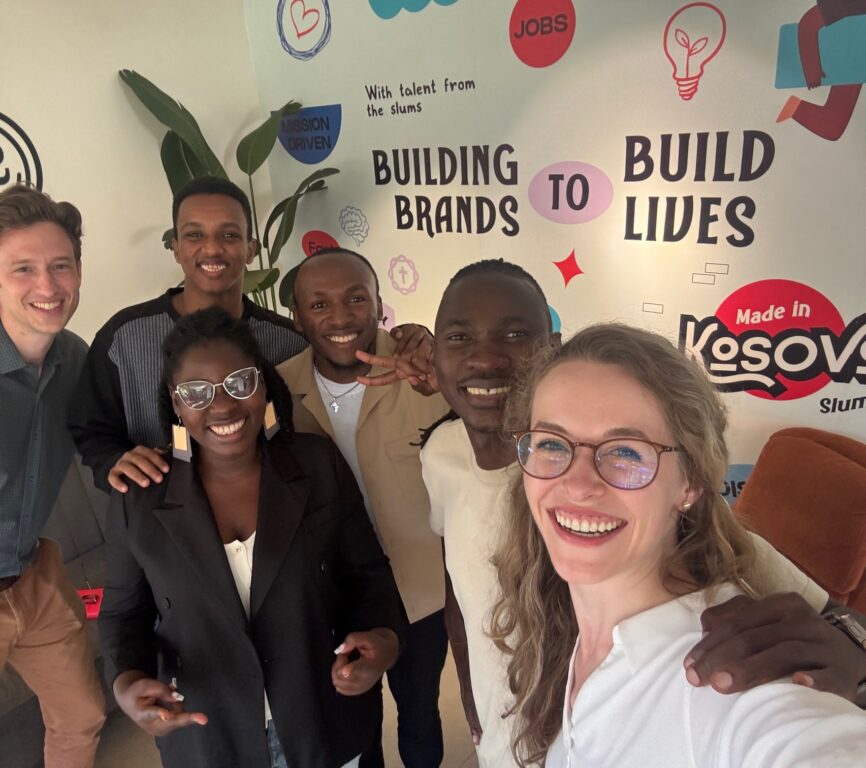
Giselle Gonzales with EqualReach partners in Uganda
EqualReach’s message to leaders: The power to make change is in your hands
In the philanthropic, social impact space, it can be easy to talk a lot, but Gonzales truly wants to make a difference.
Her message is that “every person reading this article has influence and power in their workspace” – “I started in a role where I wasn’t directly related to HR, yet I controlled the projects and had the ability to influence how we worked with freelancers for these roles”, she tells UNLEASH.
This is why at the One Young World summit Gonzales called on the 2,000 leaders in the room to make a 10% pledge.
If every company represented at the summit redirected 10% of their annual spend to refugee communities, this would see tens of millions of dollars of opportunities – not charity – for displaced people.
Just “10% makes a difference” – the question that remains is where do businesses start?
For Gonzales, it is about building the business case by doing just one pilot, one project, and then showing the results; “let our teams show you what they’re capable of – you’ll be amazed”.
Think of it like try before you buy; “the skills are out there, it’s just a matter of [leaders] seeing it for themselves”.
This is exactly what Z Zurich Foundation did – the partnership between EqualReach and Z Zurich was showcased live on stage at One Young World.
Z Zurich Foundation’s Chair, Gary Shaughnessy, shared: “Despite often finding talent in short supply, businesses can miss the skills refugees can offer. We may assume that what displaced people need is purely help, when what they may actually need is opportunity.”
Gonzales tells UNLEASH that “Z Zurich probably approached this with a little bit of cautious optimism”, but they discovered world class talent – “with every single project we do, my favorite part is that ‘aha’ moment when people realize what refugee talent is”.
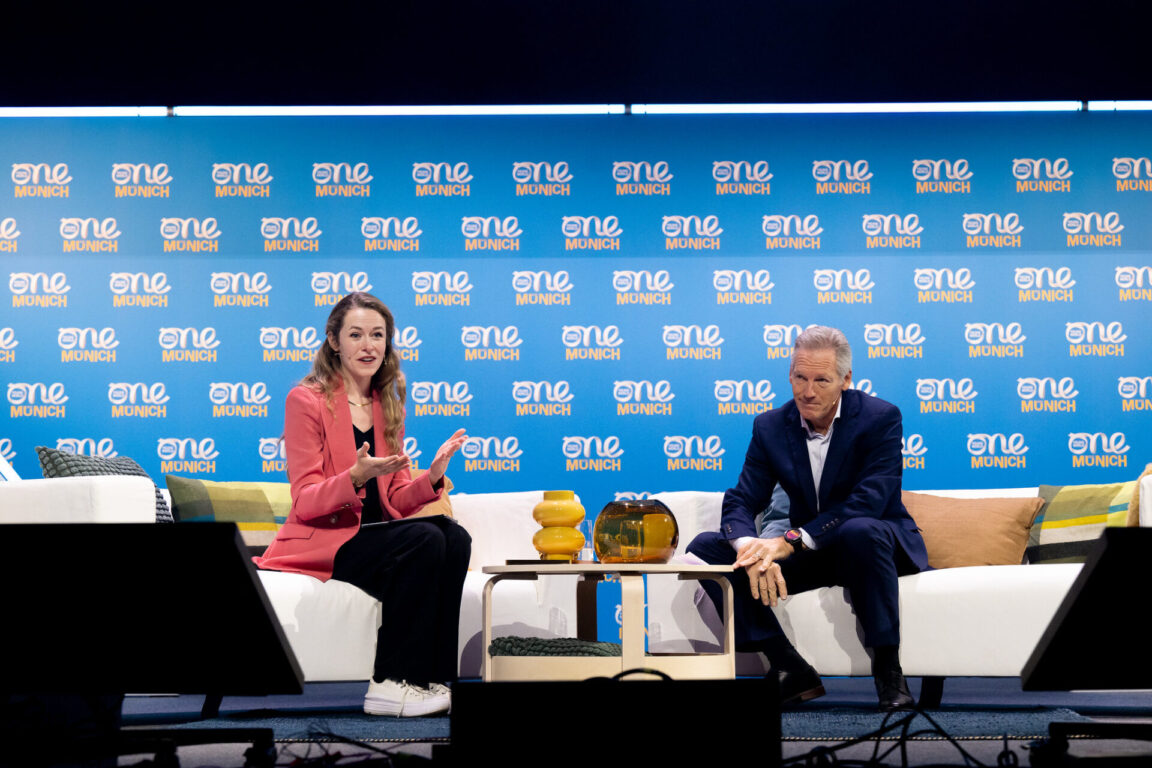
Giselle Gonzales & Gary Shaughnessy on stage at One Young World.
“I empathize with a lot of what HR leaders are going through right now. They’re seeing AI dramatically change the way they think about their workforce,” notes Gonzales.
“In that uncertainty, one of the benefits of a flexible project-based approach is they can have that ability to grow and change over time.”
One extra challenge for businesses, and leaders, right now is the political environment in the Western world is hostile to refugees.
For Gonzales, the key here is not seeing “this being a side CSR initiative”; if you do, then it is really easy for the programs to be swept aside.
She shares: “Let’s say an organization can’t explicitly support refugees or they have no social impact focus, we can still drive meaningful change while essentially using that opportunity as a Trojan horse to drive impact.”
Even when there’s no support from above, individuals can still step up.
With everything happening in the world, it’s important that we each take those opportunities to use our power and influence in businesses for good,” concludes Gonzales.