‘When leaders overlook culture or fail to invest in their people, trust erodes’: How SAP is boosting employee wellbeing
SAP Americas’ Head of People & Culture Megan Smith speaks exclusively to UNLEASH to share how the software giant is tacking employee wellbeing – from Mental Health First Aid training to creating people-centric workplaces.
Key takeaways for HR leaders
SAP has launched a number of wellbeing initiatives to boost employee’s mental health – including Mental Health First Aid training.
Speaking exclusively to UNLEASH, Megan Smith, Head of People & Culture at SAP Americas, explains how the business is working to better support employees.
Smith also highlights the importance of people-centric leadership, while advising leaders on how they can improve their approach to wellbeing.
HR departments are very much used to spinning multiple plates – having to manage compliance, performance, wellbeing, and transformation initiatives, all while keeping employees engaged.
For software giant SAP – which generated a revenue of €34.2 billion in 2024 – the top HR challenges have a common theme: aligning business goals, legal and financial requirements with the care and consistent treatment of people.
With around 110,000 employees, SAP has a diverse workforce with a wide range of perspectives, expectations, and needs, all of which must be supported as the business operates in an economic environment defined by uncertainty, rapid transformation, and volatility.
To learn how the business navigates these challenges, while simultaneously championing wellbeing, UNLEASH spoke exclusively to the SAP Americas’ Head of People & Culture, Megan Smith.
Boosting mental health at SAP
For Smith, a focal part of her role has been looking at how to make improvements in policy and practices that support employees, while still aligning with SAP’s future goals.
One way in which this has been initiated is through virtual and in-person Mental Health First Aid (MHFA) sessions across the US – in partnership with the National Council for Mental Wellbeing.
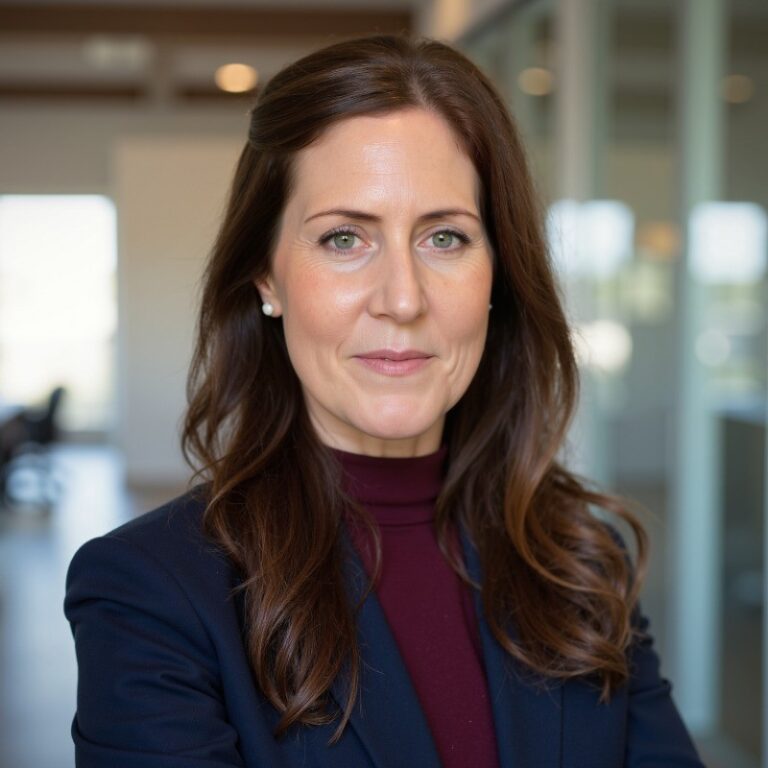
Megan Smith, Head of People & Culture, SAP Americas
MHFA is provided to employees to equip them with practical skills to better identify and respond to mental health challenges when they arise, while also providing SAP with a platform to start important conversations. Employees are also better equipped to spot signs of when a colleague might be struggling.
To increase this offering, SAP is working on a new initiative called ‘The Working Mind’, which shifts the focus inward to give employees the tools to better understand and support their own mental health – not just others’.
‘The Working Mind for Employees’ is a 5-hour certification course which enables employees to build resilience and foster a supportive workplace environment. Pilot offerings are now available for registration in the US in a virtual format.
Likewise, ‘The Working Mind for Managers’ is an 8-hour certification course that covers the same topics as the employee course, but includes an additional session to enable managers to support their teams with the same tools and strategies.
The initiative, which was first launched in Canada, has already created an impact, with Smith explaining: “Managers and employees have started to meet and discuss more regularly how we keep the importance of mental health top of mind, and report feeling more empowered and prepared with tools to help themselves and others.”
This being said, managing the success of wellbeing initiatives is complex and often hard to determine.
To gain a better understanding of employees’ mental health, SAP offers surveys to gauge how they are feeling about their health and the balance across work and personal life.
“We also go to offices, talk to managers, and have focus group conversations with our employee network groups,” Smith shares. “We look at how company changes are being received in the culture.
“Beyond anything internal, we know the geo-political, socio-economic background within a country or community plays a major role, so the external conditions are something we are highly attuned to as well.
“Even with all those indicators, I’d say we’re still on the journey of understanding how best to measure success in this area.”
Wellness perks, such as apps, gym memberships, mindfulness classes, are often offered by businesses to improve employee wellbeing – however Smith believes that these work more as pacifiers than solutions.
Wellness perks are helpful to support symptoms of stress and improve overall mood and health, but they don’t, in isolation, address the root causes of burnout,” she comments.
“Burnout often stems from workload, financial stress, or cultures where employees don’t feel safe setting boundaries or speaking up. These are factors influenced largely by leadership and culture.”
According to research from SAP SuccessFactors, 57% of employees feel that their burnout will not get better unless their company makes serious changes.
Smith therefore advises leaders to encourage open conversations and engage in empathetic listening, creating an environment for employees to feel supported.
“Offering both personalized and structured support for day-to-day challenges and long-term growth helps nurture a healthier and more resilient workforce,” she notes.
‘People are an organization’s most precious strength’
Although monitoring employee wellbeing is essential, it’s important that HR leaders acknowledge the impact having a people-centric workplace has on a culture.
For Smith, a people-centric workplace is where “wellbeing, health, safety, and inclusion are embedded in company practices and modeled from the top down.”
When this is in place, it sets a culture to serve as the “foundation for long-term business success” because when “people feel at their best, they perform at their best and want to grow with the company long-term.”
In order to achieve this type of culture, senior leaders need to see the importance of investing in people and culture, while also showcasing how employees’ wellbeing is directly tied to business performance.
“People are an organization’s most precious strength,” Smith explains.
“When employees are supported in their growth and equipped with the skills they need, they perform at their best.
“That translates directly into greater innovation and stronger business outcomes.
Investing in people and culture helps attract and retain talent, reduce turnover, and create a more engaged workforce that is prepared to navigate change.”
This is particularly important as leaders play a decisive role in shaping resilience.
For Smith, when leaders lead with empathy at the front of a challenge, by providing clarity in times of change, they help teams stay focused and confident.
“Leaders can create an environment where challenges are seen as opportunities to learn and adapt, which strengthens resilience across the organization,” she adds.
“But when leaders overlook culture or fail to invest in their people, trust erodes and morale suffers.
“Resilient leadership builds the foundation for organizations to thrive, not only today, but well into the future.
“It can be as simple as telling a team, ‘we got this – I know it’s tough, but we’ll get through this together’.”
Sharing her concluding thoughts, Smith shares that she wishes more leaders would realize that preventing burnout and supporting mental health is not just about offering resources, but “how leaders show up every day.”
She continues to explain that the behavior leader’s model sets the tone for their teams: whether people feel safe to set boundaries, take time to recharge, and speak openly about challenges.
“When challenges arise, how a leader handles it is observed by others, and this is then modeled across the organization,” Smith summarizes.
“When times are tough, is the focus on blame or how to collaborate to solve the issue and learn from it?
“Leaders send a powerful message when they model a measured approach to handling stress, regularly check in with employees, and get involved in building solutions.
When they take care of themselves as well in the process, it’s even more powerful. Wellbeing isn’t an afterthought, it’s essential to how the business succeeds.”