You can’t be successful with AI if you don’t have the right foundations, says KPMG’s Trusted AI Leader
There are lots of rewards from AI, but there are also significant risks. In an exclusive conversation with Samantha Gloede, Trusted AI Leader and newly appointed Global Head of Risk Services at consulting giant KPMG, UNLEASH explores how to find the “art of the possible” with AI, all while remaining responsible.
Expert Insight
When it comes to AI, “the way we think about it is, you can’t be bold with innovation and fast with accelerating adoption and recognition of ROI, if you don’t have the foundation”, Samantha Gloede, Global Head of Risk Services and Trusted AI Leader at KPMG, tells UNLEASH.
However, how do you build a responsible AI foundation?
UNLEASH unpacks this with Gloede in an exclusive conversation.
$38.4 billion revenue consulting giant KPMG is committed to being bold, fast and responsible with AI.
As KPMG’s Trusted AI Leader Samantha Gloede tells UNLEASH, the company is “leading by example; we’re taking this seriously ourselves”.
This triplet of bold, fast and responsible guides how KPMG’s 275,000 employees worldwide use AI in their day jobs.
However, it is also the foundation for how KPMG workers support and advise clients on the best ways to drive transformation in their own businesses.
When it comes to AI, “the way we think about it is, you can’t be bold with innovation and fast with accelerating adoption and recognition of ROI, if you don’t have the foundation”, notes Gloede.
As Gloede steps into an additional role – Global Head of Risk Services – at KPMG, UNLEASH sat down to discuss how the consulting giant is applying this trusted AI framework in reality (and how it is advising its customers on responsible AI use).
While there’s lots of positives with AI, there’s also a need for organizations to think carefully about the AI risks.
Want AI success? Bring employees on the journey with you
Underlying KPMG’s commitment to be bold, fast and responsible with AI is its trusted AI framework.
The core of the framework is human centricity – the consulting giant is “always making sure that we are thinking about humans and their role with AI”.
There’s a lot of fear around AI; Gloede believes that some of this comes from mistrust of the big AI firms – “they’re not very transparent in addressing the impact AI is going to have on the workforce”.
Therefore, there’s a responsibility for employers to step up and articulate that AI will provide the opportunity “to elevate the type of work they do”.
It can “remove the things that aren’t adding a lot of value”, thereby “freeing people up, and giving them access to tools that provide the insights to elevate what they do” – this enables workers to add more value and to be more strategic.
Gloede sees AI as “an evolution of the workforce” – “I don’t think there will be a need for less people”, instead, KPMG is thinking about how AI is going to change “the type of capabilities that we need”, and how that looks different for every part of business.
In a recent UNLEASH exclusive interview, KPMG’s AI Workforce Lead Niale Cleobury shares that the consulting giant has moved from saying to its workers ‘go and be great’ with AI, and is now working to apply AI to people’s individual roles.
KPMG has looked at “a lot of the work we do, breaking it down into individual tasks and activities”; this approach, for Cleobury, ensures that KPMG truly reaps the true value from AI for its people and its business.
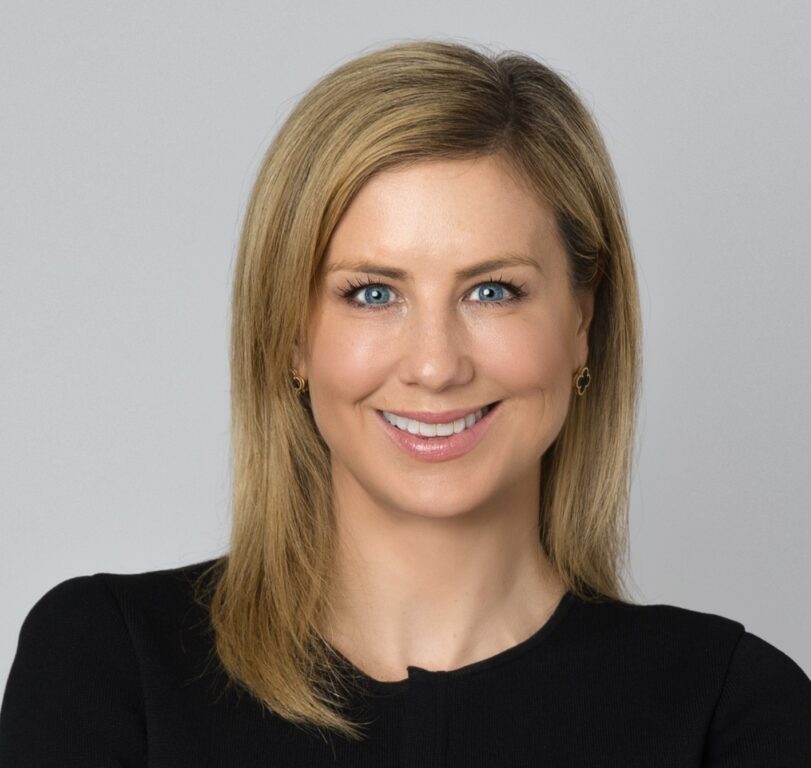
Samantha Gloede, Trusted AI leader and Global Head of Risk Services, KPMG.
The key to success around AI implementation is for “employees to feel like they’re part of that journey”, notes Gloede.
To do this, employers need to provide “the right training and literacy to help people use the tools” effectively in their roles, as well as to build their skills for the AI-powered future.
By focusing on skills, organizations can help build “the right level of transparency”, and ultimately “there will be less fear”, as it helps “people to prepare for what that change will be”.
KPMG takes this seriously, and is actually moving towards mandating foundational literacy of AI – this includes a focus on trusted AI, as well as “specific AI ethics courses” that walk employees through specific challenging scenarios.
In addition to that “foundational layer of literacy”, “we’ve also working it into all of the learning plans” to enable employees to truly make the most of AI in their roles.
Security of AI, security with AI, security from AI
With any technology, there are always risks around cybersecurity, privacy and data integrity.
AI is no different, but some of these more foundational risks can sometimes get overlooked, despite the fact that the “security threats are far more sophisticated – and can come from more directions”.
Given her new role as Global Head of Risk Services, UNLEASH was keen to find out Gloede’s advice to organizations and organizations around AI security risks.
The way our CISO talks about AI is security with AI – using AI to better secure the technology – security from AI – when AI is a threat [and] bad actors are using AI – and security of AI – making sure that your infrastructure is secure.
“It’s a really important three pronged approach to security,” notes Gloede.
This explains why KPMG’s AI framework suggest taking a “very holistic view of the risk ecosystem” – and that different stakeholders (from legal, HR, security, technology and beyond) to come together to manage AI governance.
At KPMG, “our AI governance is very multi-disciplinary. That’s definitely what we would recommend to our clients as well”, concludes Gloede.
The future of AI and risk at KPMG
It is clear that KPMG as an organization sees AI as a huge opportunity, but only if it is “deployed in a responsibly way”.
AI can really elevate “what we do to be much more transformational; driving growth, driving innovation, and driving enterprise value”, notes Gloede.
While workers are a key stakeholder in AI success at KPMG, Gloede is clear that top of her to-do list is to look at the services and solutions that the consulting giant offers to its clients – “how do we need to apply AI to them to make them fit for the future?”
There’s a lot of value that KPMG can offer to its clients in this period of disruption; the consulting giant sees its roles as helping “them figure out their risk business”, their workforce, their vendor partners, and their enterprise as a whole now and into the future.
Gloede sees KPMG as acting as an “ecosystem orchestrator” for all of this – “we understand their businesses deeply”, so the key is “helping them understand the art of the possible” with AI, and how they can drive through that transformation.
It may seem overwhelming – but in her new combined roles of Trusted AI Leader and Global Head of Risk Services, Gloede is “excited and ready for the challenge”.