LinkedIn Talent Connect: HR must adapt its mindset in the age of AI
UNLEASH attended LinkedIn’s Talent Connect United Kingdom. The importance of mindset, adaptability and storytelling were the key themes of the London event keynotes and UNLEASH’s exclusive interview with LinkedIn’s Head of Global Talent Acquisition, Erin Scruggs.
HR Leader Interview
Uncertainty has become the new normal; how must HR leaders respond?
Mindset is key. "The future belongs to those who adapt," noted adventurer Deborah Searle, during her keynote at LinkedIn Talent Connect.
Here are UNLEASH's top takeaways from the event.
HR and Talent leaders are grappling with unprecedented change – uncertainty has become the new normal and the labor market remains tight.
In challenging times it can be easy for leaders to sabotage themselves. What if leaders could have a different attitude, and back themselves instead?
“Mindset matters far more than we realize…it’s amazing how just one bold move, one bold decision, can unleash something in you that you didn’t even know was there.”
Those are the words of Deborah Searle, professional adventurer who famously rowed the Atlantic ocean alone, at LinkedIn’s Talent Connect United Kingdom event.
Searle added that while humans have a negativity bias, it is hugely impressive “how brilliantly the brain can adapt to phenomenal change and challenge.”
“Innovation and opportunities just don’t come from repeating past successes, they come from taking action while we’re outside of our comfort zone.”
“The future belongs to those who adapt.”
The challenge is knowing where to start. Vice-President, Head of Global Talent Acquisition at LinkedIn Erin Scruggs’ view is that HR leaders must “decide what are the biggest problems to solve.”
“There’s noise everywhere, but being really clear on what you are solving for, for who and why” is essential. “Then all other decisions can flow from that overarching narrative.”
Scruggs sat down with UNLEASH for an exclusive interview at LinkedIn Talent Connect; during the conversation, she shares how she is leading through uncertainty at LinkedIn.
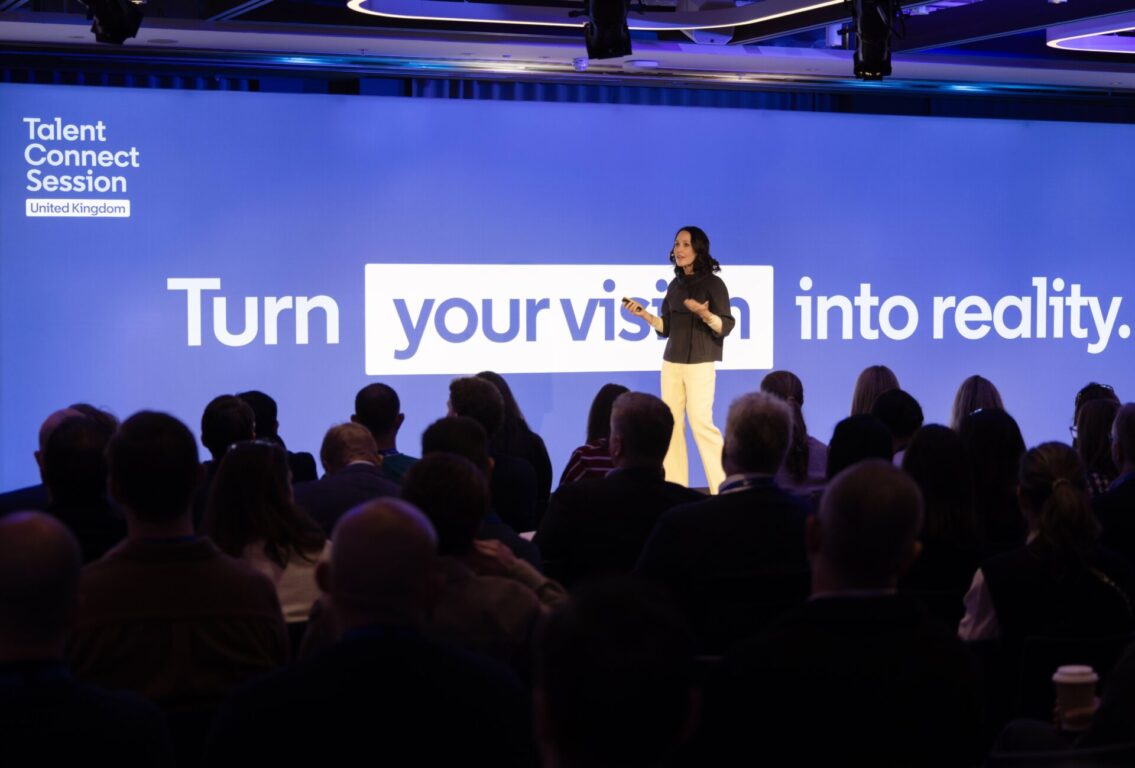
Erin Scruggs, Head of Global Talent Acquisition at LinkedIn, on stage at LinkedIn Talent Connect United Kingdom.
Why HR leaders need to master telling the AI story
In 2026, HR and Talent leaders need to accept that “everyone is going to have AI”– the decision now is “whether you’re able to change your workflows, you’re able to change how you work to make AI its most effective,” Scruggs tells UNLEASH.
“We talk all the time about the problems to be solved. When we look at our strategy for the year, what are the problems we need to solve? Where is the AI ready now? Where do things look promising with AI?”
Scruggs team, of course, use LinkedIn own Talent products, including LinkedIn Hiring Assistant which was showcased on the Talent Connect stage.
LinkedIn’s Talent team is already seeing significant time savings from Hiring Assistant – 1.5 hours per role – and Scruggs is excited for new features like Voice Screen to be available to her recruiters.
When it comes to tech tools, there’s a need for a new mindset when it comes to AI. Scruggs tells UNLEASH that we’re no longer living in the era of enterprise technology where “you went big and you would do a multi-year journey.” Instead “it is all three-month pilots, and we expect 50% of pilots to fail”.
Scruggs and LinkedIn are creating the conditions for these pilots to either be scaled or be a learning moment for the team. This requires “developing that tolerance, that appetite for change.”
This is in line what Amy Edmondson said on the UNLEASH America Main Stage – “the only way to make progress is through trial and failure.”
For Scruggs, embracing pilots enables her recruiters “to shape the future of our function” in collaboration with leaders – her call to action for Talent leaders is making sure they’re not implementing AI “from an ivory tower.”
Instead, they need to work with “the people on the frontlines who are telling you exactly what they need and why”.
Bringing people along on the journey also helps alleviate concerns about AI’s impact on recruiters’ jobs.
Searle noted in her keynote that if you’re not explicitly articulating what’s happening, people will fill the silence with their own fear and speculation.
“When people talk about what will happen to the role of recruiters,” Scruggs’ view is that “they will become stewards of the technology.”
“They might not spend their time sourcing, but they’re going to spend making sure that the technologies that we choose do it in a responsible and ethical way,” she adds.
Echoing takeaways from Microsoft’s Jaime Teevan’s keynote at UNLEASH America 2026, Scruggs is clear that “recruiters are ultimately accountable for the output, not the AI.”
To conclude, Scruggs tells UNLEASH that in this AI age, the key skill for HR leaders is to be “a master storyteller” both upwards to the C-Suite and downwards to employees.
They need to be articulate the “vision of what will change, for who, and why is that a better future to walk towards” for the business and the workforce alike.