Radisson CPO: ‘Our HR strategy is not just aligned with the business strategy – it enables it’
In an exclusive interview, UNLEASH sat down with Radisson’s Chief People & Resources Officer, Iñigo Capell, to discuss HR decision making (and why it goes hand in hand with business strategies) at the €1.3 billion-revenue hospitality giant.
CHRO Interview
At Radisson Hotel Group, data, not opinions, are the basis of decision making, both in HR and broadly across the business.
In this exclusive interview, UNLEASH sat down with Radisson's Chief People & Resources Officer, Iñigo Capell, to discuss HR and business strategies, and particularly why career development and AI are strategic levers for the hotel group.
Capell has a call to action for HR leaders: “Many people think that AI implies huge budgets” – “that’s not true”. “The only thing you need is curiosity.”
For Iñigo Capell, Chief People & Resources Officer at Radisson Hotel Group, what makes the €1.3 billion-revenue hospitality giant special is its ‘Yes I Can!’ ethos.
This attitude of service excellence is embodied by Radisson’s 75,000 people across 10 hotel brands, 1,520 hotels and 100 countries – and for Capell, Radisson’s Yes I Can mentality “makes our work super easy as HR professionals”.
In return, Radisson as a business genuinely prioritizes its team members.
Capell notes: “There is no business initiative that doesn’t have a strong people angle behind it”.
For Radisson, its employees are “a true enabler of accelerated growth”.
This means that “HR is an integral part of the business strategy…our HR strategy is not just aligned with the business strategy, it enables it”, notes Capell.
UNLEASH sat down with Capell for an exclusive interview to get the inside track on HR and strategic organizational decision making at Radisson.
Why decisions are based on data, ‘not opinions’ at Radisson
There are five core principles that guide Radisson’s global business strategy.
One is that all decisions made at Radisson are “based on data, not opinions,” explains Capell. The hotel giant has invested “time and money on standardizing [data],” as well as improving the quality of the data that drives its decision making.
“If every unit has their own processes, life is extremely difficult,” adds Capell.
Radisson’s data focus is enabled by the hotel group’s significant investment in technology since 2020; now, “we have access to an unprecedented level of people insights that guide everything we do”.
92% of Radisson’s processes are digitized, and Workday is the hotel giant’s tech core.
Capell and his team are impressed by the user experience of the Workday platform – it is also great on mobile, which is important given only 20% of employees have a work computer.
This plays into another two of the five guiding principles: “We serve our hotels” and “Technology and AI at the core”.
Capell tells UNLEASH: “Technology gives us an extraordinary opportunity to reach…every team member, everywhere in the world. Every tool, process or model we design must help our hotels deliver exceptional service.”
Radisson is a mature Workday user – “we have expanded into some areas where not so many companies have gone”.
For instance, the hotel group’s 75,000 employees use Workday to schedule shifts, as well as clock in and clock out, seamlessly. The business also has better ability to “forecast productivity”.
This is much more efficient than using WhatsApp to swap shifts – which was time consuming, complicated and lacked organizational visibility.
It was a tough implementation because of “specific local legislation and hotel rules, but we feel extremely proud of the work we’ve done in the last four years to bring people value and business value to the organization”.
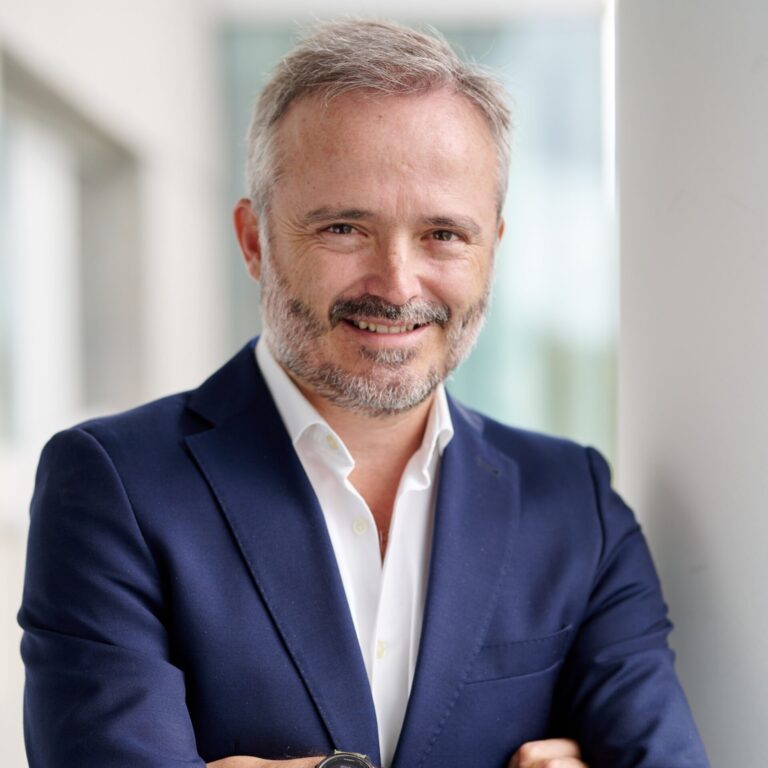
Iñigo Capell, Chief People & Resources Officer, Radisson Hotel Group
Radisson also leverages Workday for its performance and development approach. The hotel group has drastically simplified its method to be more practical, human and gamified “so it works for frontline teams as well as corporate roles.”
This is echoes the fourth of the five guiding principles: “Less is more.”
“We are obsessed with simplicity – that means removing complexity, not adding it, and making our people’s lives easier,” adds Capell.
While the final principle is to have “global DNA” – HR approaches are designed to work everywhere; Radisson might operate in 100 countries, but “we need one model and one identity, not a federation of local systems”.
Capell’s advice to his HR peers is to have standardized processes – “if every unit has their own processes, life is extremely difficult” – HR needs to invest money and time in standardizing data if it wants to make better decisions.
‘Our biggest responsibility is to secure the best careers’ for employees
Radisson’s core cultural belief is that ‘we grow talent, talent grows us’ – this explains why learning and development are a strategic lever for HR and the wider business.
Capell shares: “Careers are one of our CEO [Federico J González]’s first priorities – he always says that our biggest responsibility is to secure the best careers for our team members.”
Radisson doesn’t just talk the talk; the hotel giant walks the walk on learning and development.
In 2024, 95% of team members had an individual development plan for their careers, while in 2025, across the organization, more than 1 million learnings were completed, and employees achieved 8.5 million learning hours. The average rating of courses was 4.87 out of 5.
To add to this, Radisson has a 91% employee engagement score (which is 18% higher than the industry average).
Capell tells UNLEASH that the challenge is that too often people start in Operations, for example, and then stay in that function: they struggle to see the opportunities to move internally, so they leave for other companies.
“We want to foster functional mobility”, and to do that, “we need to take risks on people”.
I personally believe that 20 years ago, our leaders took more risks on talented people who want to accelerate their careers” than they do today.
To support learning and support, Radisson has multiple initiatives – Career Fest stands out for Capell.
Career Fest is about giving talent the opportunity to learn about different roles, functions and career pathways within Radisson. It includes leaders talking about pivot journeys, as well as workshops where individuals can explore their own career paths.
For the first time in 2025, Career Fest was opened up to external talent and more than 15,000 people registered. As a result of the initiative, 11,800 people applied to be in the Radisson talent pool with 66% expressing interest in job opportunities at the hotel giant.
Career Fest happened online because “technology allows us to reach everybody”, and Radisson created a special online hub to host the event for internal and external talent.
AI and the future of work at Radisson
Two years ago, Radisson started to adopt AI within its organization by rolling out Microsoft Copilot licenses, but didn’t stop there. Radisson also leaned into its learning foundation and provided specific AI training to its workers.
AI is also helping the HR team to create learning content “much faster and more efficiently: simplifying messages, supporting course development, and accelerating the production of learning materials”.
It is easy to see where head office roles like HR can leverage AI – but where does AI fit into the working lives of the majority of Radisson’s employees are on the frontline working in a hotel?
“All functions are spending a lot of time understanding how AI can help us transform our day to day,” notes Cappell.
He shares that Radisson has identified 150 AI-driven initiatives across the businesses discovered by “the curiosity” of Radisson employees and the result of Copilot trainings.
When it comes to guest-facing roles, the core AI use case is that “it will allow our team members to spend more time with our guests.” This is not about raw financial efficiency, but about guest experiences.
“When you’re at a hotel, the check-in process is where you have someone looking at a keyboard, typing like crazy the data they need” because “there are legal regulations in most countries that hotels need to register all this data”.
Then “there’s a guest – and many times a line of guests – [waiting] to check in”.
With the help of AI, “this will improve significantly – it will be a conversation; everything will be by voice”. “Our team members will have the opportunity to look into the eyes of our guests and have a nice conversation”, rather than having to spend time typing.
Capell is clear that AI “improves productivity” and will “allow all of us to be much better, to significantly improve our processes, and to have the time to spend on really adding value to activities”.
A key learning for Capell as Radisson has embraced AI over the past two years has been that “many people think that AI implies huge budgets” – “that’s not true”.
When it comes to AI, “the only thing you need is curiosity.” Therefore, Capell’s advice to his HR peers struggling with AI adoption is to “foster curiosity across the organization”.
AI is taking center stage at UNLEASH America 2026 in Las Vegas. Leading academics and executives from the brands like Microsoft, Kyndryl, Coca-Cola and SAP will be sharing how to make the best business decisions when it comes to AI. It’s not too late to join us March 17-19.