EZRA: Empathy at work is a recipe for business success
UNLEASH attended EZRA Hosts in London, and heard from politicians, academics, and HR leaders about why rethinking power, leaning into human skills in this age of AI, and embracing empathy are key to success. Check out our takeaways from the event, including exclusive interviews with EZRA’s CEO and Chief Innovation Officer.
Event Insights
UNLEASH was invited to an event hosted by coaching giant EZRA in London all about power, redefined, and the need to lean into empathy.
Featuring sessions from Jacinda Ardern, former Prime Minister of New Zealand, as well as leading figures in the world of HR and academia, UNLEASH has pulled together our highlights of the event.
Read on to find out how AI fits into this conversation.
Founded in 2019, EZRA Coaching started with a belief that “everyone in the world will be better if they have a coach”.
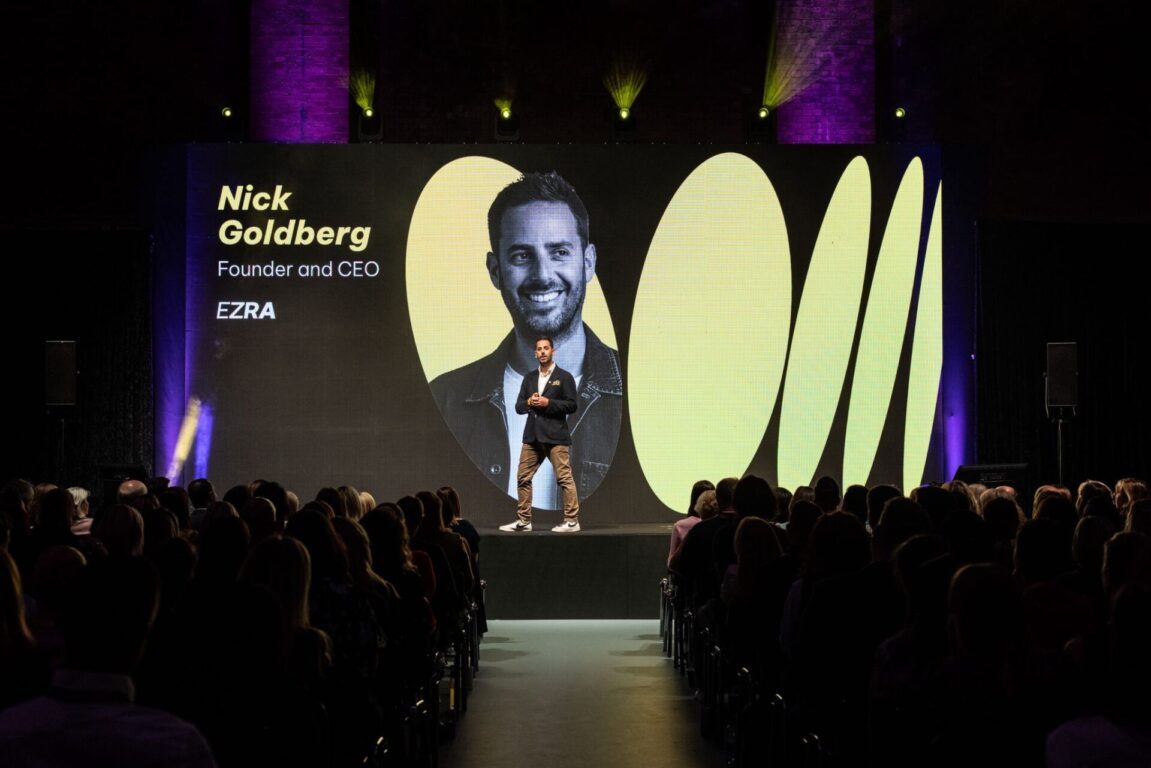
That’s how CEO & Founder Nick Goldberg kicked off the coaching giant’s EZRA Hosts event in London.
The event brought together top minds from the world of politics, academia and HR to discuss how to turn empathy into action, and redefine the very concept of power.
UNLEASH was in the audience at EZRA Hosts, listening and learning. We were treated to sessions and insights from former New Zealand Prime Minister Jacinda Ardern, University of Toronto’s Dr Haesun Moon, and HR leaders from British Airways, ServiceNow, Eli Lilly and PepsiCo.
Let’s dig into the highlights of the event.
Empathy as a strategic advantage
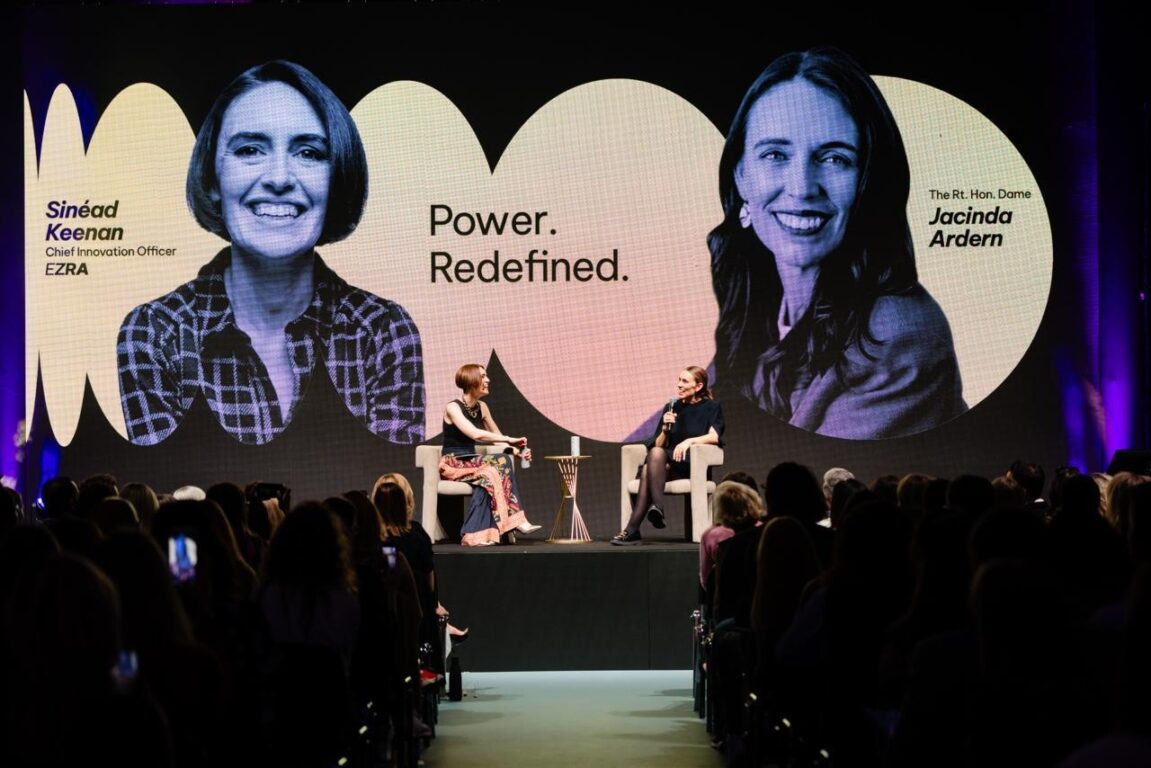
During a fireside chat with EZRA’s Chief Innovation Officer Sinead Keenan, Ardern reflected on her time as Prime Minister of New Zealand during particularly challenging times – think a pandemic, a terrorist attack and a natural disaster.
She shared that being kind and strong are not opposites – in fact, they are complimentary. Often what we think of as weaknesses are actually our greatest strengths, noted Ardern.
Clearly, leading with kindness, compassion and empathy is a recipe for success.
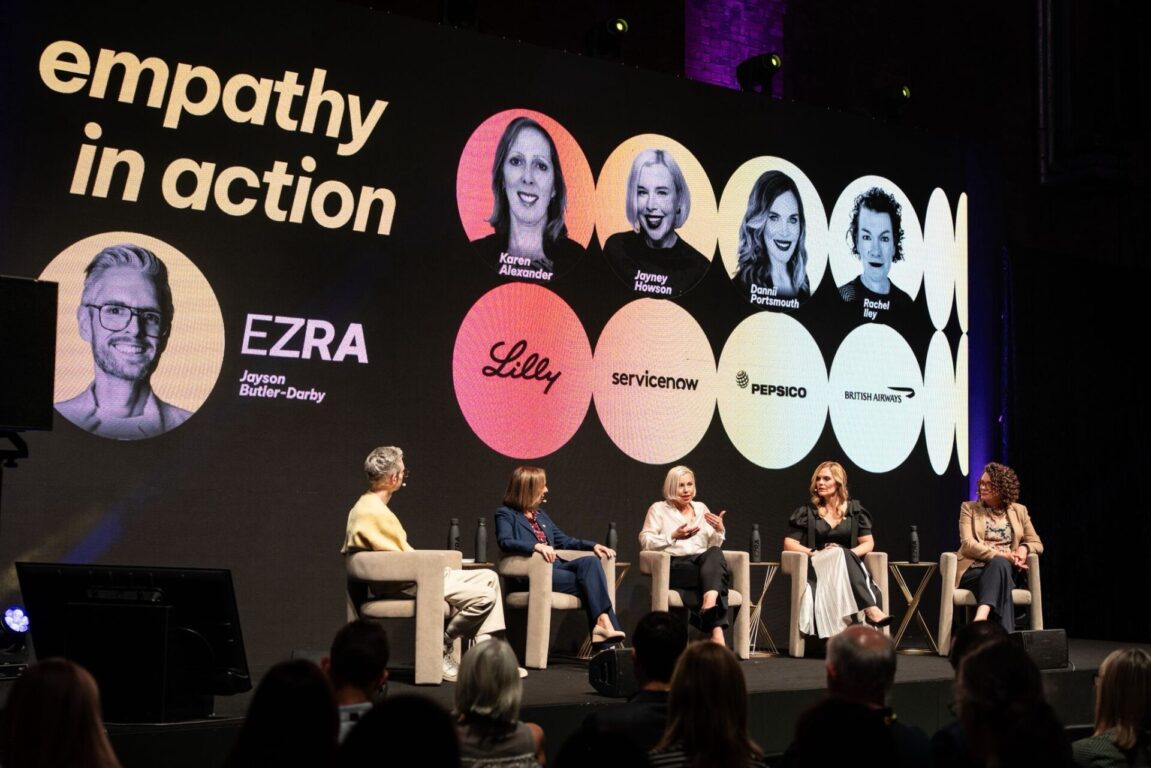
This theme was core to a HR leader panel at EZRA Hosts.
Credit: EZRA Coaching.
Karen Alexander, VP of HR, Northern European Hub, at pharma giant Eli Lilly shared a story of stepping out of her comfort zone when she took on a new role earlier in her career.
“I was able to work with some really amazing leaders who enabled me to have the space to be who I needed to be” – “they cared, they supported”, and they owned an empathetic leadership style that helped to “unleash potential”. Alexander stated that this has inspired how she thinks about leadership.
Jayney Howson, SVP and Head of Global Learning & Development at ServiceNow, added that the tech giant is really leaning into the perspective that mistakes happen.
This links back to Ardern’s comments on breaking the stigma around saying ‘I don’t know’ – it is okay to not have all the answers, the important part is having a plan to make progress.
The key is not avoiding mistakes – as Dr Haesun Moon shared: As humans, we all make mistakes – instead, it is about learning from them.
This can be a challenge because many leaders have built “their careers on never making a mistake”. Instead, they need to lean into empathy, curiosity, courage, and communication.
Human skills was something that was picked up by British Airways’ Director of Global Learning Academy Rachel Iley.
Despite a challenging economic situation, the airline took a bet during COVID-19 on a learning program focused on human skills – not technical ones.
The results four years later have been “incredible”, stated Iley. Trust in leadership is up, people are engaged, and the airline has started rethinking performance about not just what you deliver, but how you deliver it.
PepsiCo EMEA’s CPO, Dannii Portsmouth, was also on the panel, and she talked about the food & drinks giant’s partnership with TENT Partnership for Refugees.
PepsiCo has a mentorship program – a 90 day commitment – for refugees – “every person who entered this program as a mentor will tell you that they took away more than the person they were mentoring”.
It has changed how they show up at work, and how they think about leadership.
“We’re constantly looking at how can we find ways that inject that energy, that engagement”.
“Every day I wake up and decide I’m going to give my time to PepsiCo”, that isn’t guaranteed tomorrow. Leaders need to be aware of this – this is not the time to be complacent.
Credit: EZRA Coaching.
AI as a workplace disruptor – what’s the solution?
ServiceNow’s Howson also talked about the HR topic of the moment: AI.
She stated that everyone has been massively disrupted by AI in the world of work.
In thinking about AI at work, ServiceNow’s number one principle is to becoming “more deeply human in this journey” – “we all know how important human connection is, and we need to bring that through”.
AI was also a topic noted in exclusive UNLEASH interviews with EZRA’s CEO Nick Goldberg and Chief Innovation Officer Sinead Keenan in exclusive interviews.
Credit: EZRA Coaching.
Goldberg tells UNLEASH: “A lot of our clients are very big companies; they’ve been very comfortable for a very long time” – AI is disrupting that.
These enterprise companies have bought an AI tool for the whole company that could really drive productivity, efficiency and strategic work. “The challenge they’re having is that people aren’t adopting it.”
They don’t know how to use it, they are fearful of their jobs (and for the future of their teams).
As a result, EZRA is finding that their customers are coming to them to ask “how can you help our people their mindset” and embrace the technology?
While EZRA does have an AI component to its coaching platform – an assistant known as Cai – the focus here is about “how a human coach can focus you to have the right mindset to use AI”, adds Keenan.
Supporting AI adoption and transformation is a “novel use case for coaching”.
Keenan tells UNLEASH that the data shows coaching has a real multiplier effect – “ you coach your leaders on how to get the best out of their teams”, and that drives up performance, retention and engagement.
This fact is her advice for HR leaders on how to continue to make a business case for coaching in a challenging budgetary environment.
Goldberg also calls on HR leaders to focused on the data behind coaching if they want to make the business case.
They need to talk about the “why”; “don’t start any program without an objective and a business problem to solve in mind”, he tells UNLEASH.
The future of learning, coaching and AI
EZRA prides itself on its ability combine great human interactions through coaching with top level technology to “democratize and make it [coaching] scalable”, according to Goldberg.
How is the coaching company continuing to innovate to meet the needs of its 100s of enterprise customers globally? What’s top of EZRA’s to-do list for the rest of 2025, and looking ahead to 2030?
Goldberg tells UNLEASH that EZRA will be looking at the AI data, and then doubling down and continuing to invest.
There’s a need to move to agentic AI, “where it knows everything that you do, and it’s in your pocket”.
What Goldberg is clear about is that “there’s no point building something to compete with Microsoft Copilot or ChatGPT” – “we’ve got to build something that’s different”, that draws on EZRA’s specific data and understanding on coaching and learning.
Beyond AI, Keenan shares that EZRA is also thinking outside the box on social and group learning.
“One-to-one is our center of gravity – that’s where we think transformation truly happens”, but that doesn’t mean that organizations don’t need more support on driving high-performance teams through different approaches.