Virgin Hyperloop cuts 50% of staff
This comes amid a change in direction for the transportation company.
Why You Should Care
Virgin Hyperloop has shifted its business from passengers to cargo.
And so it has laid off 111 workers or 50% of its workforce.
What will the future hold for Sir Richard Branson's company?
While Sir Richard Branson’s entrepreneurial focus started with music back in the 1970s, transportation has become a core focus of the British billionaire’s Virgin Group.
He has stakes in the train, airline, and space flight sectors through Virgin Trains, Virgin Atlantic, and Virgin Galactic. Back in 2021, Branson became the first billionaire to reach the edge of space – he beat Amazon’s Jeff Bezos by a few days.
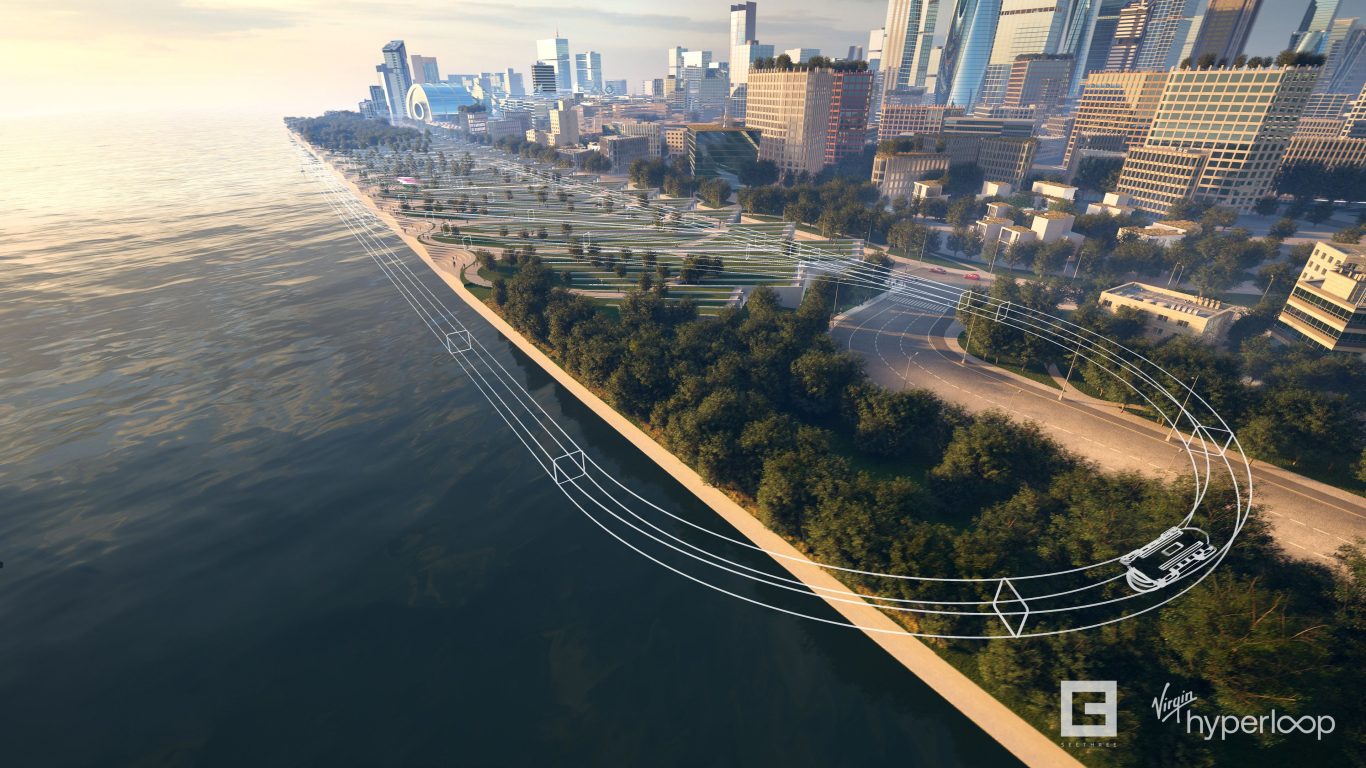
However, another transportation company in the Virgin Group is Virgin Hyperloop, which aims to rely on vacuum tubes and magnetic railway technology to transport passengers at a whopping 670 mph.

Credit: Virgin Hyperloop.
After a rocky year, which saw the departure of Virgin Hyperloop’s founder and CEO Josh Giegel and a “talent flight” of other senior executives, the company has now changed direction from passengers to freight.
As a result, it has laid off 111 people – this is approximately 50% of its staff. It is believed that this was done via video call.
Virgin Hyperloop told the FT: “It’s allowing the company to respond in a more agile and nimble way and in a more cost-efficient manner. These types of decisions are never taken lightly.”
The company added that the change of direction comes on the back of “global supply chain issues and all the changes due to COVID-19”.
The future of Virgin Hyperloop
Virgin Hyperloop’s main investors beyond the Virgin Group include Saudi Arabia’s government-owned DP World. There is a concern that the change of direction from passengers to cargo could put its only contract – which happens to be with the Saudi government – under threat.
Virgin Hyperloop has emphasized that it aims to reinvest profits from the cargo version of the transportation into a revamped passenger model.
“It’s abundantly clear that potential customers are interested in cargo, while passenger is somewhat farther away,” DP World told the FT.
“Focusing on pallets is easier to do — there is less risk for passengers and less of a regulatory process.”
The FT reported that DP World is already discussing with 15 customers about this new cargo-focused hyperloop product.
It also seems that the Virgin Group also remained on board despite the change away from passenger transport, which it prioritizes on Virgin Galactic and Virgin Atlantic.
Credit: Virgin Hyperloop.
What about Virgin Hyperloop’s status as an employer? Like Peloton, which also announced mass lay offs, it is crucial that the company ensures that existing employees know their jobs are safe and protected, as well as understand whether Virgin Hyperloop will now be advertising new jobs.
Only time will tell if this change in direction is good for the company.
UNLEASH has reached out to Virgin Hyperloop for comment, but is yet to receive a reply.