‘Our talent differentiates us’: How TruStage is leaning into the employee experience
When strategy and HR align at US insurance provider TruStage, talent experience is seen not just as a priority, but a business differentiator. UNLEASH speaks to Chief Strategy & Human Resources Officer, Linda Nedelcoff, to get the full story.
HR Leader Insight
Insurance and financial services provider TruStage, which recorded $5.6 billion in 2024 revenues, is leaning into the power of talent as a strategic differentiator.
Chief Strategy & Human Resources Officer, Linda Nedelcoff, details how the 90-year business is focused on talent experience both now and going forward in an exclusive UNLEASH interview.
Read on to find out how TruStage’s employee engagement and experience strategy is informed by its customer playbook and focusing on the capabilities needed to scale intimacy in the age of AI.
HR is rapidly moving to become both a driver of organizational strategy and a strategic business advisor, particularly in the context of AI-powered work.
Despite this, it’s not often you will see Strategy sit alongside HR in C-Suite job titles – unless you’re familiar with US-based insurance and financial services provider, TruStage and Linda Nedelcoff.
Her role as Chief Strategy & Human Resources Officer is evidence of what she describes as “a representation of how TruStage leans into talent and people resources as a part of our strategic differentiator”.
“I believe our talent is a piece that does differentiate us. The fact that strategy and talent sit together, along with communications and corporate social responsibility, is also an indicator of how TruStage views people resources,” she says.
UNLEASH sits down for an in-depth interview with Nedelcoff to learn more about how TruStage is leaning into its employee engagement and experience strategy by taking a leaf out of its customer playbook and focusing on what it takes to scale intimacy and skills in the age of AI.
Adapting the customer playbook for employee experience
TruStage rebranded from CUNA Mutual Group in March 2023 and welcomed a new CEO towards the end of that same year, heralding a new way of operating for the organization beyond a new logo and color palette.
The business has been in operation for 90 years and Nedelcoff explains that some of the work that’s “a focal point within Human Resources, for the latter half of 2025 has really been a continuation of the talent imperative and around leadership capabilities, building the opportunity for us to operate as one TruStage”.
Throughout this period of transformation Nedelcoff and the wider business is “conscious about bringing our employees along and creating a vision for what the future holds, even in the midst of knowing that things are changing for them”.
The key to putting employee experience and employee engagement at the center of everything the business does, she says, lies in the consistency of the customer base TruStage has served over its 90-year existence.
One of the things that I think differentiates us at the enterprise level is that we try to listen and think about that customer, so we’ve tried to lean into that on the employee side,” she tells UNLEASH.
“Obviously, when you have 3,900 employees you can’t meet everybody’s needs, but we’ve leaned into things like employee personas, which we know is really important in our customer journeys.”
Meanwhile, TruStage has also expanded its engagement resources groups to 13, which help to inform decision making around employee benefits, experiences, investments in learning and development.
“They also help us to make decisions around the products and services that we offer, because they’re a representation of that market community,” Nedelcoff explains.
Scaling intimacy from core to individual
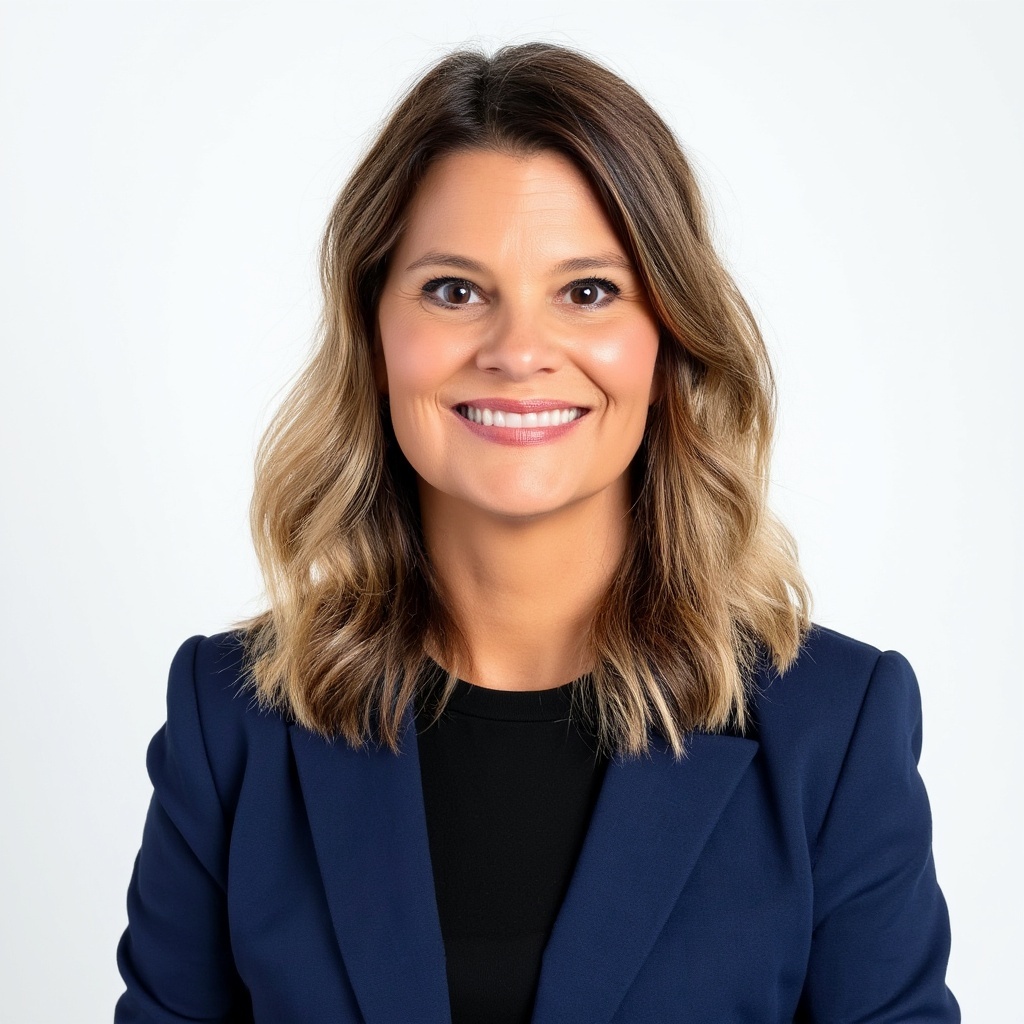
Linda Nedelcoff, Chief Strategy & Human Resources Officer at TruStage
Part of “leaning in to knowing the employee” is the ongoing AI evolution, Nedelcoff says. This will allow TruStage “to scale intimacy in a way that organizations and HR hasn’t been able to in the past, because scale and intimacy were in contrast with one another”.
She adds that these digital capabilities will allow the organization to “use the insights and the information we have to train it based on – our cultural characteristics and who we are as an organization” – to delve deeper into employee needs.”
“We learned through our caregivers engagement resource group – and obviously this is not a unique trend to us – this construct of trying to manage work and factors that are happening outside of work, with your family, is such an important stressor that we needed to understand,” she explains.
Similarly to other organizations, TruStage partnered with service providers to help target specific areas of concern among its workforce, deploying the Homethrive wellbeing concierge service and extending access to Sunny Day Fund, a financial wellness platform aimed at helping workers save for positive financial goals, as an employee benefit.
“Those benefits emerged through insights and information that we gathered through our engagement resource groups, as well as the personas that we were seeing across the different life stages of our employees,” Nedelcoff underlines.
She explains that the organization’s customer base can also inform its talent strategies based on multigenerational differences, which she describes as “the same issues, different zip code”.
This means there are a set of “core common experiences” that are consistent throughout both groups, that align “to our values and our behaviors and our cultural characteristics”, such as access to feedback, coaching, resources and benefits.
The challenge, Nedelcoff details, comes in customizing for individual needs, stating that “figuring out how we can have even more intimacy, rather than trying to go there all at once.
We’re trying to get commonality in the core spaces and then figure out what are the pieces that that are different. Career development is a perfect example, as is learning and development.”
Aligning skills with the business strategy
TruStage is not just looking at the talent experience in the present but for the future of work as well. With the rapid evolution of enterprise AI and ongoing paradigm shifts in how work is done, Nedelcoff explains that organizations cannot afford to stand still when it comes to what’s needed.
“We know that there’s different skills and capabilities that we’re going to need in the future, and we know that it’s an important opportunity for us to invest in our employees,” she says.
We’ve been through some transformational changes to reset us relative to our organizational priorities, and so we’ve been over the last 14-16 months, really trying to deep dive into this investment into our employees and their development.”
One specific area TruStage has invested in is data, again leaning into the fact that “we believe that we know and serve our market extremely well,” something Nedelcoff says is “critical for us and we feel strongly about.”
While the term has a broad definition, she explains that the importance of data is critical to TruStage as a market differentiator and so too must the talent strategy and skills follow suit “from a priority standpoint, versus trying to broadly just pick a variety of skills to develop and grow”.
“The team worked closely with the data business areas to understand what the competencies, knowledge, capabilities and experiences are that employees needed, and then we built a curriculum around data,” she says.
Talent experience in the age of AI
HR leaders and workers alike are having to adapt to new ways of working through the introduction of AI, while also being aware of the impact the technology can have on employee experience.
Nedelcoff acknowledges that there is hesitancy for some employees about this trend, but that it is important for the organization to be “transparent, open, empathetic and recognize that it’s a change” while also generating excitement about AI’s impact.
Like many other organizations, TruStage has developed its own internal GPT system to acclimatize employees to using AI in a controlled setting – a significant consideration as a highly-regulated financial services organization.
“We want our employees to acknowledge that [AI] doesn’t just have to be a single dimension. It doesn’t just have to be these jobs and tasks going away; it can really enrich it,” she explains.
Again, Nedelcoff comes back to the relationship with the organization’s customers as a guiding path for how employees can think about their own roles and careers in the context of AI.
“When we think customer as it relates to their interaction with AI, it’s less about what’s happening with worker’s roles, what’s changing with their responsibilities, but how they are responding to the customer needs, as that identifies their work.”
People still remain central the way the business develops though, she adds, with AI acting as an enabler of human connections and learning, particularly having built programs, learning cohorts and leadership opportunities aligned with the founding ethos of the organization – people helping people.
“Those are the things that we’re investing in right now as we think about the future. We always try to tie it back not just to the modern trend, but back to the core; our purpose, our mission,” Nedelcoff concludes.
We’ve been so strong for 90 years. How do we lean into that anchor as we think about the next 90 years?”