KPMG: ‘If you’re not turning up as a strategic advisor with a load of agents behind you, then you’re not going to be competitive’
UNLEASH sits down with Niale Cleobury, AI Workforce Lead at KPMG, to find out about his new role and what it means for the future of AI at the consulting giant. What responsibilities does HR have in the AI-powered world of work?
HR Leader Insight
KPMG is ahead of the curve on AI - the $38.4 billion revenue professional services giant is moving from an experimental phase to really reaping the value from the technology.
UNLEASH spoke with Niale Cleobury as he steps into the AI Workforce Lead role at KPMG about the future of AI and HR for the consulting giant.
Read on to find out why Cleobury believes HR has a huge opportunity to lead with AI (albeit in partnership with IT).
Having spent his career in professional services advising clients on HR transformation, Niale Cleobury is now bringing this expertise to a new role at KPMG International.
He is becoming Global AI workforce Lead and now bridges the internal and external HR focus of the $38.4 billion revenue consulting giant.
His appointment comes at a pivotal moment.
For Cleobury, AI transformation is fundamentally different traditional SaaS implementation; “AI poses very different questions to what we pose when we go in and get people to move HR data from Excel sheets into a system”.
Historically, professional services companies often did not walk the walk; what they advised companies to do was not necessarily what they did themselves.
“With AI, we’ve really had to switch that on its head” – “if we’re going to our clients to help them innovate in a very new space, we have to be doing that ourselves”.
“We have to have that culture internally of getting hands-on with AI,” continues Cleobury.
As he takes on this Global AI Workforce Lead role, as well as becomes KPMG’s go-to person on all things HR for the consulting giant’s 275,000 employees worldwide, UNLEASH sat down with Cleobury.
How does bringing a client-facing, tech-first approach to HR help move the needle on AI?
KPMG on getting ‘true value’ from AI
“We’re really proud of what we’ve achieved so far internally,” Cleobury tells UNLEASH.
Adoption has happened because KPMG has “been really positive about it”, encouraging those who are excited to experiment and find use cases where AI can move the needle.
The challenge has then been getting leaders to “champion that effort”, and recognize those who are “really pushing the boundaries” and “sharing the good news stories”.
While KPMG has built a great AI foundation, it’s time for the consulting giant to come out of the “experimental phase” of figuring how AI works.
The next phase is about “how we get to true value”.
“We’ve done the scattergun approach” – getting tools into the organization, using them.
However, now, KPMG wants to move beyond that; “we want specific, innovative use cases” – they need to be specific enough that the outcome can be measured, and innovative enough that they drive change.
Rather than saying to employees “go and be great” with AI, leaders need to be more specific, and say how they should be using AI in their specific roles.
AI success comes from transforming the ‘people layer’
In Cleobury’s view, the value from AI comes from the “people layer” – “it needs to change what those people are doing enough to create value”.
“It is about getting our people the right tools to get their jobs done more effectively” – whether that’s Microsoft Copilot or KPMG’s own tools like an LLM called Ava or new AI agents.
Until the people layer transforms, we’ve just got people with a bit more capacity on their hands.”
As a result, KPMG is looking at “a lot of the work we do, breaking it down into individual tasks and activities into the key services that we deliver, and seeing where agents can really come in”.
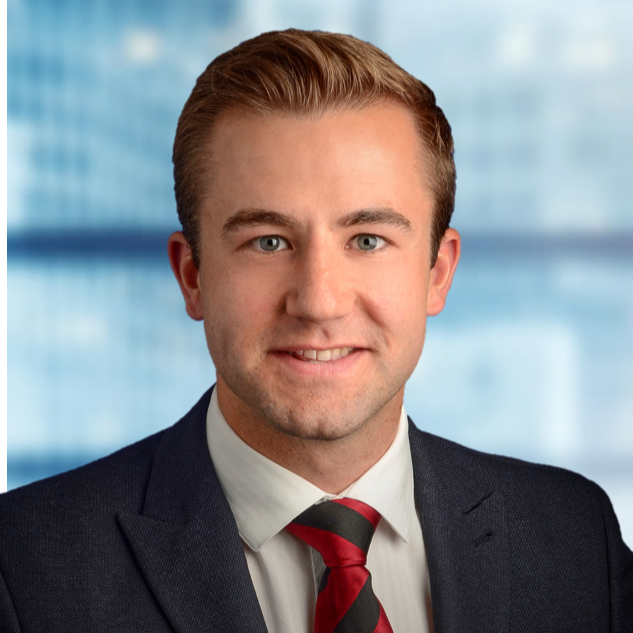
Niale Cleobury, Global AI Workforce Lead, KPMG International.
The consulting giant is also helping its clients with this type of work too through its AI Opportunity Assessment Tool.
“We input our clients’ HR data” – the tool then looks at the tasks in the role, and looks at AI use cases, and can suggest capacity savings if you apply that use case.
“We can actually look across the whole organization and say, here are your ‘no regret bets’”; this helps to quantify which investment cases are the right ones for that organization.
KPMG can also take this further to predict “what does my future organization look like if I was applying these use cases”, and then feed that into strategy conversations.
Ultimately, for Cleobury and KPMG, the golden promise of AI is that it’ll completely transform the future of consulting, and turn “us all back into being that strategic advisor”.
“We want to build agents that are basically downloads of the knowledge that we have”, then they can all the work in the background while humans are in “the forefront”, supporting clients in making those big, strategic decisions.
If you’re not turning up to a client as a strategic advisor with a load of agents behind you helping you to do the work, then you’re not going to be effective or competitive.”
The AI-powered future of HR at KPMG
Given his new role as AI Workforce Lead, UNLEASH was keen to find out what is top of Cleobury’s to-do list.
“The upskilling agenda” is top of mind. The learning conversation is only gaining momentum as new AI technology comes out, both internally with KPMG employees and externally with clients.
There’s increasing awareness that “we’ve got a big skills issue on our hands if we don’t start acting soon”, Cleobury tells UNLEASH.
Organizations need to understand the skills they have now, and the skills they’re going to need in the future – AI can help move the needle so employers have greater visibility here.
KPMG is investing in a lot of learning tools, particularly those that drive more personalized, on-demand learning.
One example that Cleobury shares is called Spark, which a tool that integrates into Microsoft Teams. Employees can just ask it a question to help them prep for a meeting, and it can pick out the right training plans for the specific need.
Beyond learning, Cleobury wants to “build more agents” – “we’ve been really successful so far…we want to do more with that” in order to better support clients.
He believes that the “workforce of the future will be agents and people”.
“We’re looking at a future where AI is going to be able to do a lot of the work that’s currently done” – however, “there will always be a very, very important position for people within the organization”.
This moment is, therefore, a huge opportunity for the HR function, in Cleobury’s view.
“HR has really picked up the baton of AI” – they’re running with it, but there’s more progress to be made.
“I want to see HR actually turn around and work with technology departments” to really configure what are the roles for people, and what are the roles for AI.
“Where do we want people to drive good results?” “Where is it best to have people do what people do best: collaborating, communicating, informing?”
Importantly for Cleobury, especially from his client-facing, tech-first HR perspective, HR must work really closely with the IT department.
There needs to be a “pinball effect” between HR and IT in this future of work. “There’s so much synergy between the two departments” – some organizations, notably pharma giant Moderna, have gone so far to merge the two together.
HR, “if you’re not merging with your tech department, you better be good friends with them”, concludes Cleobury.
AI is going to take center stage at UNLEASH World, 20 to 22 October – it’s not too late to join us in Paris!