
The Adecco Group’s Daniela Seabrook says HR shouldn’t own workforce planning alone. Here’s why.
October 8, 2026

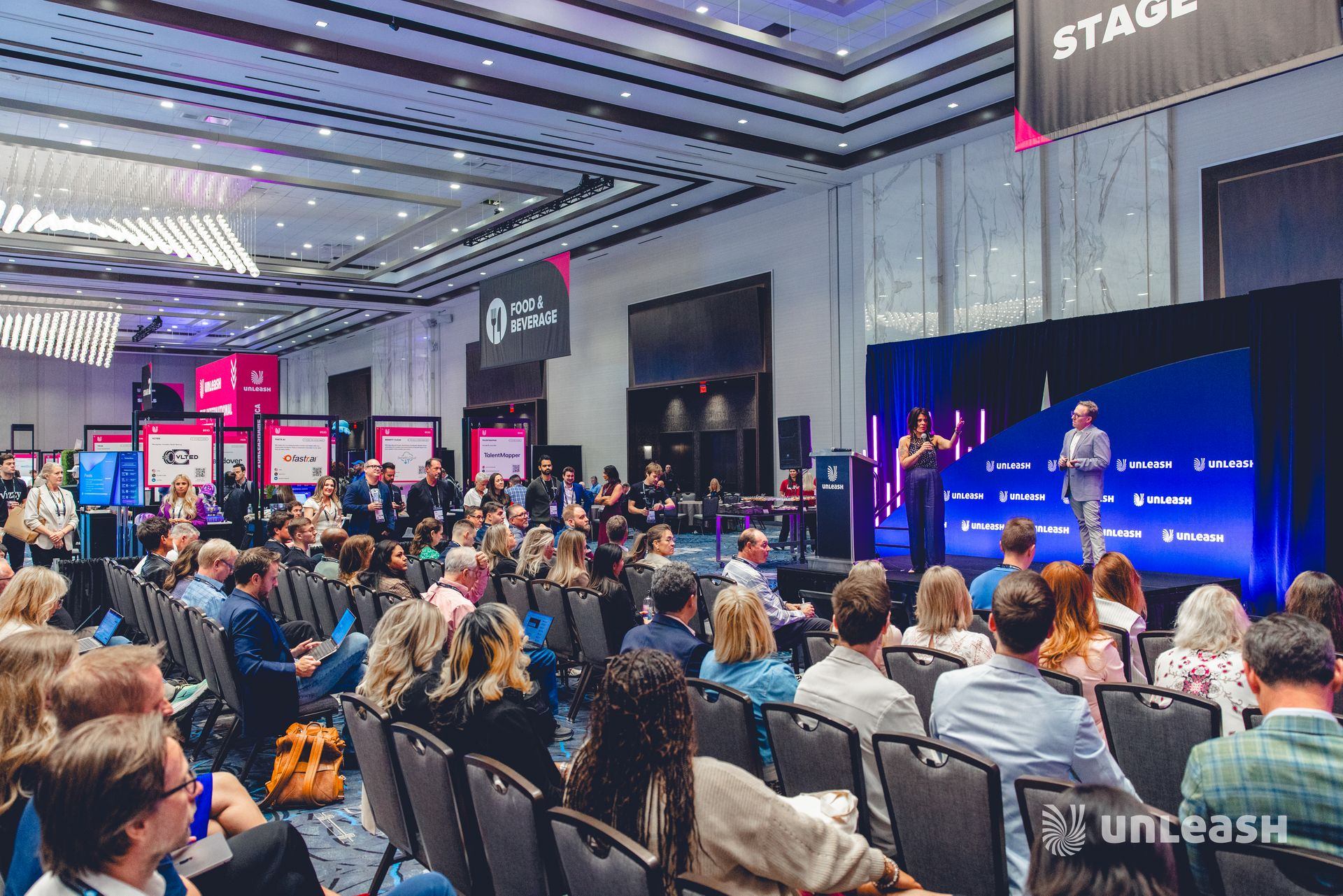
At UNLEASH America: The International Festival of HR 2024, the UNLEASH Editorial team spoke to a plethora of world-renowned speakers to gain their exclusive insights to the latest advances in the HR industry.
One of the speakers we interviewed was The Coca-Cola Company’s Smita Srivastava.
As the company’s Senior Director and Lead for the Global People & Culture Capability Development, Srivastava leads the end-to-end capability development strategy and delivery for The Coca-Cola Company’s Global People & Culture Community – which of course, includes HR.
Reflecting on the event, Srivastava says: “UNLEASH America is known for its focus on disruptive innovation and emerging technologies in HR and I enjoyed gaining insights from industry leaders and HR visionaries on the latest trends and strategies shaping the future of work.”
“It was also a great way to connect with a global network of HR professionals to build valuable relationships, while discovering innovative tools, technologies, and resources to implement positive change.”
In an exclusive interview, UNLEASH explores more about Srivastava's experience at UNLEASH America, as well as how The Coca-Cola Company encourages skills development, taking calculated risks, and many more poignant topics.
Unsurprisingly, skills was a topics that was top of mind for many HR leaders at UNLEASH America. But specifically, leaders were concerned about which skills will become increasingly essential for HR in the coming years.
Commenting on this, Srivastava highlights three fundamental areas that should be focused on: data-driven decision making and people analytics, change management, and strategic business acumen.
Touching on the first point, Srivastava begins: “The future of HR is filled with data.
Explaining this further, she highlighted the need to go beyond basic reporting, sharing the importance of asking the right questions and using data to identify trends and predict future needs.
Filtering into her second point, is the acknowledgement that the pace of change in the workplace is only accelerating.
HR professionals, therefore, need to be adept at navigating change, to help employees adapt and foster a culture of continuous learning. For example, practicing strong communication skills to explain changes, build buy-in, addressing concerns, and being prepared for the unexpected.
Her final point was to reiterate the need for a solid business acumen.
“This requires knowledge of the business landscape, financial literacy, and the ability to translate HR strategies into measurable business outcomes.”
With this in mind, it’s no wonder that the company has made strong commitments to prioritizing upskilling and skills development.
In fact, one way The Coca-Cola Company has exercised this is by recognizing the importance of investing strategically.
For example, the drinks giant has a clear focus on what matters the most, such as skills and capabilities critical to success, like Human Centered Design, which ensures a people-centric approach to all our work.
Srivastava adds: “We also embrace an experimental mindset. We test the waters through pilot programs before committing to large-scale initiatives. This allows us to gather feedback and refine learning programs at scale for maximum impact across the enterprise."
What’s more, The Coca-Cola Company leverages the 70-20-10 model – or the 3 E's approach. This framework emphasizes hands-on learning (70%), exposure to diverse learning styles (20%), and formal education (10%).
According to Srivastava, this ensures HR professionals gain “well-rounded skill sets” through practical application, social learning, and targeted training.
As one of the most recognizable companies on the planet, it’s no surprise that The Coca-Cola Company generated a revenue of $46 billion for the year ending March 31 2024.
It’s therefore no surprise that the business has created a culture that encourages calculated risk-taking, while learning from failures to drive innovation in skill development.
For Srivastava, it’s about encouraging companies and HR teams to turn 'what ifs' into 'wows'.
“By embedding experimentation as a cultural practice, we can model desired behavior, normalize experimentation mindset and behaviors, and increase adoption.
"Focusing more on experimentation as a skill empowers us to break down silos, develop critical thinking, and build an agile, data-driven approach to capability development and broader innovation."
She continues to highlight her belief that the future of HR hinges on two key challenges: bridging the skills gap and building an agile workforce.
“We need to become talented architects, not just recruiters, by equipping our people with the skills needed to thrive in a constantly evolving landscape,” she notes. “At the same time, we must cultivate a culture that embraces change, fosters continuous learning, and allows for calculated risks.
“By prioritizing these areas, HR can truly become the innovation engine within our organizations. It's about striking that balance to stay ahead of the curve.”