


'Digital Me' is turning human capability into corporate assets. HR must push back
April 27, 2026

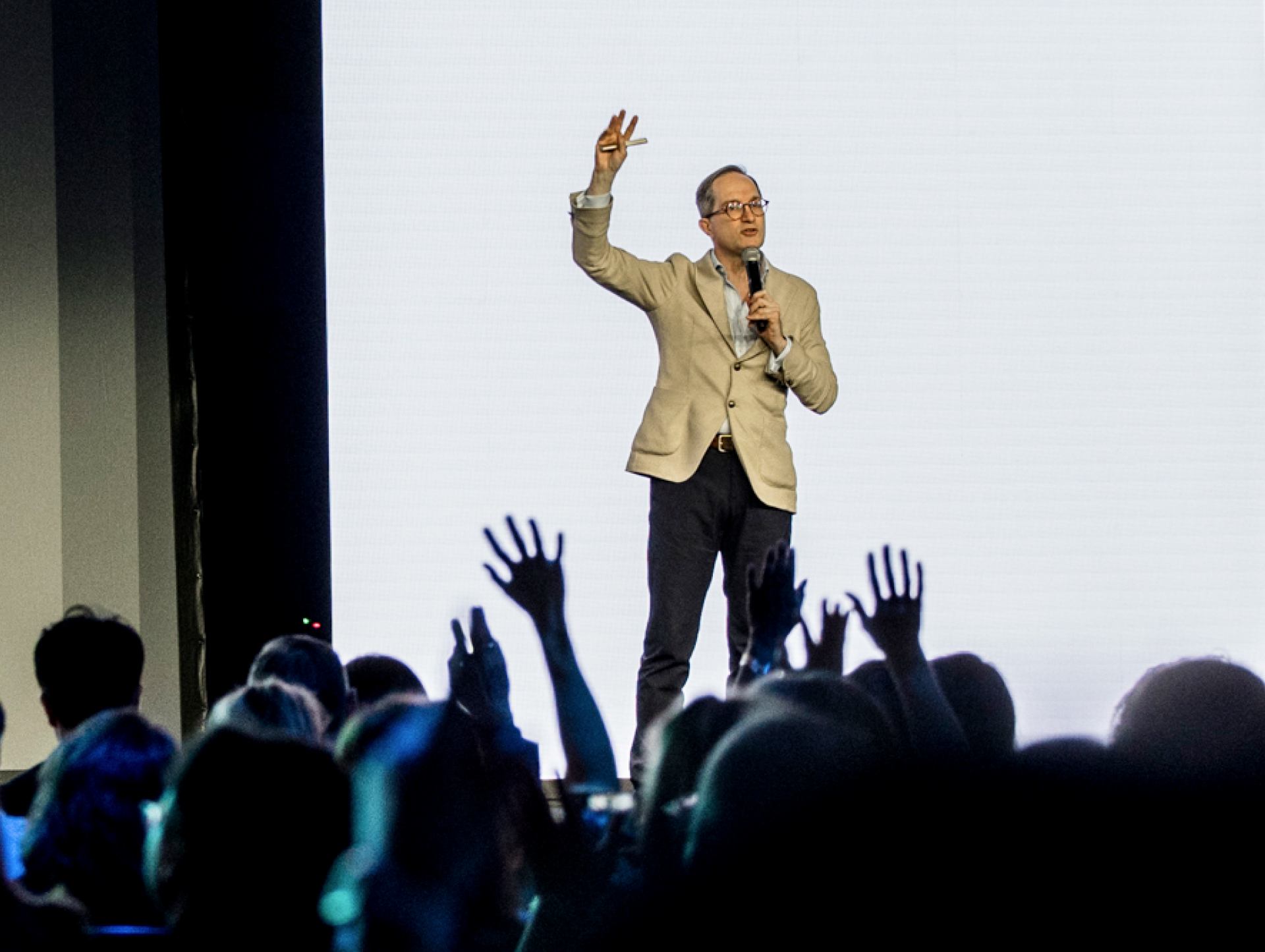
At an industry event this June in Barcelona, I asked a room of 120 CHROs what was creating the most uncertainty in their organizations. The answers came fast: generative AI, restructuring, skills disruption.
A harder question followed: How much leadership attention is actually reserved for helping the workforce absorb those shifts?
The conversation exposed a familiar gap. Transformation sits near the top of every corporate agenda, yet its human work gets squeezed between technology implementation, talent processes and crisis response. Senior people leaders are expected to enable change, but few have protected time to accompany employees through it.
That matters because transformation is not simply movement from one operating model to another. It is a rupture, and every rupture creates distance.
Any significant change sharpens awareness of difference: between the people who designed it and the people who must live with it, between roles gaining influence and roles losing status.
Change is also temporally uneven. Executives may spend months examining a transformation before it is announced. By launch day they have absorbed much of the loss involved and begun to identify with the future. Employees are often entering their valley of tears just as leaders declare momentum.
Distributed work stretches that gap further. Consequential news arrives through screens, while informal opportunities to interpret it are scarce.
The CHRO’s task is to create enough proximity– through connection and shared purpose – that people can engage with change instead of feeling abandoned by it. That work runs on two levels: what individual leaders do, and what the system is designed to do.
Anxiety, anger and frustration are data. They reveal what people believe they may lose: their sense of competence, identity, relationships, autonomy, or status.
A longitudinal study of a Chilean subsidiary of a US multinational, which switched its working language from Spanish to English, tracked its roughly 60 employees at five points over two years.
Negative emotion did not automatically derail adoption. Instead, manageable distress prompted learning and experimentation.
The three language specialists hired to teach English became de facto emotional coaches: they listened, normalized setbacks and helped employees regain agency.
CHROs should put emotion on the transformation dashboard: track where negative reactions cluster, how they shift and which groups feel overlooked. Train managers to listen without immediately correcting or reassuring. Give people peer mentors or change coaches.
Watch high performers closely. The people best equipped for the new world often have the strongest external options, and they disengage quietly if support flows only to those who are visibly struggling.
Resistance is easily misread from a distance. A decision that looks rational in the executive committee can feel like an assault on identity in a country unit, a branch, or a legacy business.
Senior people leaders need direct contact with those consequences. Town halls have a role, but they are poor substitutes for small-group conversations, site visits, job shadowing and repeated listening at the organization’s edges.
Rotation makes this systemic. Moving transformation leaders and high-potential employees temporarily across functions, geographies or legacy businesses builds an empathy infrastructure. It reveals why the same initiative feels like opportunity in one place and threat in another.
Change visions often remain abstract: “becoming AI-first,” “simplifying the operating model” or “building a skills-based organization.” Employees cannot locate themselves inside a slogan.
Leaders need a demo of the future: a tangible version of what the change means in practice. This could be a prototype workflow, a pilot team, a redesigned role, or a scenario showing how a typical workday will actually change.
A good demo answers concrete questions: Which tasks disappear? Which decisions move? What remains stable? What must employees learn? What will success look like three months after implementation?
Co-creating that demo with employees turns recipients into authors. The future becomes something people can test, challenge and refine, rather than a destination arriving through slides.
Purpose becomes credible when it shows up in everyday work.
Belonging comes from shared experience. No amount of communication substitutes for it.
The integration of CaixaBank and Bankia in Spain shows what that looked like. The 2021 merger brought together two institutions with different histories, cultures and power positions, in the middle of the pandemic. The IT integration could easily have hardened a conqueror and conquered dynamic.
Instead, joint integration boards put people from both banks together around the same problems, working in matched pairs they called parejas de baile – dance partners.
In November 2021, they moved 7.6 million active Bankia customers and 10.4 petabytes of data onto CaixaBank’s systems over a single weekend, finishing the migration ahead of schedule. The deadline became a shared finish line, and clearing it early proved both sides could operate as one team.
Not every transformation needs a dramatic deadline. But a moment that forces genuine interdependence, such as a co-located sprint, a simulation, a first combined customer launch, does more for belonging than a year of messaging.
It is important to design, rehearse and celebrate those moments.
Transformations often break down between functions, regions, technical teams, external partners and legacy businesses. Yet organizations routinely leave those interfaces to goodwill.
CHROs should identify the boundaries on which change depends and staff them deliberately.
Interface roles need credibility in more than one world, clear decision rights, access to senior leaders and actual time to translate, rather than another task bolted onto an existing job.
The dance-partner roles at CaixaBank and Bankia did exactly this.
The same logic applies elsewhere: paired an HR lead with a technology lead for an AI rollout, or place operations translators between headquarters and country teams. Choose people who can carry concerns in both directions.
Technology can deploy a platform. Strategy can define a target operating model. Finance can quantify the business case.
Change always creates distance. The leadership choice is whether that distance becomes a fault line or the space across which something new gets built.