

The Talent Operations Transformation
October 6, 2026

Finance is there to calculate and pay our bonuses and taxes," a member of the leadership team told me when I started my career at Microsoft.
Yet there I was, showing up to a sales meeting uninvited. "And distribute luncheon vouchers on time," another ex-colleague added, humorously.
Meanwhile, my actual responsibility as CFO wasn’t just numbers; it was about business impact and strategic partnership.
This was 2008, the year of the subprime crisis.
Productivity pressures and budget cuts were intense.
Cloud transformation was just beginning, bringing with it talent shortages, FOBO (Fear of Becoming Obsolete), and reskilling demands in IT.
Social media took off, sparking the era of Big Data and transforming fields, like marketing. Many marketers lost their jobs globally due to the changing landscape.
Being in Finance back then was both thrilling and challenging. We had to downsize, reorganize, and align with new tech and business realities.
We were absorbed in core finance work—accounting, tax, reporting, compliance. But core finance is only impactful when things go wrong, which is not what anyone wants!
The goal was to earn that elusive "seat at the table". But how?
Let's play a game: imagine replacing "Finance" with "HR', "2008" with "2024," and "cloud" with "AI". Sound familiar?
It should! HR today faces challenges akin to those finance encountered back then.
The pandemic barely ended, and already we've faced the 'Great Resignation', geopolitical uncertainty, inflation, and the explosion of AI.
Regulatory shifts like Pay Transparency, EU CSRD, and the EU AI Act add more pressure, alongside generational shifts, hybrid work, and productivity demands.
As HR professionals, you’re navigating not only your roles but also the broader implications of AI transformation.
Done poorly, HR risks being sidelined, replaced by automation and business-driven strategic HR decisions.
As AI is increasingly capable of taking over entire workflows via AI-agents and as talent management insights become democratized through technology, HR must redefine itself and focus on where it adds strategic value to the business.
Otherwise, there’s little to justify its existence — let alone its position on the leadership team.
What did we do in 2008 that led to our success at Microsoft? We outsourced core finance functions, reorganized, downsized, and upskilled.
Instead of ten accountants, I hired three senior controllers who spent one day each week learning and engaging with the business. This required adaptability and persistence—traits not traditionally associated with Finance.
But after a short learning phase, we stopped being meeting-tourists and made sure to add value by delivering insightful data analysis.
When hiring those controllers, I prioritized adaptability, perseverance, ambiguity management, business acumen, and a willingness to challenge the status quo—skills that went beyond traditional controlling.
Our success metrics were business-impact KPIs. We went further, organizing CEO and CFO meetups to address partners' pain points and adjust our strategy as the crisis hit everyone.
Just like Finance redefined its role in 2008, HR must now rise to the challenge. Here’s what HR professionals can learn from my experience:
Change is tough and requires high self-awareness, commitment, and grit. You need to shift perceptions of yourself and those around you.
It’s not a popularity contest, especially at first. Think of it like a diet: success comes from a clear vision of who you want to be, and a plan to get there.
There’s plenty of advice out there, but it often falls flat.
Start with a quick win to shift perceptions.
Seek support from your GM, share your goals, and ask for help.
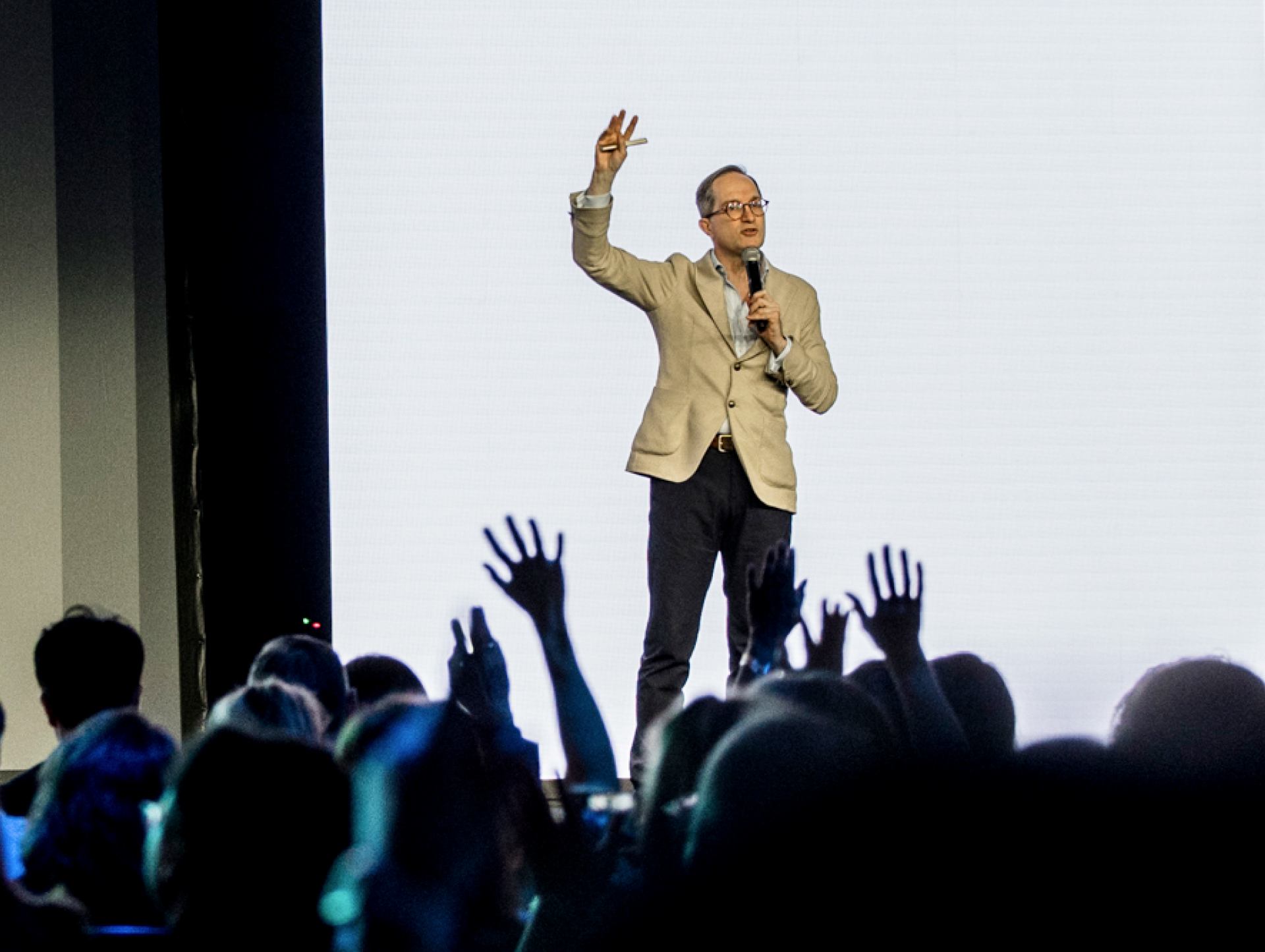
As Peter Hinssen quoted Winston Churchill at UNLEASH World in Paris: "If you don’t take change by the hand, it will take you by the throat.