
'Digital Me' is turning human capability into corporate assets. HR must push back
April 27, 2026
When OpenAI launched ChatGPT in November 2022, it rewrote the rules of work almost overnight. Suddenly, every employer was asking what AI would mean for jobs, productivity, and organizational structure.
Despite being at the frontier of AI, OpenAI was not immune from this disruption.
Four years after ChatGPT’s launch, the AI giant has achieved almost universal internal adoption of AI – the 3% who don’t use AI daily are out of the office for various reasons.
On “individual adoption we’re doing exceptionally well,” Arvind KC, OpenAI’s Chief People Officer since March, tells UNLEASH. But that’s the only first stage of AI adoption. KC believes there are two more: team and organization.
“We are at the team adoption stage,” he notes. Organizational transformation is still to come: “We’re not there yet.”
Growth at OpenAI is happening at a speed KC hasn’t seen before, even in senior tech roles at Facebook, Palantir and Google. Headcount has increased from under 1,000 in 2023 to around 8,000 now, while annualized recurring revenue nears $50 billion, and $122 billion was raised in a March funding round.
That kind of growth inevitably brings uncertainty, and OpenAI has faced its share; from leadership turnover, Sam Altman’s brief exit and return as CEO, all while the debate over AI’s impact, not just on work but on the future humanity, has grown more urgent.
At that pace, “you’ve got to make meaningful decisions very fast,” and it can be tempting to think “I know how to do this because I’ve done it in the past.”
KC’s instinct is to pause, “deliberately creating some good friction,” ensuring leaders have space to be designing for the future, not recreating the past.
The role of a Chief People Officer is to “build a workforce that helps meet business goals.” KC believes this mandate has not changed with AI – the difference now is that the workforce is both human and agentic.
There are two ways to frame AI’s disruption of work, in KC’s view – is it taking jobs away, or is it “creating enormous capacity [which] lets us be a fundamentally different company?”
OpenAI is embracing the latter, more optimistic view – this explains why every individual at OpenAI now has a suffix to their day job: ‘agent manager.’
KC shares a practical example. He recently asked a recruiter to map out the talent in one part of the organization. Until recently, that work would have gone to a talent research team, who would compile their findings into a spreadsheet. Two hours later, the recruiter sent KC a link to a site with the entire talent landscape mapped out, built using a cohort of AI agents.
“I looked up the person some more – they’ve never had a technical role in their life,” KC says.
The bar to being technical has fallen dramatically: “We have democratized intelligence.” Rather than technical skills being the differentiator, those who will thrive with AI are curious, resilient and find “joy at reinventing everything,” notes KC.
When KC joined OpenAI in March, he expected its people to be smart. What surprised him was their kindness and humility.
Humility and kindness matter because AI is a problem “we’re going to solve together, not individually.” As KC puts it: “This whole space is so undefined – you need the humility to believe you haven’t solved it.”
KC models this humility in his own role. Asked what he’d do differently since joining, KC admits there are “so many things.”
Rather than assuming he has the answers, KC keeps questioning whether he is steering OpenAI and its people in the right direction. As the company transitions from team to organizational AI, two questions guide KC’s decision-making: “Are we really building the futuristic organization for ourselves, so we continue to be future proof? Am I seeing what’s coming ahead and not operating just on current models of the world?”
As a former CIO & VP of Engineering, KC believes that the HR function should borrow a term from engineering. CPOs should become ‘forward-deployed organizational architects,’ reshaping how work is organized inside their own companies, and eventually, across the wider economy.
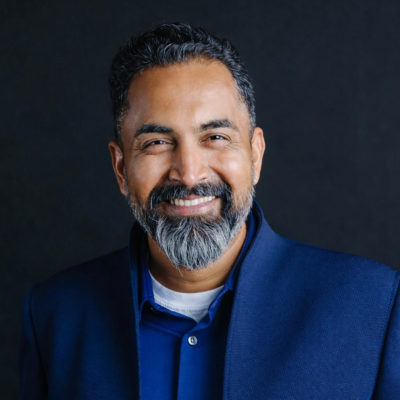
Humility also plays out in practice in OpenAI’s culture of bottom-up innovation. Good ideas can come from anywhere; every employee is empowered to build something and share it.
Those ideas surface through informal channels like Slack. OpenAI uses ChatGPT to make sense of large volumes of unstructured information and identify what’s worth scaling. KC recently saw a member of the recruiting team share a Chrome extension they had built to run reference checks quickly. Within a day, the entire team had adopted it.
“When you have efficient communication and bottom-up innovation, the best ideas get selected,” KC says.
He is clear that bottom-up doesn’t mean “everybody’s going in random directions.” It is about “empowerment with the steer.”
The steer comes from OpenAI’s mission - ensuring artificial general intelligence (AGI) benefits all of humanity. However, it also comes from flashpoints like OpenAI agents going rogue and hacking Hugging Face and Australia’s Medicare, or hundreds of OpenAI employees, alongside peers at other frontier labs, signing a letter calling for an AI slowdown.
Importantly, that steer isn’t set by one person. KC is clear that OpenAI relies on “collective judgment rather than one person making every call,” and that internal conversations about safety have influenced the company’s recent decision-making.
Employees have proposed new safety use cases and third-party scrutiny of OpenAI’s tools; KC says many changes to how its AI models are built started this way.
The constant change that comes from operating in a high-growth environment makes people anxious; KC notes that anxious people “bottle [things] up and don’t necessarily take risks.”
HR’s job is to counter that by protecting the conditions teams need to flourish, starting with psychological safety.
That starts at the top. OpenAI CEO Sam Altman gets around 300 Slacks a day from employees, and he responds to them. HR also acts as a place where people can go to ask questions and make sense of change.
OpenAI’s culture is under the microscope. In the past month, the New York Times has reported that employees’ safety concerns were “ignored” by senior management. Safety leader David Robinson quit and wrote in The Atlantic that the company’s culture is “broken.” OpenAI also fired three safety researchers for allegedly sharing confidential company information – as reported by the Wall Street Journal.
KC shares that people speaking their minds, internally and externally, is a strength of OpenAI’s culture. OpenAI’s approach, he adds, is to give talented people the conditions to innovate, and then “listen when they raise concerns.”
It’s a commitment KC takes seriously. He is under no illusion that the people and culture side of AI transformation is easy, least of all at frontier speed. Culture and innovation are two sides of the same coin, and his role as CPO is to keep them in step. The world will be watching.