


'Digital Me' is turning human capability into corporate assets. HR must push back
April 27, 2026
Change has long been talked about as something that has a before, middle and after, but “that’s not the world we’re living in anymore.”
That’s how Holly Ransom kicked off the Workhuman Forum during UNLEASH 2026 in Paris.
“Change is no longer an initiative; it is our environment,” she added.
To respond to this reality, leaders need to find a way to provide clarity when certainty isn’t possible.
The key is moving away from “control as the default.” There’s no need to focus on predicting the future; instead focus on being “ready for when it arrives.”
From the conversations at the Workhuman Forum, here are three actions that HR must take to lead in a world where change is constant.
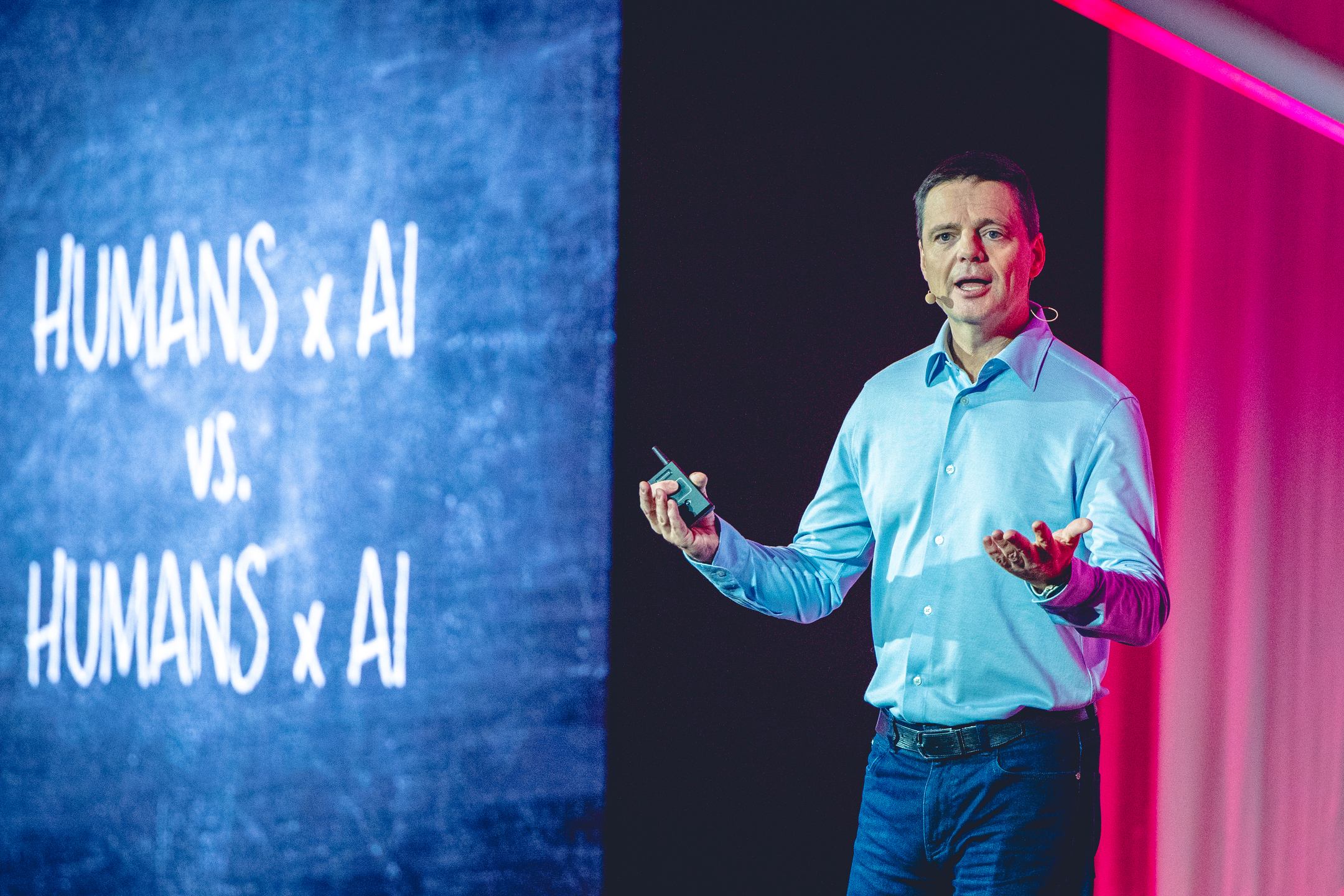
“Everyone is talking about the AI revolution.”
However, the real story for Harvard Medical School psychologist Susan David is that “humans are being asked to adapt and adjust.”
Therefore, skills that have traditionally been described as “soft” are now critical.
Given there’s an emotional cost to continuous transformation, emotional agility is essential and foundational.
As Anne van Dassen Müller, Chief People Officer at Stolt-Nielsen, noted on the Forum’s CHRO panel, leaders must have the courage to take people on an emotional journey during change. “That’s not something AI can do;” it requires a leader with great judgement.
David noted that rather than simply saying “that person is resistant” to change and that’s “not my problem,” leaders need to listen to people’s emotions.
“Emotions are data, not directives.” This is not about dwelling on emotions, which can create toxic workplace cultures, but instead realizing that it’s hard to move through change “if we don’t actually understand what it is we’re working with.”
A “core leadership capacity is actually understanding what people are feeling” and then bridging that to “how we actually start enacting organizational change and transformation more effectively.”
In times of uncertainty, it’s natural to feel anxious.
In that moment, the answer is not for leaders to weaponize people’s anxiety or take a defensive position.
Instead, INSEAD Associate Professor of Organizational Behavior, Gianpiero Petriglieri, stated that leaders must take a developmental path, asking questions like: How can I be more curious? How can I be more generous?
For Petriglieri, that means treating leadership as a relationship, not a position, and recognizing care as hard work. “Let’s stop diminishing care,” he urged.
By shifting from being firm and possessive to being curious and generous, leaders can show up with clarity and courage.
During the CHRO panel, Amanda Poole, Chief People Officer at Bristol Myers Squibb (BMS), echoed this, noting that HR leaders need to get clear on priorities.
The pharma giant talks about the “rule of three...what are three things I need to do this month, this quarter, this year to really deliver for patients?”
Importantly, people only get three; “you don’t get to have eight different bullet points underneath.”
“We have felt that amidst all the other turbulence that comes round, the clarity of those three things has been incredibly valuable for us,” continued Poole.
Petriglieri shared his own triplet: three principles that HR must get right for people to feel leaders genuinely care:
In close to 30 years in HR, Poole said she has rarely seen a moment like this one. As AI reshapes work, the function is no longer just focused on resilience and engagement. It now has to grapple with bigger, tougher questions about the workforce of the future.
Workhuman’s Chief Human Experience Officer KeyAnna Schmiedl agreed. Even technology decisions are about “everything that touches people,” she noted on the CHRO panel.
With the cost of AI rising, “it’s now a question of where is the technology most effective, and where do we absolutely need people?”
Data is what allows HR to answer that; for Poole, it enables CHROs to position the HR function as the expert in the room.
But not all data is created equal, Workhuman CEO Eric Mosley warned in his keynote.
Workhuman’s bet is on recognition data, which President Tom Libretto described during a press conference at the Forum as “the most definitive source of future truth.”
Identifying future leaders has long been subjective and uncertain, but by turning recognition data into insight, HR now has a “crystal ball” of the future org chart, Mosley said on stage.
That capability will separate successful organizations, because “everybody’s going to have AI, but it’s the people that will direct the AI the best and do all the other work [who] will prevail,” concluded Mosley.