

Leaders see progress, employees see friction: Inside the change capability divide
October 20, 2026
Rebecca Port joined identity giant Okta as Chief People Officer in January 2026 with the task of scaling company culture and operational rigor.
To do this, she has committed to giving Okta’s 6,000 employees back 100,000 hours by the end of 2026 – a goal she plans to achieve by simplifying people processes.
This commitment is more than an efficiency play for Port. Okta has identified significant growth opportunities from agentic AI; to realize these, people strategy must be aligned with business strategy.
“We’ve got to do many things differently,” she tells UNLEASH. “Having the right culture, people, processes, systems and ways of working is absolutely critical.”
Over the past seven months, Port – supported by Okta CEO Todd McKinnon – audited the HR function at the identity company.
The result was the realization that “some of the ways we used to work are not fit for purpose any longer.”
This conclusion led to difficult decisions and conversations for Port, including having to say goodbye to some colleagues.
She then hired some leaders to build a new “world-class people team” capable of driving the newly aligned people and business strategy.
The HR audit also involved examining the processes that underlie the entire employee lifecycle – “how we hire, how we onboard, how we develop, how we pay, how we exit.”
Before, then identifying opportunities to streamline and simplify those processes, with the aim of saving employees 100,000 hours this year.
In terms of what this looks like in practice, Port shares that 9,000 hours have already been saved from rethinking mid-year performance review process. Previously, it was a “very heavy lift” for managers, so there were replaced with a quick check-in that focuses more on “the conversation, rather than the documentation.”
Okta has also optimized its HR tech stack to reduce the number of clicks between platforms, as well as streamlined its engagement survey from 40-questions twice a year to a five-question survey conducted annually in Slack.
Port admits “we didn’t use that data for anything.” Now, however, managers receive an automated report from the survey with actionable insights; “you haven’t got hundreds of hours of HR Business Partners and managers ploughing through answers.”
Beyond that, for its 1,000 people managers around the world, Okta has consolidated “the hours of disparate manager training” in various locations into a two-day manager program.
The program encompasses “everything managers need to do to be successful – along with the skills that will help them get there.”
The aim of the 100,000-hour saving is to ensure that “people will enjoy interacting with our processes, and think they are worthwhile,” notes Port.
“As we design processes, we are putting the end user at the center,” ensuring that they are never an administrative burden that gets in the way of work.
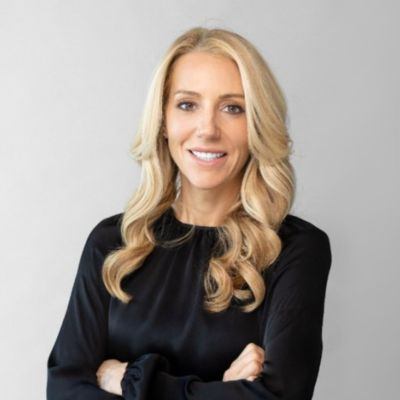
Port has not just committed to giving 100,000 hours back to employees; she is also steadfast about building trust with Okta’s employees in her new role as Chief People Officer.
This is important as Okta employees experienced three consecutive years of layoffs between 2023 and 2025, and AI is bringing new uncertainty about jobs.
Port notes: “HR is in the difficult position of trying to be all things to all people. What builds trust is consistency and transparency.”
While it’s impossible to say that AI will never displace people from their jobs, Port’s approach is to “acknowledge that anxiety is there” and be transparent: “I’ll commit to giving updates when I can.”
At present, “I am not finding that AI can directly replace very many jobs – what it can do is replace work,” says Port.
“The org chart of the future will look very different – it will have agents, it will have humans” and both “will be doing jobs that don’t exist today,” she adds.
Her focus, therefore, is on deconstructing work; this requires shifting the mindset at the identity giant away from workforce planning and toward “work planning.”
“The leaders who will be successful in AI will be able to work plan, not workforce plan.”
Port tells UNLEASH how the HR team itself is leveraging AI and deconstructing roles. Okta has AI agents that act as coaches to managers, meaning they do not always need to go their HR Business Partner for support.
“That has huge implications on the Business Partner role” so the team is “reconstructing workflows around what is done by an agent, what is done by a human” and will be piloting that in one part of the business. Port is “really excited to see how that lands.”
While Okta has made significant progress with process simplification and work planning, Port is clear that this work is ongoing: “We’re in the messy middle.”
Imagine renovating a house: “You’ve got these big visions. Then you start knocking down walls. You rip out the floor. There’s dust everywhere – it looks terrible.”
At that point, it’s hard not to “lose sight of where you’re going.” Eventually, “you sit in your renovated house, and go, oh this was so worthwhile.”
While the HR team at Okta sits in “that messy middle where things are all over the place,” Port asserts that she is “keeping the team focused that this is worthwhile.”
For the rest of 2026, her focus will be on continuing to improve and simplify people processes “to make sure that they help Okta move fast and grow fast.”
Port concludes that when it comes to the people strategy, “the ultimate measure of success is business growth.”