


'Digital Me' is turning human capability into corporate assets. HR must push back
April 27, 2026
The more uncertain the world becomes, the harder leaders reach for a strategy.
For Harvard Medical School Psychologist Susan David, that instinct is understandable, but increasingly misplaced.
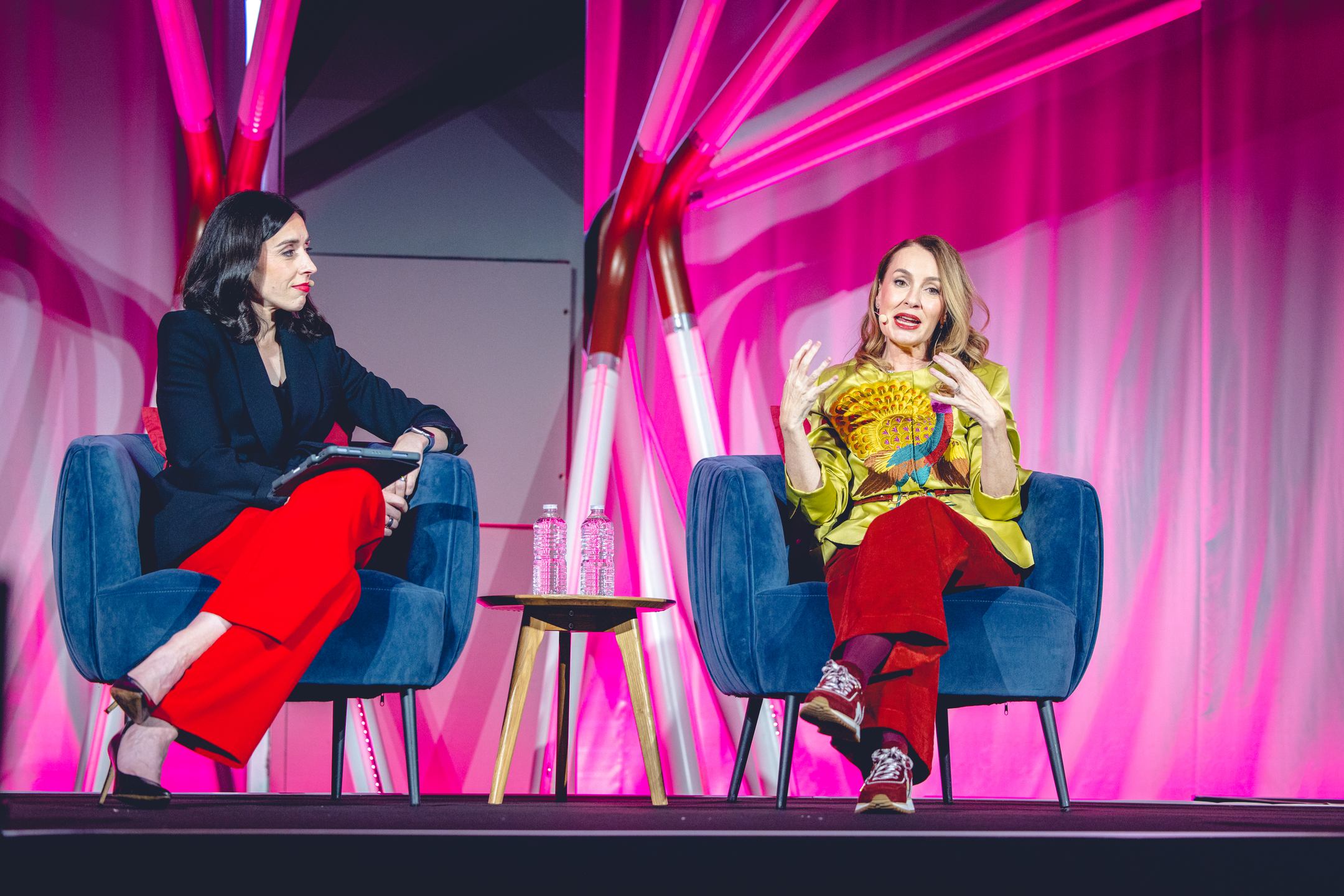
In an exclusive interview following her fireside at the Workhuman Forum during UNLEASH 2026 in Paris, David shares: “Strategy feels very comfortable to leaders because we can persuade ourselves that as long as we have something we can measure, that’s going to solve problems.”
When transformation stalls, engagement falls or unwanted attrition rises, David argues that it is never about strategy: “It’s always about people’s capacity.”
“The strongest predictor of successful change is actually not whether people know the strategy or not. It is rather leaders’ ability to understand and respond to the emotional journey of their people.”
“Everyone’s talking about the AI revolution; the real revolution is the human skills revolution,” argues David.
The pull of strategy amid uncertainty, David explains, has two roots.
The first is historical. Since the industrial revolution, math and science have been valorized due to their predictability. By comparison, skills like empathy and collaboration have been sidelined; they were difficult to measure and often seen as ‘soft’.
Much of management and leadership discipline was built on the idea that “what matters is measurement, strategy and so-called rationality;” everything else was too difficult, notes David.
The second reason is psychological. Uncertainty, complexity and ambiguity are what David calls the “three predictors of collapsed nuance.” This means humans innately see all three as a threat, and when under threat we narrow our focus – psychologists call this “cognitive narrowing.”
In organizations this shows up as “black and white thinking” – that’s why strategy is so appealing: it promises clear answers.
Strategy is not the enemy; the issue is that “we’ve completely over-indexed,” David tells UNLEASH. Organizations need to accept that “what got them here is not going to get them there.”
The first step to breaking the historical and psychological cycle is a mindset shift away from seeing human skills as soft.
“When people say they’re soft, it’s almost like they’re saying they’re peripheral, an afterthought,” notes David. In reality, “human skills are the most important arbiters of successful transformation.”
The second step is closing what David calls the “knowledge-action gap.”
Consider a leader who gets feedback that they struggle to collaborate or show empathy. Too often, HR’s response is to get them to watch training videos with the view that “simply knowing how to collaborate or empathize” will make them better at it.
She argues that “almost all learning and development is built on a fiction that if we simply give people more knowledge, it will actually change their skill set. It does not.”
If the current skill-building approaches aren’t working, what must HR do to help develop these essential human skills instead?
David’s answer is to dismantle the idea of ‘good' and ‘bad’ emotions. It is easy for leaders to assume that positivity is good, while questions, confusion or sadness are bad. This is another example of collapsed nuance, and it comes at a cost to the whole organization.
“Every single thing we’re asking of people right now is dependent on their ability to be open to discomfort,” notes David. “The more we shut down difficult emotions, the more we create organizational fragility.”
Instead, leaders need to see all emotions – comfortable or not – as data, to be treated in a similar way to HR or financial data.
However, there’s an important caveat: emotions may be data, “but they’re not directives.”
“A leader wouldn’t take one number on a spreadsheet and use that single number to define their entire organizational strategy.” The same goes for emotions: one angry person is just one data point; 20 may be a trend line worth noticing.
Leaders need to ask themselves the question “WTF?” In this context, David is clear it means: What’s the function?
Asking that question means leaders don’t get stuck on the emotion itself but use it as a signpost. “It builds a bridge into the future, [providing] clarity and next steps.”
It’s a skill leaders will need long after the current wave of change. “Our capacity in the world today, and our capacity in the world tomorrow,” David tells UNLEASH, “is really dependent on our relationship with uncertainty.”