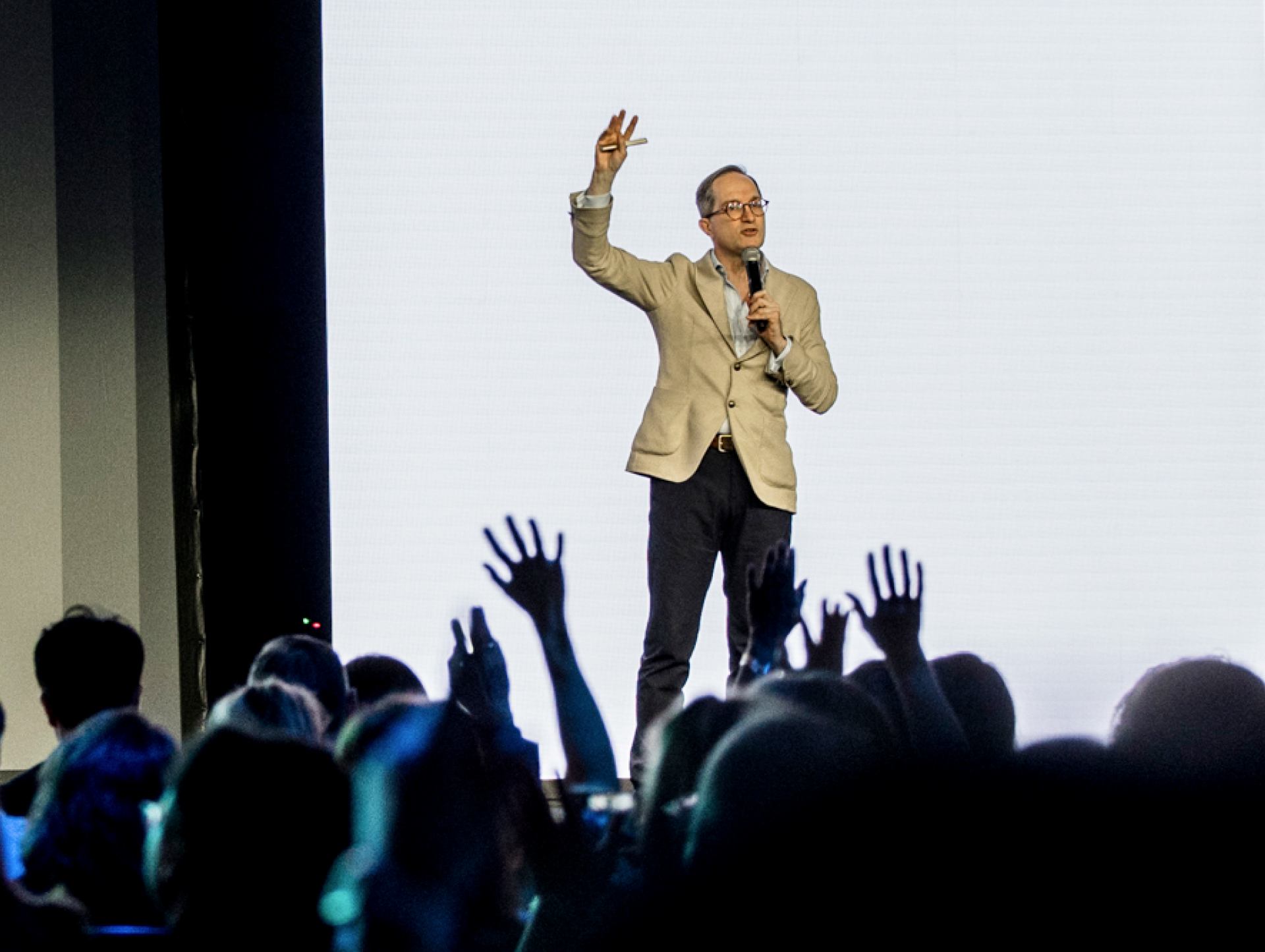



The Adecco Group’s Daniela Seabrook says HR shouldn’t own workforce planning alone. Here’s why.
October 8, 2026

Every week for The Briefing, UNLEASH’s weekly intelligence email for senior business decision-makers, we ask our community of analysts – the true HR experts – to solve the biggest workplace challenges.
Got a question for the analysts? You can send it directly to them via The Briefing – make sure you’re signed up.
We asked: When the workforce modeler says reduce and the people strategy says reskill, what evidence does HR need to make reskilling the outcome instead of a compromise?
Here what’s the analysts had to say.
This case seems to be growing as AI frees up worker hours and leaders are tempted to realize savings by reducing the workforce. But AI adoption and a changing business/economic landscape also create demand for new skills.
In many cases, existing employees whose skills than may be in declining demand need precise upskilling to upgrade their skills to those that are in increasing demand.
Leaders should consider two things in making their decision:
In many cases, after these considerations, reskilling and upskilling will emerge as the better business decision.
HR has to be prepared for this scenario with a history of metrics showing how capability has been compromised by reductions in the past, as well as the costs associated with ramping back up. If the only metrics available for learning have been completions and smile sheets, reskilling will be the last option considered.
A strong understanding of the organization’s current skills and capabilities will be crucial so the workforce modeler, so as to identify areas where there is real work to move people into. A skills gap analysis can identify which people are close enough to these specific capabilities that they can be reskilled to meet the need.
To establish reskilling as the preferable outcome, HR needs to:
If reskilling wasn’t originally fed into the workforce modeler as an option/variable, provide the parameters above and re-run the model. There is also a practical question about how long each option takes. If someone can be reskilled and start the work in three months, while hiring someone new takes six months, that matters.
We're treating a forward-looking organizational design challenge like a backward-looking accounting exercise. Standard workforce modeling is trapped in a short-term loop, optimizing for today’s headcount costs while treating software as a durable capital asset and human capability as a discretionary expense to cut. It may improve this quarter’s numbers, but it creates enormous future liability.
When Finance pushes to reduce and HR argues to reskill, HR isn't asking for a moral concession. Ideally, it is bringing hard economic facts. Hiring externally for critical technology capabilities can cost 1.5-3x more than developing internal talent. And real ROI from AI requires investing 2-3x the software cost in human capability and workflow redesign.
Cut the people, and you starve the very capacity required to make the technology produce value – which helps explain why so many enterprise AI deployments yield no measurable profit impact when confined to simple task substitution.
The damage extends beyond current capability. Automating entry-level tasks eliminates the sandboxes where junior talent learns, experiments, and develops judgment. What looks like efficiency today quietly fractures tomorrow’s leadership pipeline.
Reskilling is not the softer alternative or the compromise position. It is a mathematically sound risk-mitigation strategy—one that trades short-term cost slicing for long-term enterprise value.
When the workforce modeler says reduce and the people strategy says reskill, HR needs evidence that reskilling is the better business decision, not simply the more people-friendly one. That means connecting three things: the skills the business will need, the skills already present in the workforce, and the economics of closing that gap.
HR should be able to show where existing employees have adjacent capabilities and how long it would realistically take to build what's missing. Then weigh that against the cost, time, and execution risk of reducing headcount now and recruiting those capabilities later. The strongest case also proves demand.
If HR can show that the future work is real, the reskilling pathway is achievable, and employees can become productive within the business's required timeframe, reskilling stops looking like a compromise. It becomes a workforce investment decision.
The question isn't simply, "Can we reskill these people?" It's, "Can we build the capability we need faster, better, or more economically with the talent we already have?"