Slashwork CEO: HR teams often get the worst tech – let’s fix that for the AI world
Three former Meta engineers have built the “spiritual successor” to communication platform Workplace from Meta: Slashwork. It aims to be an “indispensably useful HR tool” built for the AI age. UNLEASH sits down with CEO & Co-Founder Jackson Gabbard to find out how Slashwork will disrupt HR tech.
CEO Interview
"HR people get the worst tools - they feel like they weren’t designed for people to actually live or work in”.
That's what Jackson Gabbard, CEO & Co-Founder of Slashwork, the self-proclaimed "spiritual successor" to Workplace from Meta, tells UNLEASH in an exclusive interview.
Let's dig into how Slashwork aims to disrupt the HR tech sector and design a tool built for the AI age that truly helps HR teams in their roles.
In May 2024, Meta announced it was shuttering its employees communications tool Workplace from Meta. The product is currently in read-only mode and will be completely shut down in June this year.
Fast forward to August 2025: Three former Meta engineers, Jackson Gabbard, David Miller and Josh Watzman, who were integral in building and scaling Workplace, among other key Meta products, decided to build its “direct spiritual successor.”
They’ve called the product Slashwork, and it has the backing of Julien Codorniou, former Meta Vice-President leading Workplace turned investor; he is General Partner at 20VC.
In early February, 20VC led a $3.5 million investment round into Slashwork. Other investors include Slack Co-Founder Cal Henderson, former Meta COO Sheryl Sandberg, former VP at Slack and Glean AJ Tennant, and Deliveroo CEO & Co-Founder Will Shu.
UNLEASH exclusively interviews Slashwork CEO Gabbard to dig into the startup’s vision to build better, AI-ready tech for employees and HR alike.
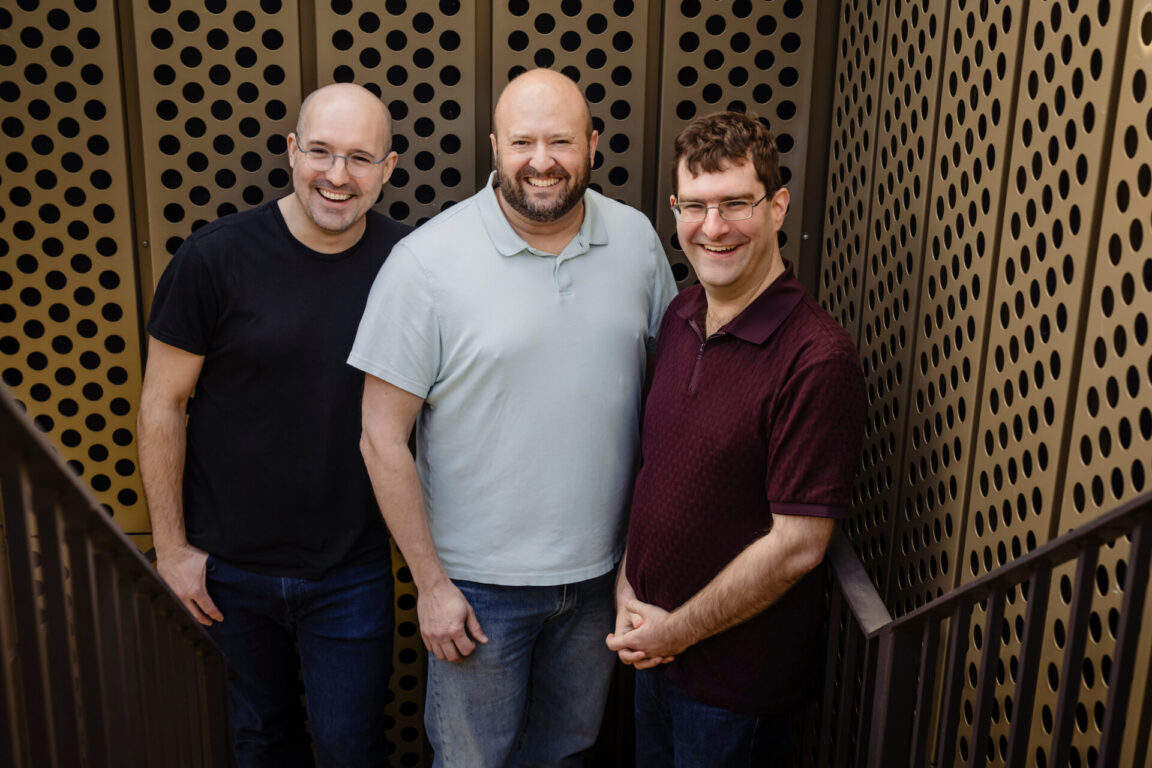
Jackson Gabbard and his Slashwork Co-Founders, David Miller and Josh Watzman
How Slashwork is the AI-powered successor to Workplace by Meta
Gabbard explains that he and his two Co-Founders worked at Meta for a long time, they then joined other companies and found that the workplace tools they used, like Slack, Teams, emails, Whatsapp, were lacking – they had lost something that Workplace from Meta had.
“It turns out that this a very common thing experienced by people who have left Meta, and also Workplace customers…there’s nothing on the market that scratches this itch.”
Gabbard continues: “HR people get the worst tools – a bunch of HR tools just look and feel terrible – they feel like they weren’t designed for people to actually live or work in.”
Because “we built a lot of that fire” at Workplace, Gabbard, Miller and Watzman thought to build something that resurrects “some of the tech that was lost when Workplace died – the idea of just being able to open up a tool” and immediately see what matters in a feed rank system, like the Facebook feed.
Slashwork, like Workplace, is “accessible to every single member of a team,” irrespective of their tech skills. “This product will be instantly recognizable” to everyone; there’s no need for extensive onboarding or training.
The icing on the cake is that Slashwork is being built in (and for) the AI reality of work in 2026.
“Very soon, you’re not just going to have [human] coworkers; you’re going to have coworkers who are bots,” notes Gabbard.
“Nobody has cracked this yet – it’s brand new territory.
“One of the things that we get to build into Slashwork is the ability for anybody in the company to create an agent, but also for the company to have its own agents.”
Two HR use cases Gabbard mentions are agents that help people book their PTO or submit their expenses directly in Slashwork: “Why have some horrible third-party app on your phone?”
Gabbard continues that Slashwork agents are built to be just as powerful as employees and, importantly, they can do this work not just within Slashwork platform, but within external sources too.
That’s not something that Workplace from Meta would’ve been able to do – the attitude of tech giants is “you don’t give access to the walled garden; it is a fortress” – however, in today’s AI reality “business need rich integration and to have the right gates open,” so that’s what Slashwork has built.
Gabbards adds that as the workplace changes at such pace, what many HR tools lack is a proper feedback mechanism and this is something Slashwork aims to correct.
“If you think about the two ways that HR messaging tends to go out – email blasts or messages that scroll away forever – one is a vortex of no feedback, the other is a vortex of high noise, no signal.”
“We’re trying to build a tool [with] immediate insight and measurability” on how the comms have landed.
Currently, Gabbard and his team are focused on Slashwork succeeding “with small teams first.” The alpha version of the tool is in the hands of 10 teams, most of which are ex-Workplace customers.
“We want to build a killer product experience for them” and ensure that “this is the hub where they get work done”.
The goal is by the end of 2026 to have Slashwork be generally available – enterprise availability is expected within two years.
Gabbard shares: “We should be an indispensably useful HR tool” for all sizes of teams, from tiny to gigantic. Ultimately, the vision is to build a tool “that makes HR and Internal Comms teams’ jobs so much easier.”