



‘One inch ahead’: Howard Yu on why AI success is built daily
October 1, 2026

“In a labor market defined by skills shortages, retention pressures and operational risk, organizations that fail to listen will lose talent and competitive ground.”
That’s the conclusion of a recent study of 2,200 workers in 11 countries by Top Employers Institute.
The research is clear that organizations need to stop just listening to their office-based (or white collar) workers, and actually hear the needs of their frontline, blue-collar workforce.
Currently, “the blue-collar employee experience is still not as well understood as it is for white-collar roles”, Adrian Seligman, Executive Board Member at Top Employers Institute, tells UNLEASH.
82% of workers told Top Employers Institute say it’s important they have a say in how work gets done, and eight in ten want their leaders to listen to their input and suggestions.
The issue is that only 65% feel that their voices are heard, and just 68% feel appreciated and recognized for their contributions.
Shockingly, a quarter told Top Employers Institute that they never received information about their jobs, and 39% received updates less than once a week.
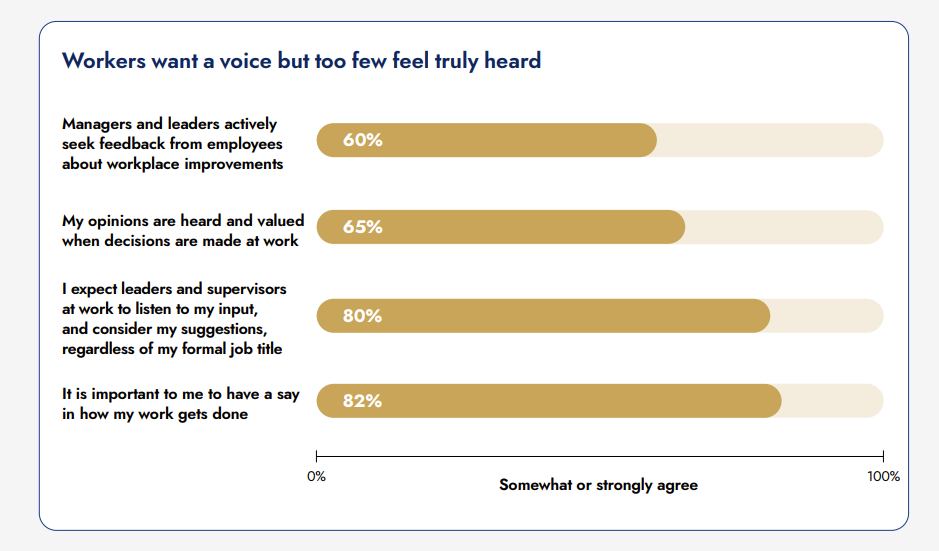
“For leaders, this means moving beyond top-down approaches and building regular, meaningful dialogue into the way we work with these teams. Embed two-way safety discussions and provide opportunities for direct engagement.”
Beyond this, Top Employers Institute also uncovered that pay is very important to frontline workers. Financial security is their number one priority; it was twice as popular as recognition.
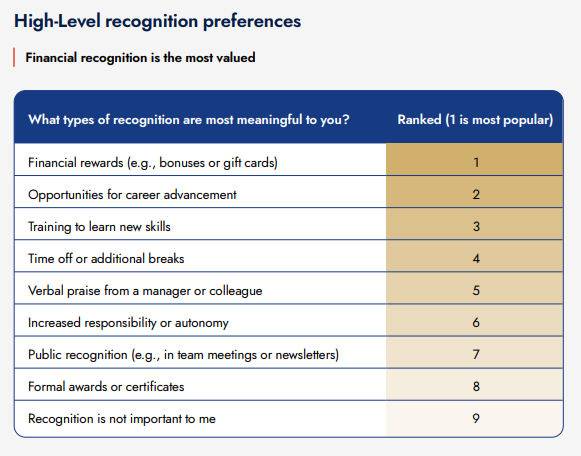
Having said that, pay isn’t everything – they also want meaning and friendships at work, career development opportunities, and flexibility.
Seven in ten said they couldn’t enjoy their work if didn’t get along with their colleagues, and 38% said they don’t want to remain in their current positions with 33% valuing training opportunities and clearer career paths.
In addition, 64% told Top Employers Institute that they valued flexibility more than financial rewards, but one in three had not control over their schedules, which erodes their wellbeing.
41% said that having more predictable scheduling would be helpful – blue collar workers are also keen for reduced overtime, set hours and flexibility around care giving.
AI is the HR top of the moment – however, a lot of the conversation about AI is around white-collar workers.
Top Employers Institute’s data explored the attitudes of blue-collar workers to AI.
73% said that AI was improving their industry, but they are less clear on its impact on them and their jobs. 51% said they see how AI will have positive impact on their careers.
The report stated: “There’s belief in the technology, but uncertainty around its personal implications” – leaders need to close this gap to reap the rewards of AI.
The challenge is that blue-collar workers don’t feel equipped to navigate AI-driven change – only seven in ten felt comfortable using digital workplace tools, and just 61% had received the right training.
The data shows that those who did have training on technology were 51% more likely to be engaged.
It is clear that frontline workers need more support around workplace changes, and not just limited to when it comes to AI.
66% told Top Employers Institute that they felt supported to navigate changes that affect how they do work, and just over half (59%) said they had to support to develop the skills needed for future roles at the organization.