

Scale, data and ecosystem: Inside TechWolf’s acquisition agreement with SAP
October 9, 2026

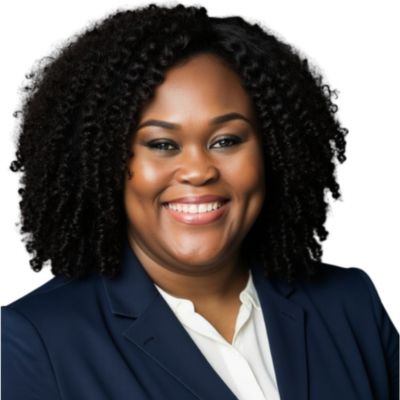
When Dr Kalifa Oliver, Senior Director of Technology, People Analytics & Legal at Lowe’s, sits down with the HR team, she isn’t in the room as a colleague. At the home improvement retailer, Oliver’s People Tech team doesn’t report to HR at all: it sits within Tech and HR is treated as a customer, not a co-owner.
That may seem like a structural inversion to many Fortune 500 companies, but for Oliver it’s exactly the discipline a business the size of Lowe’s – 1,750+ stores and 300,000 associates – needs if it wants to grow employee experience.
It’s a personal pivot for Oliver. Her career has spanned senior HR roles at Ford, Stanley Black & Decker, Wells Fargo, Walmart, and WPP. Moving into a function that treats HR as a customer has been a mindset shift for her, the people analytics team and the wider business.
As she marks her first year at Lowe’s, Oliver spoke with UNLEASH about the decision behind the move to Tech, and why she’d tell her People Tech peers to consider the cultural challenges before copying it.
Allie Nawrat: In your role as lead for People Tech, why do you report into Tech? What prompted the decision to shift the team out of HR?
Kalifa Oliver: People Analytics sits inside Tech at Lowe’s because the work itself is technology work at its core: we’re building data products and platforms, not running HR programs.
Being in Tech means the team plans, resources and ships the way a product org does: clear scope, clear timeline, protection from scope creep.
In HR, the day-to-day is inherently reactive – there’s always an urgent ask. In Tech, we can hold the line on a roadmap and actually finish things version by version, which means less time firefighting and more time building while solving more immediate problems on a strategic basis.
The move predates me by two to three years. My understanding of the core rationale is twofold.
First, aligning People Analytics resources with broader Tech resources for efficiency and speed. Second, giving the analytics associates on the team a real career path.
Data work can feel niche and, frankly, career-limiting when it sits inside a business function like HR that’s built around programmatic and procedural work rather than analytics.
Moving into Tech gave those associates a growth trajectory that matched their actual skill set along with the ability to interact with more peers doing the same kind of work, creating a real environment for continuous learning.
AN: Why does sitting in Tech position HR as a customer, not the owner, of People Tech? What’s the benefit of this at Lowe’s?
KO: When HR is a customer , the relationship gets a clear contract. HR brings the problem and the business context; we bring the product discipline to solve it well and make it scale.
That clarity is what makes the partnership stronger, not weaker. It forces real prioritization: we’re not just responding to the loudest ask in the room; we’re scoping against a roadmap and building things designed to last, not one-off fixes.
It also allows us to build the tool from a more objective and problem-solving lens than if we were immersed in the business all day, every day.
AN: How big was the shift to move from HR to Tech for the People Tech team?
KO: The honest answer is that shifting from a HR mindset to a product mindset is a real cultural change, not just an org chart change.
A product mindset works backwards from a vision. That’s often the reverse of how people learn to operate inside HR, where flexibility and responsiveness are the default instinct.
That’s a real adjustment, and I won’t pretend the team didn’t feel it, and quite honestly still feel it. In fact, I’m sure the business feels it too; it’s an adjustment for them too.
[Product mindset] works for Lowe’s because of the scale: at more than1,750 stores and roughly 300,000 associates, one-off or manual solutions don’t hold up; you need real data infrastructure and product discipline to serve a population that size well.
I’ve seen my team rise to the challenge: the quality of what we ship is better, and our release cycles are tighter and more predictable, solving immediate problems while still building toward something bigger over time.
AN: Are there downsides to People Tech no longer sitting in HR at Lowe’s?
KO: Yes, and it’s honest to name them. You can feel less connected to the day-to-day pulse of the business. It’s a different rhythm on both sides, and it took adjustment for the team and for our HR partners to trust that the quieter build phase would still land on something that solves their real problem.
We’ve closed that gap by a heavy focus on relationships. I have focused on building trust, being open and sometimes just being available to just talk to business stakeholders outside of formal processes and big decisions.
The other thing is that building products for HR is very much a proof-of-concept exercise, so keeping them looped in on progress is essential, since inherently they will not be involved in the build process the way they may have been in the past.
AN: You’ve just passed your first anniversary at Lowe’s. Reflecting on the past 12 months, what was the biggest decision you made – and what was the outcome?
KO: I joined in the middle of an existing data modernization effort. The biggest decision I made in the first year was to focus on the team itself, before anything else.
The skills were already there. What wasn’t yet in place was the way we operate. That might sound like an unusual place to start, but I believe deeply in people-centered design, and that belief extends to how I lead.
My focus was on finding the gaps and building the core efficiencies we needed to run fast and become the Tech team we already had the skill to be. The outcome is a team that now operates with industry-level project and engineering discipline, not just individual expertise.
There will always be room to improve – for me, excellence is a standard and expectation – but I remain grounded in the newness of this to People Analytics as a field and HR as an industry.
This is not a common setup, and its reflection of how tech forward and committed to innovation Lowe’s is as a company. It’s why I came here.
AN: What are you most proud of from the first year? What does success look like a year from now?
KO: I’m proud of my team – plain and simple – and how much they’ve delivered. We’ve adopted AI efficiencies, built new workflows and automations, and used them to ship several genuinely top-class products.
That work has positioned us, and HR as our product partner, well – I’d put our team up against any other leading People Analytics organization in the industry right. I’ll boldly say: we are a clear leader.
Success to me means really integrating AI into our tools and products in a way that lets our executive team, HR leaders, stakeholders and product users make decisions confidently and quickly.
Concretely, I want to cut the time between a problem surfacing and a confident, data-based decision by 80% from where it is today. Is that a bold goal? Yes, but I’d rather set a target that pushes us than one that’s comfortable.
That’s why top of my list for the next 12 months is building the AI-enabled infrastructure that makes that kind of speed possible, not as a one-off improvement, but as a new baseline for how People Tech operates at Lowe’s.