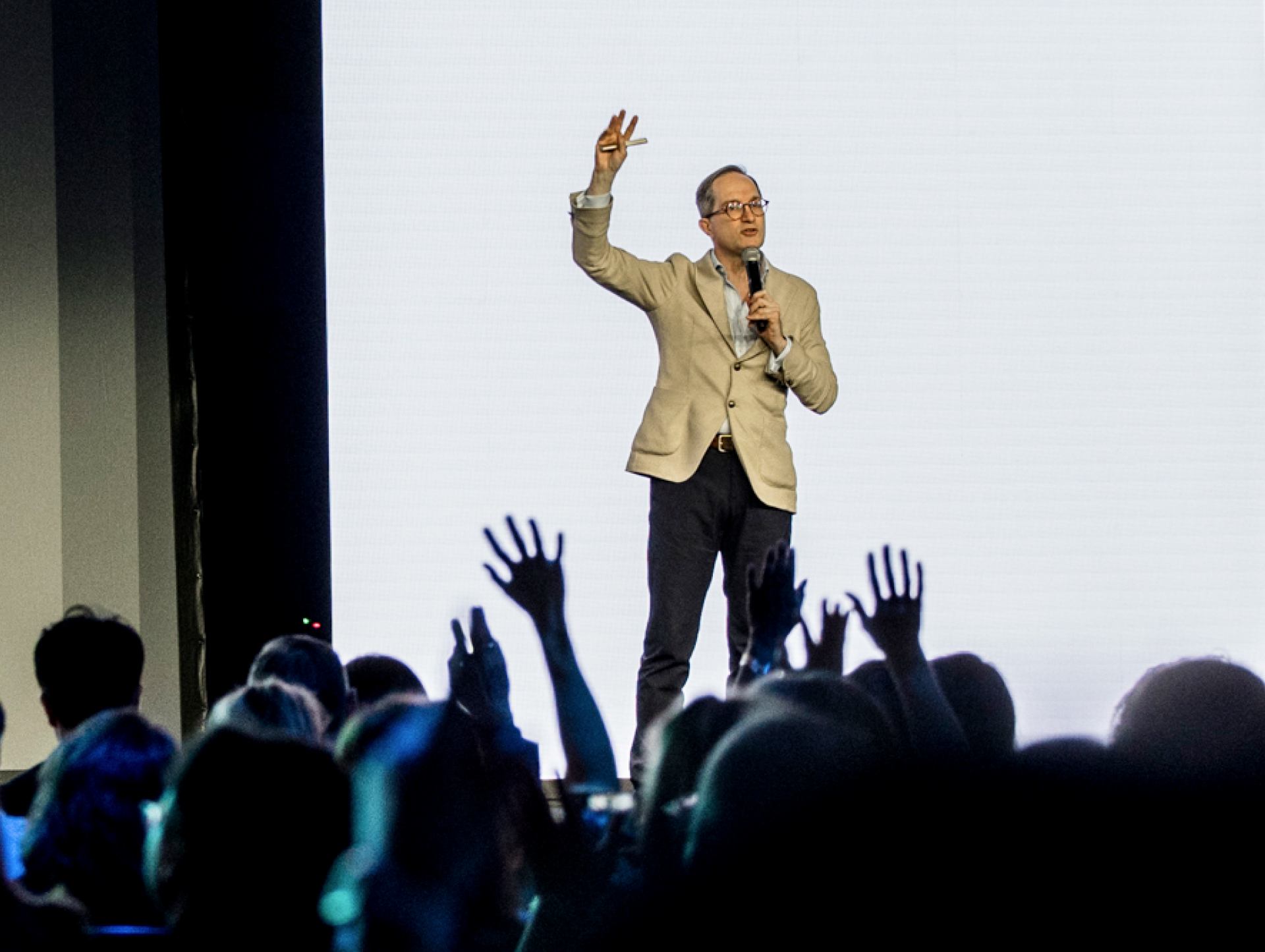



‘One inch ahead’: Howard Yu on why AI success is built daily
October 1, 2026

Politics will always be a touchy subject, but according to Perceptyx, it may have a serious impact on employee satisfaction.
In fact, the EX transformation company cited political conflict as one of the driving factors influencing employees to leave their current company, with one-in-three sharing they’ve had conflict that began as a political disagreement.
Of these employees, four-in-five are now looking for a new job elsewhere.
The survey, which used 2,300 workers, found that although 90% of employees have experienced some form of conflict with colleagues, a third stated that it began with a conflicting political discussion.
For starters, desk-bound workers are seeing the highest impact, as they’re twice as likely to have had politically-heated conversations over the past three months than deskless workers.
Gen Z are the age demographic most likely to find themselves having conversations with political conflict, with the study showing they’re 1.3x more likely than Millennials, 2x more likely than Gen X, and 2.3x more likely than Baby Boomers, to engage in these conversations.
“Gen Z feels a strong alignment of political beliefs with personal identity, and they don’t leave those beliefs at the workplace door," Emily Killham, Senior Director and Head of the Center for Workforce Transformation at Perceptyx explains.
"Of the four generations in today’s workforce, they are the only ones where a majority do not believe in discouraging political discussions in the office.
Sharing their political beliefs in the office opens Gen Z workers up to greater amounts of bias, prejudice, and discrimination, compared to Millennials (1.2x less likely to share views), Gen X (1.7x less likely to share views), and Baby Boomers (5x less likely to share views).
These conflicts aren’t just making employees feel uncomfortable – they’re having a direct impact on their performance, too.
So much so, political conflict is 5.6x more likely to impact employees productivity, 4.9x more likely to cause mental health issues, and 3.5x more likely to lead to physical health side effects.
As a consequence of this, 80% of employees are actively looking for other roles, making them 1.6x more likely to leave their current role, compared to their colleagues.
Killham continues to explain that although avoiding political conversations and conflict at work is practically impossible, resolving the conflict means the impacted employees are half as likely to plan to quit.
Even if direct conflict has been avoided, one-in-five workers still report feeling bias, prejudice, or discrimination because of their political beliefs.
Of these, just 30% believe that discussing politics in a work setting could have a negative impact on their future career.
However, Perceptyx’s study did suggest that creating an inclusive culture that is psychological safe is one way to lessen the impacts of these political disputes.
"Implementing a DEIB strategy that develops inclusive leaders and considers diversity of thought is essential."
She added: "Gen Z prioritizes working for and with organizations that align with their values; ensuring they can flourish when conflict occurs is HR’s challenge as they will be 30% of our workforce by 2030."