



FirstBus had a £26m attrition problem. Here’s how the bus giant halved it.
June 4, 2026

Businesses are obsessed with productivity in 2025, a year that has been filled with economic uncertainty and volatility.
They are turning to AI as a silver bullet to improve employee productivity – however, a new report by employee experience platform Staffbase found that internal communications could be a crucial piece of the productivity puzzle.
Staffbase surveyed 3,500 individuals in Australia, Austria, Germany, Switzerland, the UK and the US; the research found that 63% saw direct correlation between good internal communications and their productivity.
In addition, 67% said internal communications affected their motivation to do their best work, while 63% said that poor international see poor internal communications as driving them to look for a new job.
In fact, Staffbase data found that internal communications was a larger cause of attrition than paid time off, personal safety and the company’s stance on social issues.
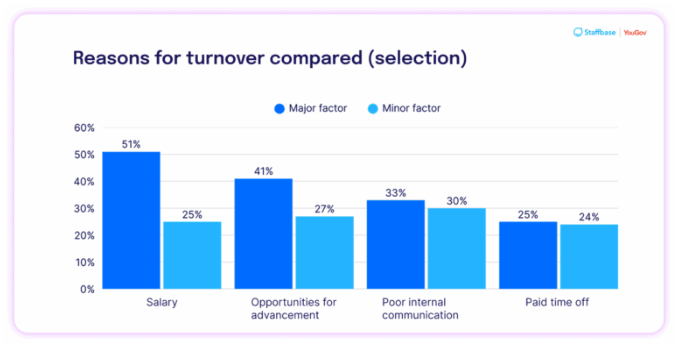
Beyond this, the research showed that 76% of respondents said they were satisfied by their relationships with co-workers and 71% were happy about vacation policies, just two in five (42%) were impressed by the quality of communication they received from their employer.
One in four also reported feeling excluded from important organizational changes, while just 19% said they were unclear about their employer’s vision and strategy.
Clearly companies are falling short when it comes to corporate communications.
Something needs to change; where should organizations, and specifically HR leaders, focus their attention? UNLEASH digs into the data exclusively with Staffbase’s Global Chief People Officer Neil Morrison.
Staffbase’s report finds that good communication starts with managers and supervisors – they are the most trusted source of information (57%), compared to intranet (51%), emails or memos (50%), newsletters (44%) and employee apps (41%).
These stats are consistent across the regions that Staffbase surveyed.
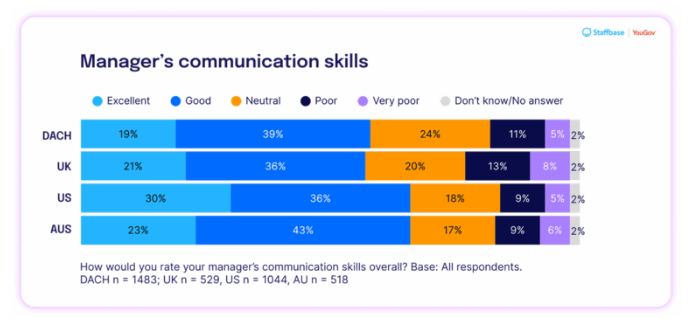
Therefore, there’s a real lesson for HR teams to really “equip your managers properly”, in the words of Morrison.
This is particularly important for organizations with frontline, non-desk workers – they feel less well informed than their desk-based colleagues (48% vs 65%).
Morrison tells UNLEASH: “Stop treating non-desk employees as an afterthought.
“If 21% of your workforce never hears from senior leadership, you've got a fundamental problem.
“Invest in the channels that actually reach people where they work.”
Clarity is also a key piece of the successful communication puzzle – focus on that, not volume.
“Leadership communication needs to help people understand where the organization is going and why it matters.