

Fixing the Talent Acquisition Operating Model: Building a Connected Hiring Tech Stack
December 3, 2026
Ask HR leaders about how AI is changing work, and you'll often get an HR-focused story about faster onboarding, smarter policy assistants, and cleaner data and reporting.
Ask HelloFresh's VP of People – Global Business Units Syed Ali Abbas the same question, and he'll say: that's the wrong ambition.
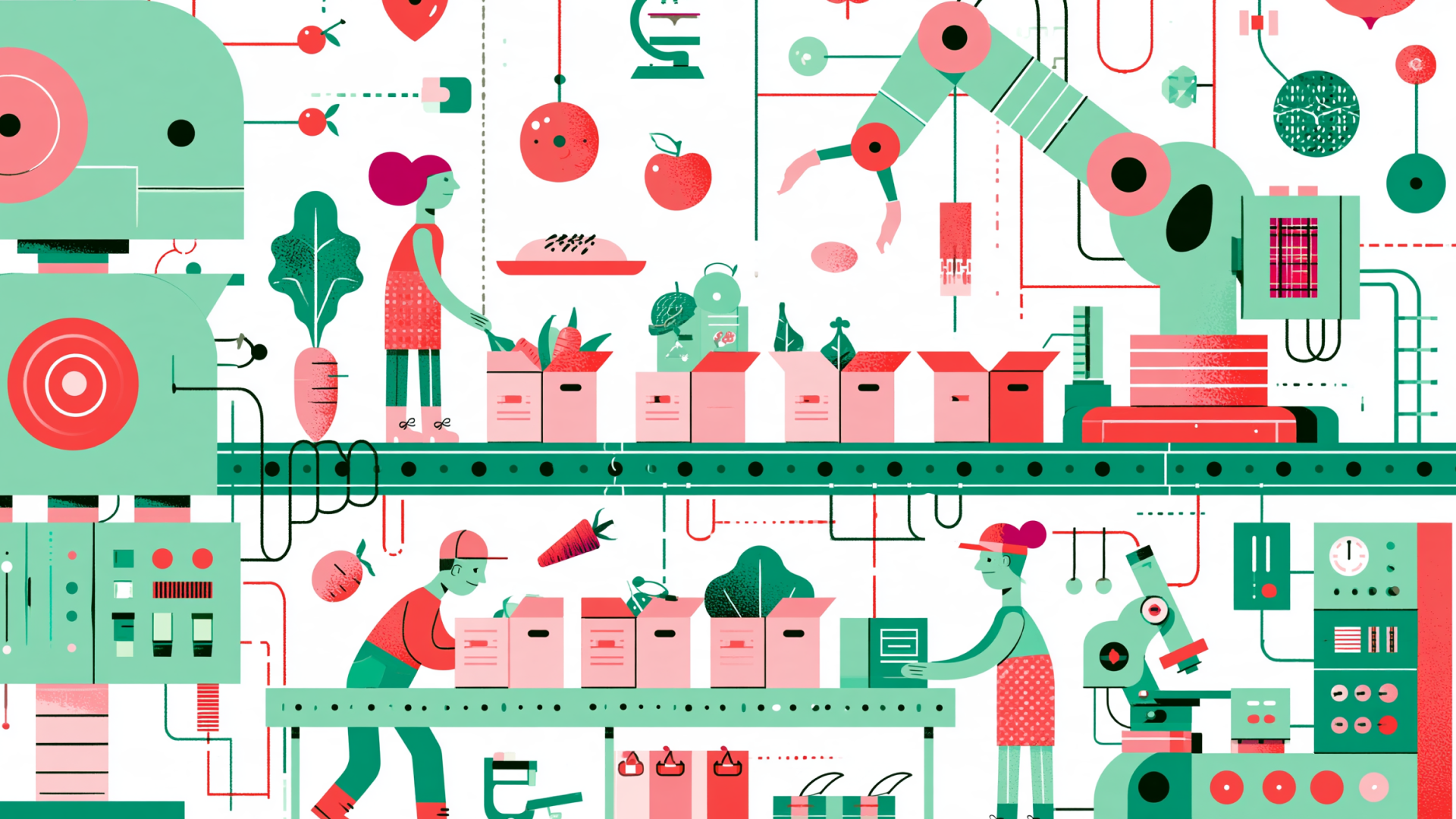
At the meal kit giant, AI isn't just a people project — it's a multi-year bet on reinventing the entire business, complemented by investments in other technology like robotics and supply-chain software.
Ahead of his appearance at UNLEASH 2026 in Paris, Abbas sat down with UNLEASH Chief Reporter Allie Nawrat to explain why HelloFresh chose a handful of high-value bets over lots of costly pilots — and why the tradeoffs along the way are challenging but worthwhile.
Allie Nawrat: Why are you seeing AI not just as a HR transformation, but as driving true business reinvention at HelloFresh?
Syed Ali Abbas: Let’s do a bit of role play. I’m the CEO of a big company, and I have access to this generational technology called AI to change what I do for my business, customers and employees.
I go to my People leader and say, ‘Abbas, how can you help me use AI to actually achieve the best possible outcomes I can for the business?’ And my People leader has two options that he can share with me.
Option A: Let’s look at the workforce, the organizational structure, the key value delivering workflows in the business; let’s infuse AI into all of that. We will have – I’m just making up the numbers – 20% higher revenue, 20% higher profitability and 20% higher employee productivity.
Option B is that I will take AI and focus on the People function to get 20% better new hire satisfaction ratings, 20% faster answers to employees’ HR policy questions, 20% improved compensation & payroll accuracy, and 20% faster workforce report generation.
My team is deeply focused on driving those needle-moving gains on the big picture. That does not mean that there’s no HR transformation. The answer isn’t an either/or. But the reality is that the biggest amount of juice we get for the squeeze for our time is when we are focused on organization-wide business transformation topics, rather than People team transformation topics.
AN: Because of the nature of HelloFresh’s business, you have a lot of physical infrastructure. How are you thinking beyond AI and towards robotics?
SAA: More than 50% of our workforce is actually in physical operations; we don’t just live in the virtual world on servers. So, automation, robotics, supply chain software and other such technologies are very important for us.
Think about packing a meal kit box in a production center in a HelloFresh facility. There’s [work done] trying to predict what customers are going order, ordering those ingredients, then figuring out the most efficient setup in the production center.
What can we do with a mixture of AI and robotics? With AI, we don’t just predict better which ingredients to order, we also manage better ingredients in the production center, driving operational improvements.
For example, robots and automated assembly lines can increasingly bring things to the person who’s packing the box.
When we marry technologies like AI, robotics and others, having them work together gives us a multiplier effect, which has a huge benefit for the business and employees [in terms of] productivity, quality, and ultimately profitability.
AN: A focus on AI and robotics comes with tradeoffs. Is there anything you’ve stopped investing in?
_v4-thumb.jpeg?length=1920)
A small example to make it come alive. We used to offer 35-50 recipes to customers in every market. As of 2026, helped by AI, we now offer between 50 to 100 recipes in all our markets globally.
But when we look at the next level of exponential gains, the story becomes complicated. In one particular production center in the US, we have been doing an experiment since the beginning of the 2026 to offer 30,000 customers 350 recipes. We trialed it, but we started to see stress on our teams, systems, processes and product quality – so we’re walking it back in small increments to find the exact number of recipes where we can serve our customers at our usual high standards. Once we find that number, we will stabilize there and roll the learnings out globally for implementation.
Our 2027 business plan will cover this, but once again I expect there will be a few sacrifices and surprises needed to drive the required investment and focus to make this a reality.
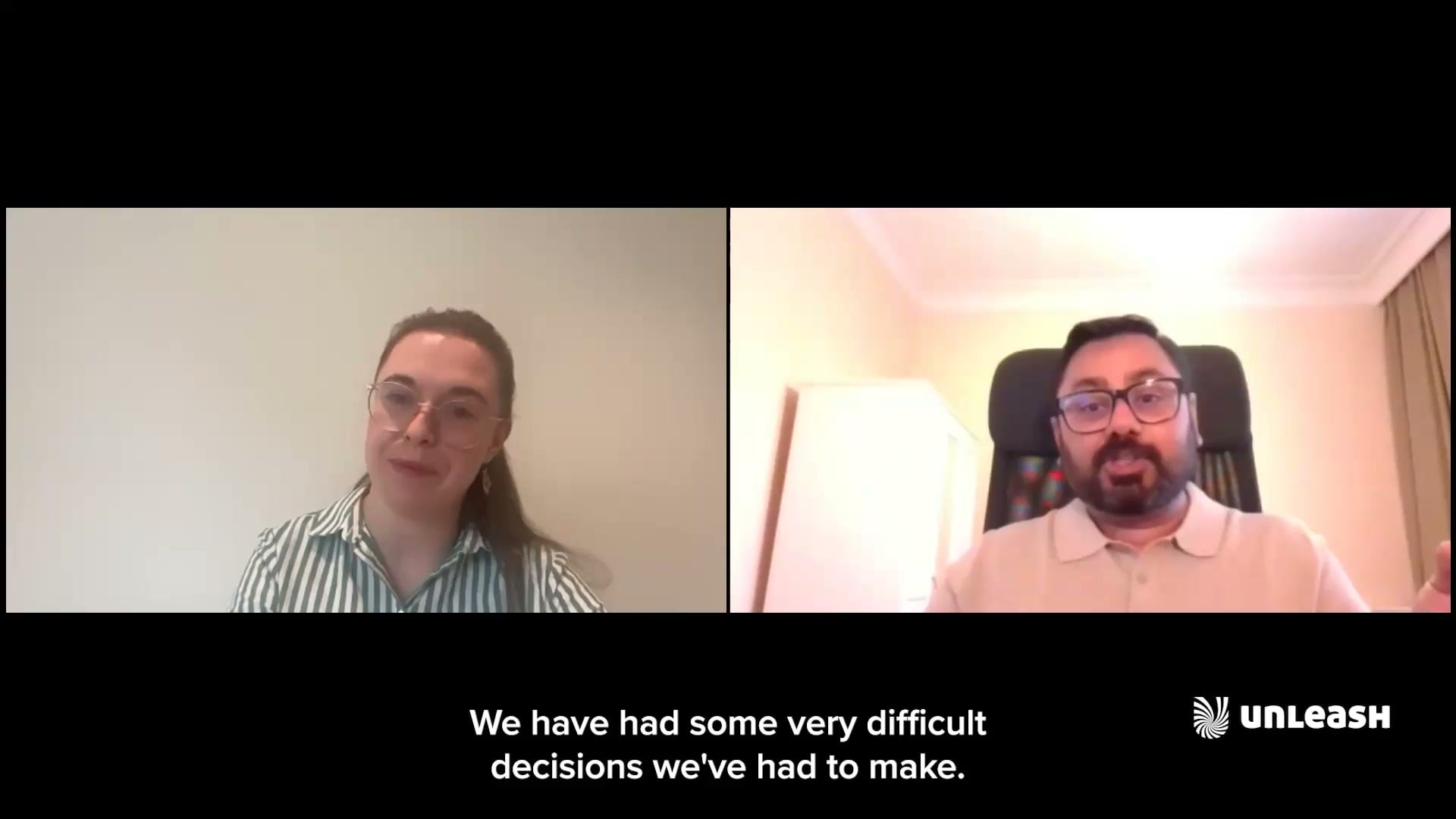
AN: Was there any particular difficult decision you needed to make in this transformation? How did you decide that the way you had to go, even if it was difficult?
AN: Reflecting on the AI and robotics journey, what is is top of your priority list for 2027?
2027 will bring new things for us.
AI is moving so fast; What we’ve done in 2025 and 2026 might not be good enough in 2027 – something new might come out. We have to build that agility and flexibility into our tech stack.
Another challenge is the impact on the workforce. Our people have understood what we’re trying to do with all this transformation – they have taken to AI like a fish to water; they’re swimming now. But with every wave of transformational technologies, the reality is there is a period of friction. From a People team perspective, keeping people calm and finding a way to navigate all of this is going to be a huge challenge.
AN: You’re joining us in Paris for UNLEASH 2026. Your session focuses on where to automate, augment, or redesign work entirely. For your HR peers trying to make that call in their own businesses, what’s the mistake they need to avoid? What can they learn from HelloFresh’s transformation?
SAA: We don’t have all the answers but in terms of learnings from our journey, here’s a quick checklist.
The first thing is that AI is a data and information play. If you want to play in the big leagues in AI and transformation, you’ve got to sort out your data first.
Third: don’t jump into AI straight away in terms of driving adoption and performance management. You can’t wait for everyone to catch up, but you’ve got to let the bulk of the workforce have a safe margin of time to get to a certain level of comfort with AI. Let the early adopters drive your journey till then. A lot of adoption initiatives with AI fail because leaders are in too much of a hurry to onboard their entire workforce.
The final thing is self-awareness on the part of the People Team. There’s an optimistic strand of thinking where people talk about how the CHRO should also own AI. Adoption, change management and organization transformation – sure. Technology – no.
We, as a function, don’t understand emerging technology at the level needed to lead the rollout out of AI in companies; there are other people who can do that better than us. Our job is to look at all this through the lens of People, and to lead the People part of the business and transformation.