

The Talent Operations Transformation
October 6, 2026
The 2020s have been incredibly challenging for businesses the world over. Not only did they have to figure out how to transition their knowledge employees from the office to home-based working, but employers also had to ensure they could keep frontline workers safe amid the COVID-19 threat.

In addition, organizations have had to grapple with rising levels of stress and burnout as workers struggle to switch off from work and achieve a work life balance when they feel like they are not just working from home, but actually living at work.
The latest challenge facing businesses is the ‘Great Resignation’. It is becoming clear that employers want more than just to be paid a decent wage – they want better employee experience, they want flexibility at work and they want internal mobility and career development opportunities.
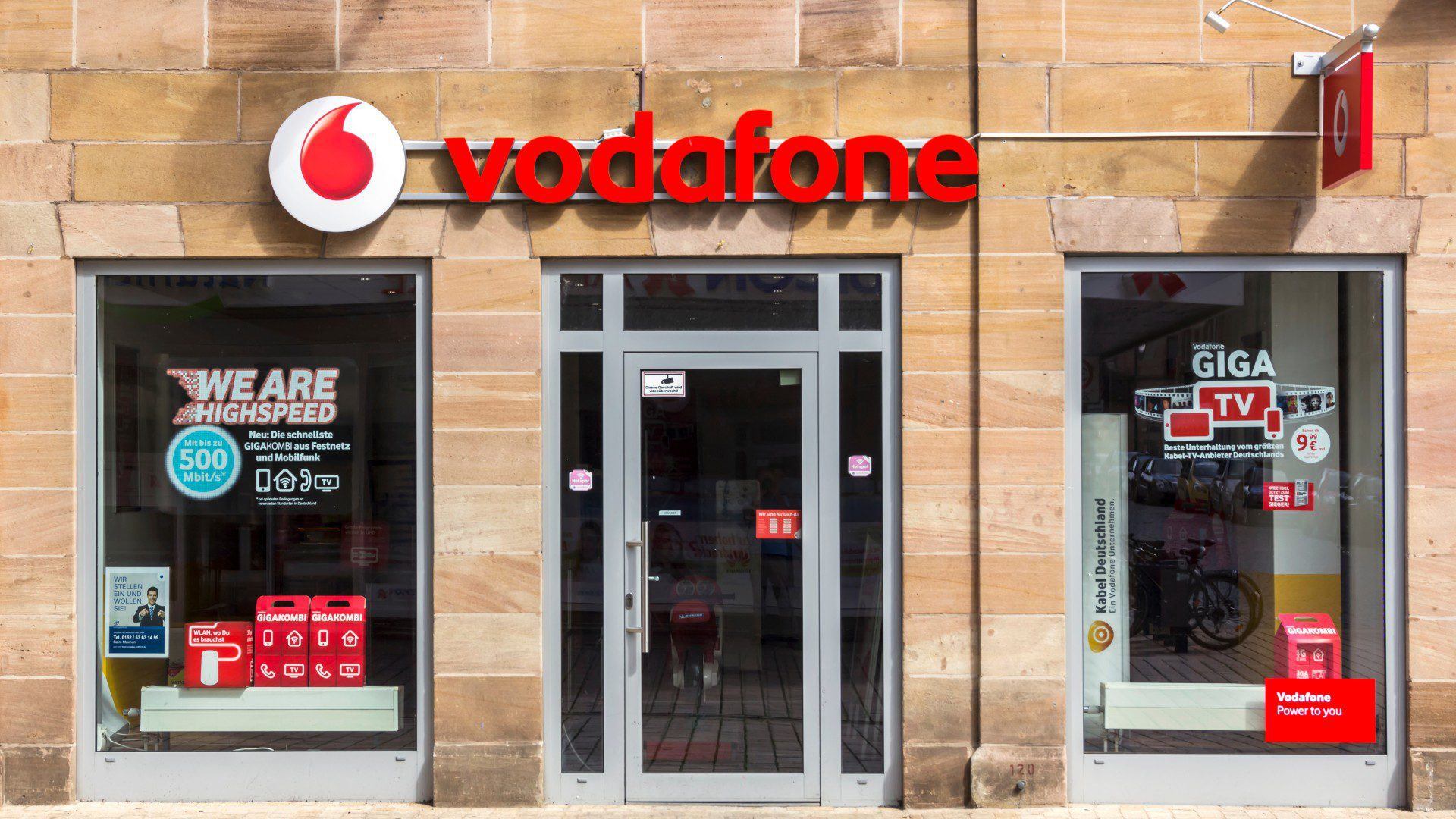
While all businesses have been facing these same issues and barriers, “there is no doubt that those who are ‘fit for the future’ have adapted faster than their competitors," Vodafone Business strategy and transformation director Fánan Henriques tells UNLEASH.
Future-ready businesses tend to be those which were (and continue to be) further ahead with their digital transformation. This meant they were not only able to survive during the COVID-19 crisis, but thrive in the new paradigm of work.
Being further ahead in their digital journey means future fit companies were often more prepared to tackle the issues they experienced, this is according to a recent report by Vodafone Business. Rather than being reactive to the disruption, they embrace the need for innovation and transformation.
The research surveyed more than 2,000 companies and found 89% of future-ready companies had a clear digital transformation roadmap, compared to 60% of businesses in general.
In addition, 71% were able to digitally accelerate in the pandemic, compared to 55% of all companies; future fit companies were better at increasing their digital transformation budget during the pandemic (56% vs 35% for general businesses).
“We have clearly seen that they also have better understanding of the possibilities that technology can provide their organization," adds Vodafone Business HR director Pinar Yemez. 80% of ‘fit for the future’ businesses are optimistic about future technologies tested – this is 17.5% higher than for all businesses.
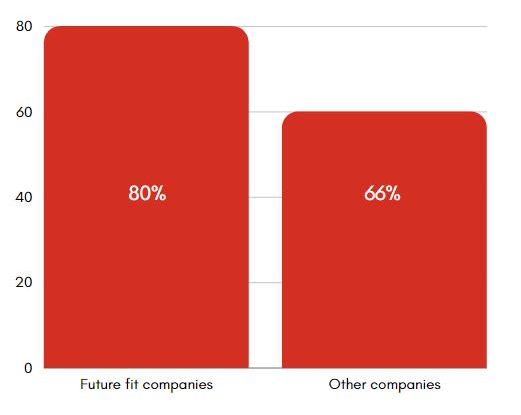
Ultimately, research by the London School of Economics (LSE) cited in the Vodafone Business Report also found that being fit for the future was better for businesses’ financial performance.
“Organizations that scored a ten-point increase in their ‘fit for the future’ score were more likely to outperform their competitors by 36%”, explains Henriques.
Interestingly, future-ready organizations are not more digitally mature and perform better financially, they are also those businesses that are more in tune with employee needs and demands. This is incredibly important in the ongoing ‘Great Resignation’ and the demands for better employee experience.
Hybrid work is the future of work. Most employees will split their time between home and the office; this is in acknowledgment that there are positives of both remote and office-based work.

Vodafone Business’ research found that workers “want more flexibility in terms of where they want” – “they also have greater expectations around freedom and autonomy," notes Yemez.
The study found that future-ready organizations are fully on board with flexibility at work. 80% said supporting flexible working hours was important for retention and recruitment, and 77% noted that employee autonomy was positive (compared to 67% for all companies).
In addition, 85% of ‘fit for the future’ businesses saw the benefits of greater flexibility (and the role of technology in enabling that) – this is 12% higher than for normal businesses.
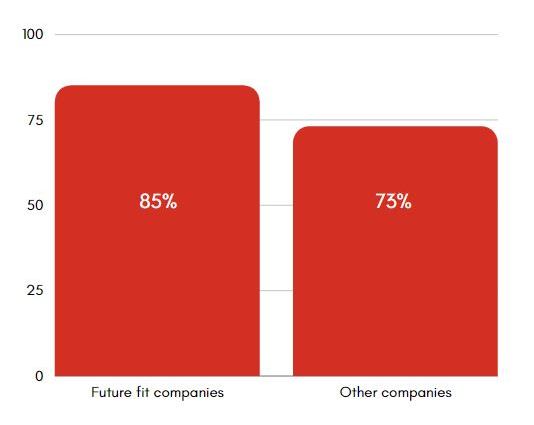
Therefore, it is no surprise that the Vodafone Business study found that future-read organizations are really focused on ensuring employees have the right tech to successfully work flexibly and remotely.
Another important element of talent attraction is values – employees are showing they increasingly want to work for purpose-driven organizations. This has been found to be particularly important to Gen Z employees who will be the CEOs and managers of the future.
Future fit organizations are ahead of the curve here. They are particularly focused on sustainability – 38% believe that being sustainable is ‘absolutely necessary’ for the future of the organization and 69% say sustainability has become even more important during the pandemic.
“’Fit for the future’ organizations’ Environmental, Social, and Governance score is significantly better than competitors," adds Henriques. This has benefits for not just their social impact and their retention strategy, but also has a concrete positive impact on their profits.
Yemez talks about how Vodafone, which sees itself as a ‘fit for the future organization’, has noticed that employees are more value-focused during COVID-19. “We’ve seen our people get involved with the Vodafone Foundation, as well as be more vocal around causes that are important to them, like sustainability or domestic violence”.
Vodafone itself has therefore taken action. “We’ve done work on our domestic violence policy. We have provided some specialist training to our HR leaders, and we introduced some basic paid safe leave for people.
"They can use this in a private and confidential way. The Vodafone Foundation has the Bright Sky App that provides lots of practical and free advice, guidance, and support to people” who are struggling in their personal lives, according to Yemez.
Yemez reminds UNLEASH that “we are still not out of the woods yet" - there are new challenges on the horizon.
She adds that although Vodafone, for example, has set up its hybrid working plans, it has yet to fully implement them because of the impact of the Delta and Omicron COVID-19 variants.
Vodafone’s future of work is based on employee listening with the help of Humu pulse surveys. “We have a very trust-based arrangement – teams organize their days in the office, according to the nature of their work and the dynamics of their team," notes Yemez.
“While we understand that people can be quite productive from home, we still see a place for the office” for things like collaboration, discussion, and social events.
It looks like 2022 will be the year that companies finally put their hybrid working and other policies into place, “but continue to adjust and experiment” as necessary.
Yemez adds that future-ready organizations are fully aware of this – “they are more agile, curious and are always learning”.
It is time that all other businesses learn from their example here, as well as in the embracing of emerging tech that can make the world of work even better.
Yemez notes that there are still gaps in HR tech tools - one example is for informal networking; "the technology and tools need to continue to evolve" especially in a "world where people work from a distance" and it is harder to build those connections with colleagues and teams.
Frankly, in this talent market businesses can’t afford to follow the same old path, they need to act now to change their mindset around technology and the workplace.