


The Talent Operations Transformation
October 6, 2026

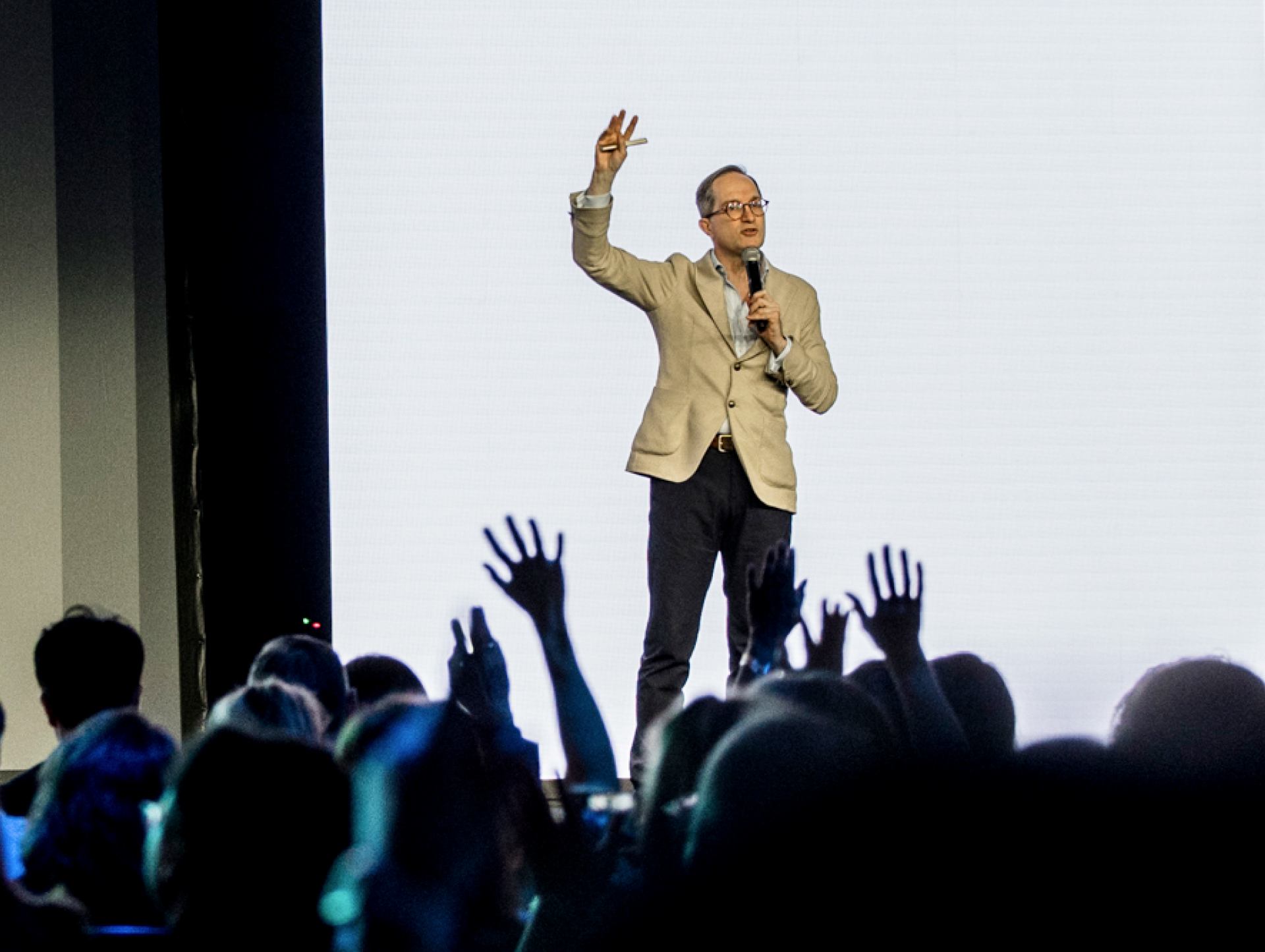
Shutting down streets in San Francisco, Workday held its flagship event, Workday Rising 2025, to discuss the future of work, while drawing thousands of HR and technology leaders to explore innovations in AI, skills, and workplace transformation.
Throughout the three-day event, Workday rising hosted more than 400 sessions, with 800 product experts and 30,000 attendees.
It’s safe to say, a lot was covered over the 72 hours – but if you weren’t able to attend the conference UNLEASH’s Senior Journalist flew from London to the Golden State; here are the key learnings from the event.
Taking to the stage to open the event, Workday CEO Carl Eschenbach was sure to share one key message: "Workday is AI-powered, human-centric and future-ready."
As he addressed the room, Eschenbach was careful to explain why each of these points are so integral to the business.
He said: “Technology and humans coming together. We use AI to amplify human performance, not replace us.
Eschenbach explained that businesses need to lean into this new mindset, and if they do, they’ll be able to reskill and upskill employees to drive “personal productivity gains” when advancing careers.
Moreover, Eschenbach added that these revive human skills.
“Employees today, more than ever, want to be with one another,” he shared.
“They want to connect. They want to build deep relationships. They want to listen. They want to learn. They want to be together.
“They don't want to continue to sit behind screens and when the meetings are over to sit there all alone. Personal connections are critically important to all of us.”
Researcher and best-selling Author Brené Brown held the events opening keynote, where she highlighted the importance of human connection.
“We're trying to find ground, we're trying to tether to each other,” she opened.
“To build an organizational core we're not using inefficient muscle to do important work.
“When we’re at our best, we’re each other's strong ground. You’re grounded in the shit show that is the world.
“So for me, we’ve got to build new strength. Paradoxical thinking, situational awareness, anticipatory thinking, system thinking, mission critical and mission clear communication. Say what you mean and mean what you say.”
“But remember, it's gonna take a bunch of skills and mindset that I don't think we have yet.”
She then moved on to highlight the importance of accountability, expressing: “Don't ask me to trust you if I've never seen you be accountable for showing up in a way that's not okay or when you’ve made a mistake.”
Brown then concluded by defining vulnerability as: "Uncertainty, risk, an emotional exposure." She explains that these are the key characteristics that need challenging in your own narrative.
90% of employees believe AI will increase productivity, according to new Workday research. However, 48% are concerned it may erode critical thinking.
This research raised the question: “Is AI killing our skills quietly, or is it just reshaping the playbook for how we grow and learn and succeed?”
This was debated in a panel discussion amongst three top executives: Massachusetts Institute of Technology Professor, Danielle Li; Workday’s SVP Talent, Chief Learning Officer Chris Ernst; and McKinsey’s Chief Learning Officer Heather Stefanski.
Li began by sharing data from some of her recent research, which found that the majority of the productivity gains from AI came from novice workers – employees that were either new or not very good at their jobs.
He then asked the vital question: “What will happen when AI can give you the perfect answer in less than 30 seconds – effortlessly.
“We potentially remove the very fundamental ingredients that enable humans to learn, grow and develop.”
Additionally, Stefanski emphasized AI's role in upskilling, credentialing, and embedding AI in leadership development.
She explains that McKinsey has upskilled a set of employees that are known as ‘AI black belts’. These employees embed their knowledge in their teams and become the change champions.
Stefanski explained: “Because of the pace of change in AI, it's really hard to keep the whole organization up-skilled on everything. But if we can keep these black belts upskilled, then they can drive the change.”
Stay tuned for more updates on Workday Rising 2025.