



Ex-Workday CTO Joe Korngiebel takes the reins as Eightfold CEO – what his mandate to scale means for HR buyers.
October 13, 2026

AI is disrupting the workplace now, and it is expected to continue to do over the next five years.
According to new research by the Adecco Group, which surveyed 2,000 executives globally who are responsible for over 10 million workers, the top three megatrends shaping business by 2030 will be digital transformation, generative and AI.
As the Adecco Group’s CEO Denis Machuel tells UNLEASH in an exclusive interview: “There’s no shortage of ambition for AI, it’s the next step of turning that ambition into real business impact” that is causing challenges for business leaders.
The issue is that just one in ten of the businesses polled are classed by the Adecco Group as being ready for this AI-powered future.
The Adecco Group’s research found that the remaining 90% of organizations are missing robust plans to support their workforce in this era of AI – this is partly because the C-Suite is struggling to find common ground on AI.
53% of CEOs say their leadership teams are struggling to align on AI and talent strategy next steps in a timely way.
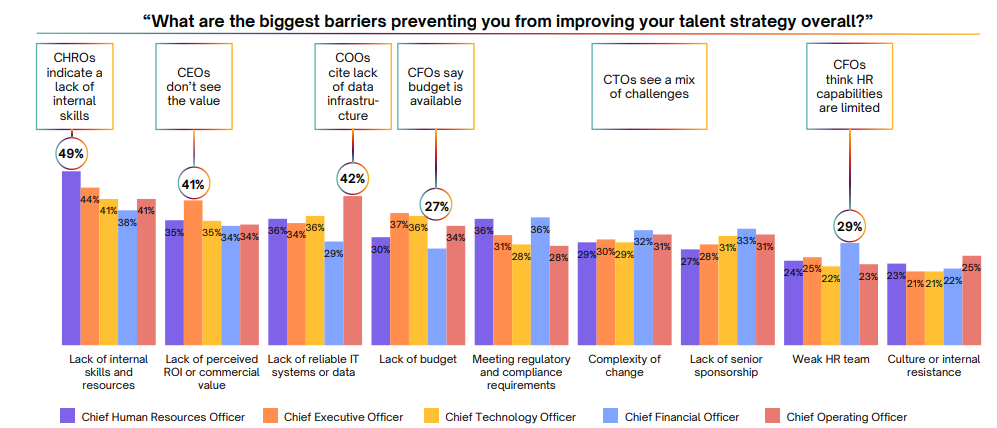
Although 27% of CFOs say that budget is available, 42% of COOs say there is a lack of the necessary data infrastructure, 41% of CEOs don’t see the value and 49% of CHROs see a lack of the right internal skills to make the most of AI.
How can organizations, and particularly the C-Suite, turn the tables, and reap the rewards of AI?
As Machuel wrote in the foreword of the Adecco Group’s report: “In the age of AI, it's not technology that will define the future, but people.”
He continues: “The data shows many leaders are still learning how they can best support employees so they can succeed through the company’s rapid adoption of AI.
“Closing this gap is key for businesses to unlock the full value of their AI investments.”
The 10% of organizations classified as AI-ready offer a clear example for other organizations to follow.
The Adecco Group research shows that the main thing that makes these future-ready organizations stand out is their human-centric approach to AI.
They are “making AI part of how their people work, learn, and grow”, and “using data to understand where they can fill skill gaps, encourage internal mobility, and plan for the new era of work”.
They are particularly focused on communicating how AI can improve work for all, and bringing employees along on the journey of work redesign in the AI era. This drives trust and confidence, and reduces uncertainty.
Another element of these future-ready organizations is they have a responsible AI framework – this is driving better results from AI.
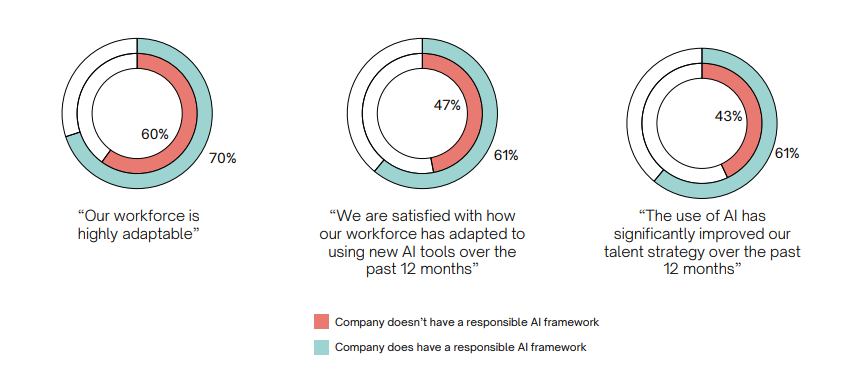
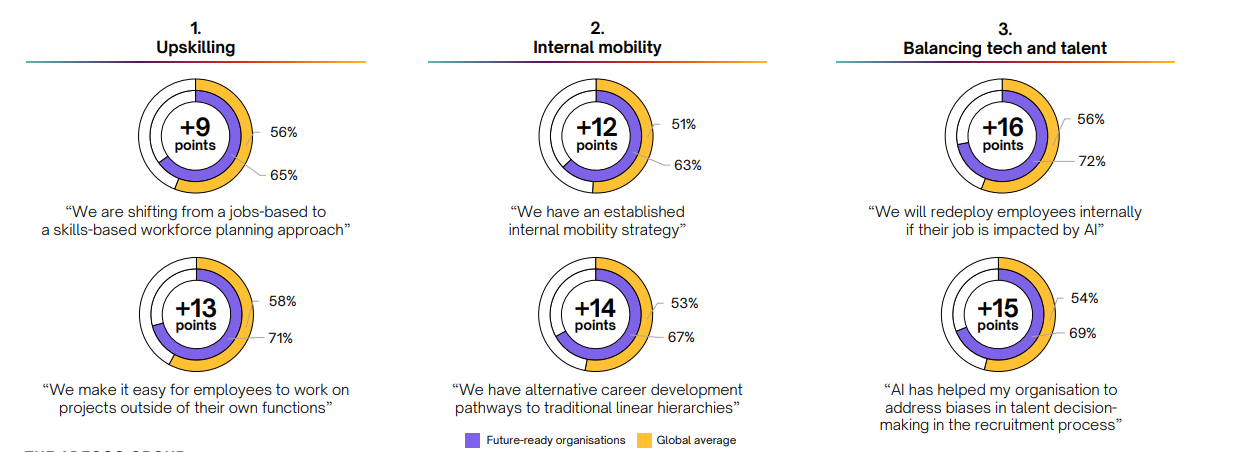
Plus, by focusing on upskilling and internal mobility opportutnies for workers, future-ready organizations are creating a culture of adaptability and mobility, which helps to retain workers, a critical element of business success in the future.
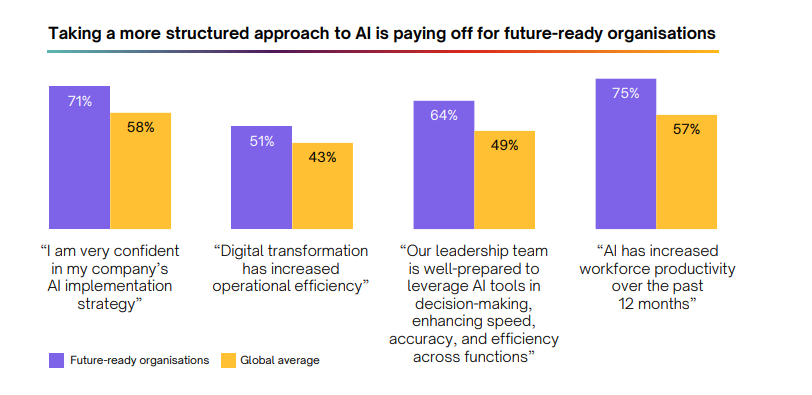
This human-centric approach to AI is helping these organizations outperform their peers when it comes to operational efficiency, leadership development and workforce productivity.
A key component to success here is having “leadership teams come together around a shared vision that prioritizes both technology and talent”; when they do this, “they create organizations that are more agile, more resilient, and more human”.